
I'm an "Older" Digital Nomad. If I Don't Put Down Roots Now, Will It Eventually Be Too Late?
Supposedly, I still have "twelve good years."

Eighteen years ago, my mom died unexpectedly at the age of sixty-two — the same age I am now. As of a few months ago, I’m officially older than she ever was.
I’ve been thinking about that a lot lately. Not: Oh my god, I’m going to die one day! More: Well, this is a strange milestone.
I’ve always been aware of my mortality, but now that I’m in my sixties, it’s a lot less theoretical.
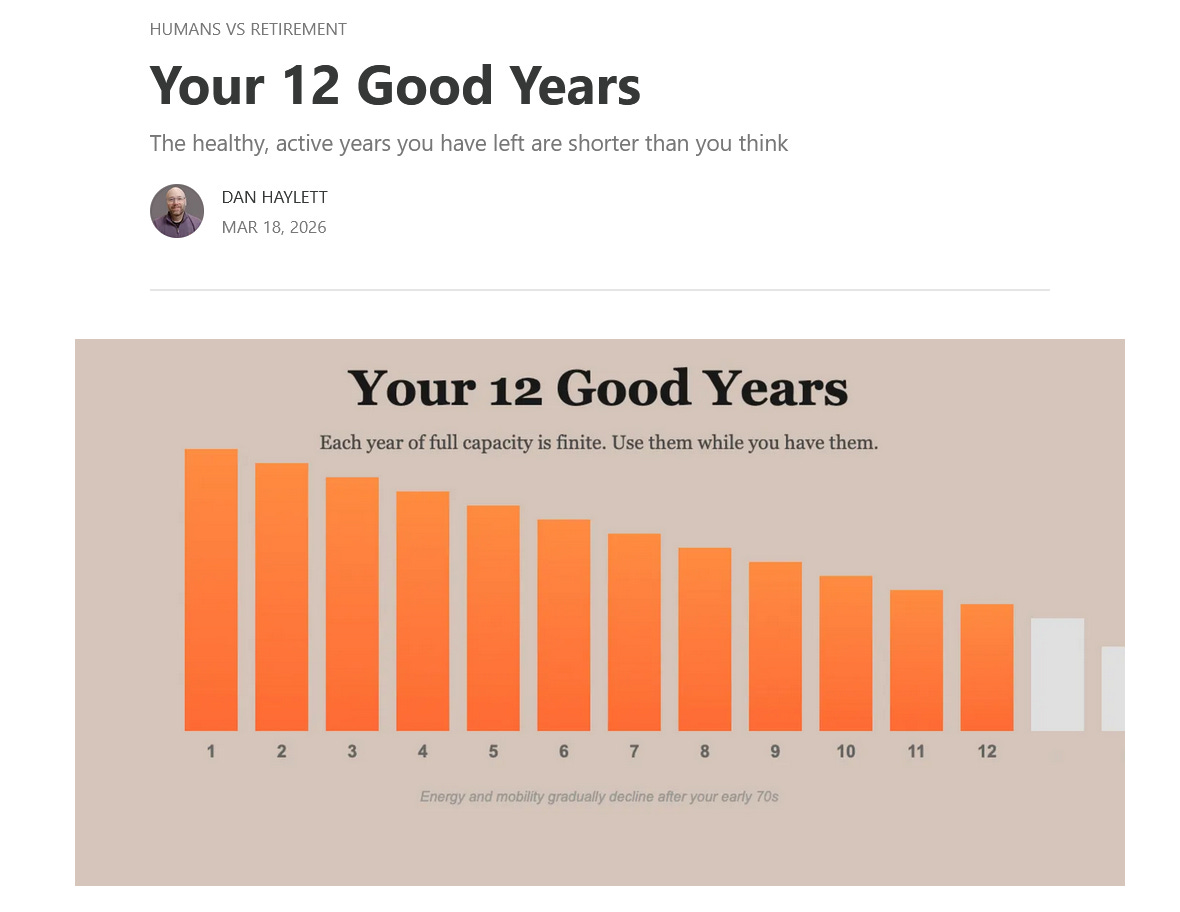
Recently, a Substack article took the world of expats and retirees by storm: “Your 12 Good Years.”
The premise was simple: if you’re in your early sixties and healthy, you likely have about twelve more years where you can take on new challenges, be spontaneous, live independently, and, yes, easily travel.
After that, physical and mental deterioration will almost certainly slow you down.
I’m well aware that my time on Earth is finite, but having a number, no matter how arbitrary, assigned to my remaining “good” years was jarring.
And how exactly will this affect my life of travel? For the last nine years, I’ve been a digital nomad, continuously traveling the world with my husband, Brent.
Brent and I are still fit and active, but I already see hints of what’s to come. My left knee complains more than it used to. My lower back wakes up most mornings very cranky.
In my seventies, transoceanic flights will almost certainly be harder, bad beds more challenging, and climbing Machu Picchu probably ain’t happening, even if my spirit is willing.
Sadly, in the last year, illness has struck some of our closest friends, so the future is even less theoretical now.
Which brings up a related issue: when it does happen — when we do have to start dealing with serious health issues — we don’t want to be on our own in dealing with them.
Our sick friends have all had fantastic support systems — both friends and family.
But Brent and I are childless. And while we have lots of friends, many of them are spread all over the world.
If we got sick now, our support system would be: It’s complicated.
So if we don’t put down roots soon, will it eventually be too late?
On the one hand, we don’t need to keep traveling. We’ve been on the road for almost a decade, and it’s been incredible. Maybe asking for twelve more years of travel is getting greedy.
On the other hand, we really love our current life. We both agree that becoming nomadic was the best decision we ever made.
In nomad circles, older folks talk about these issues a lot. Some people insist they’ll travel until health issues force them to stop. Then they’ll find a country where they can join an expat community and settle down for the last time.
There’s a grim term some folks use for this place: a “death destination.”
Brent says it’s naive to think you can wait until you have a serious health problem to settle down — and after watching our friends deal with major health issues this year, I agree with him.
If you’re dealing with a major health issue, the last thing in the world you’d want to do — or even have the energy for — is also figure out the process of emigrating to another country, much less finding a permanent apartment and, oh yeah, integrating into a foreign culture.
Other older nomads say that when the time comes, they’ll return home. And if they have children and a strong, existing support network, this seems like a much more reasonable option.
But without kids, Brent and I would have to rely on friends — and even our old circle of friends back in the Seattle area is spread out all over Puget Sound.
So if we really do want a supportive community for when we’re older, we need to start building one relatively soon.
See the problem? We want two incompatible things: to keep traveling as long as we can, and to ensure we’re not alone and vulnerable when we can’t.
If I were on my own, I think I’d risk a harder ending to avoid giving up years of a life I love. But Brent disagrees. He wants to start putting down roots soon, so we’re not trying to frantically build a support system at the exact moment we need one.
We have options, but they all come with a cost.
We could return to the Pacific Northwest for at least part of the year, to develop that support network. And when the time came, we would move back here full-time. We’d be in a familiar culture, and we’d also have access to Medicare.
But we’d also be moving back to America, which would mean being totally dependent on a car again, and giving up the more people-centered communities we’ve both grown to love. Instead, we’d be stuck back in the American sprawl we both detest.
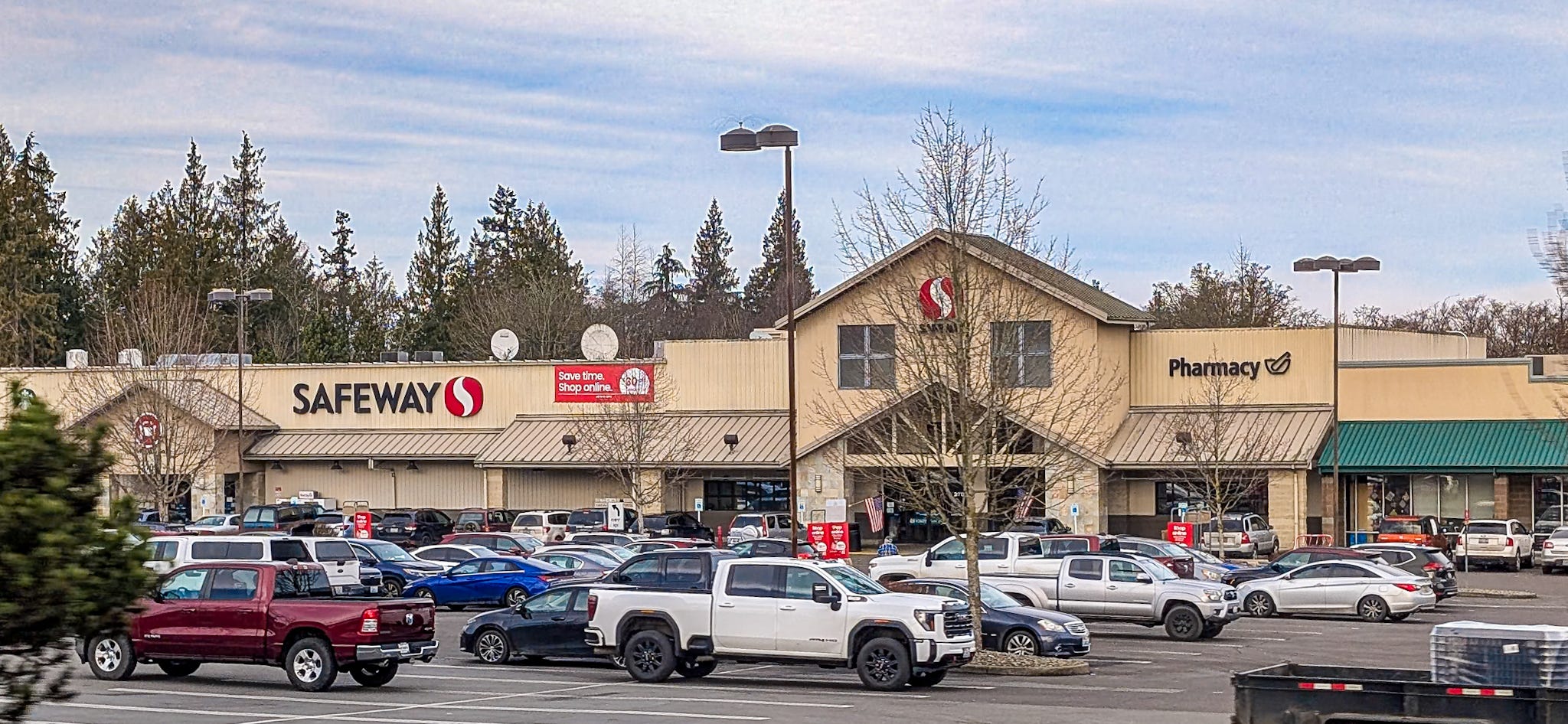
We’d also take another hit on the quality of life issue due to the “affordability” issue, since almost anywhere in the world seems a lot cheaper than America right now.
Brent is very interested in building some kind of “intentional” community with existing friends, which would at least partly improve our quality of life.
But our friends have competing interests too — in the form of kids, grandkids, weather, and their own affordability issues.
And, of course, we think it’s still an open question whether America collapses completely into fascism.
The other option is for us to permanently settle somewhere outside the U.S. — Mexico or Europe but also maybe Thailand — and try to build a life among the locals and expats.
I’m more drawn to this, but Brent argues that it would essentially mean severing our existing friendships back home. After all, how often would we see them? Once a year for a week until we become too old to travel at all?
Plus, he says, we’d have to navigate foreign cultures and bureaucracies at an age when that becomes increasingly difficult to do. So if this is our choice, we’d have to start sooner rather than later.
Unfortunately, trying to permanently settle in another country almost always includes some kind of “residency” requirement — often at least ten months out of every year. So we’d be in a foreign country, true, but we’d also have to stop nomading.
At least the U.S. gives us the option to be there only part-time. We could live there for four or five months and travel the rest of the year.
Every path comes with drawbacks and complications — and both mean we won’t be traveling full-time for all that much longer.
Then again, we’re trying to balance two competing truths: that our immediate phase of life is still full of possibility and shouldn’t be wasted, but that the future version of ourselves will depend on us making choices now that keep them safe.
Most likely, it will be the “part-time in America” option that we’re doing this year.
After all, twelve more years of this wouldn’t exactly be terrible.
Michael Jensen is a novelist and editor. For a newsletter with more of my photos, visit me at www.MichaelJensen.com.
In about 30 days I will celebrate my 72nd birthday. If I read your blog when I was ready to hit age 60 I might be a bit despondent right now, maybe seeking out a country where they have legal euthanasia. After all, we all WANT control of our lives, so why shouldn’t we be in control of our deaths?
As it is, I am glad to be celebrating #72, primarily because many of my friends I graduated with cannot do that. As a matter of fact, many friends who were much younger—as much as a decade younger—can’t blow out any more candles either. We’ve not been doing this nomad thing for a decade, but just seven years this past February. Some of the things you mention, ie, slowing down, looking for a “final spot,” and such, are conversations I’ve had with my lovely. Who is 18 months, to the day, older than me. We both live in gratitude for the health we DO have and count our good fortune regularly. 43 countries, all continents but one is nothing to sneeze at! But we talk about death, in real terms, occasionally. We carry no health insurance, take care of things as they come, and what we’ve spent is a fraction of what premiums would cost. Our Medicare is there, but a joke, and she has needed a paramedic ride twice, neither of which was fatal, though scary. On a chairlift in Romania we were up towards the top, and one of us said, “you know, if one of us had a heart attack here, we’d be screwed.” Paramedic and insurance be damned; when it’s you/ our/ my time, our ticker will run out.
Last week we had a very real reality check when my BP crashed after a lengthy hike the day before and several days of being dehydrated. I had no idea THEN what happened, but I do now, since we’ve both been digging in (thank you AI), and understand the critical significance of potassium, magnesium, and sodium in keeping our hydration in order. Especially where we are--in Vietnam. She came THIS close to calling for an ambulance, and she went to the Dark Side and thought: heart attack, TIA, or stroke, and “what if?”
What if, indeed.
Some coconut and orange juice, some rest, and later, electrolytes and magnesium got me back on my feet, but I’ve had just one gym workout since then, check my BP several times a day, do a feet elevation thing every afternoon, and even though I’ll not celebrate #72 after a two hour climb at the top of some God forsaken peak, I will celebrate with no fanfare, just a lot of thanks.
So, if you’re looking for a “death spot,” more power to you. We have ZERO plans/ intentions to return to the US, and I have no kids, no parents, and aside from some cousins, no one close to me blood wise. But we have each other. Which one of us “goes” first is in God’s hands, and hopefully the survivor will deal with it in a healthy way. I’m sure you count YOUR blessings that you have each other, as you should. Yes, we have and are slowed down, and plan to stay in Da Nang at least six months, and probably focus on SE Asia as being OUR final resting spot, though I do intend to go to Albania occasionally, since I did love it. Our quickie 2 weeks in Japan next week MAY be our last short time/ long distance jaunt, but we’ll play it by ear.
So any or all of you who may read this, just eat well, get rested, and enjoy each day. When the shit hits the fan, I know (for me) it’ll take me to a kind, gentle place, and the world will rock on without me.
I am the same age as you, although I am turning 63 tomorrow. My mother was 63 when she died in 1987.
And although our day-to-day lives are quite different, Bill and I are not nomads, I share many of your same concerns.
We moved to Delaware a year ago knowing very few people. We have started to build a community of friends here but most of them are our age or older.
We do not have children, our families are either nonfunctional or spread all over the country. Were we to need an extended community for much of anything, we would be out of luck.
I honestly don’t know what the answer is. I share your concerns about the future of this country. We moved to Delaware precisely because it has been a reliably blue state for many decades and we figured that if rights were going to be eroded, it would take more time here.
I guess I don’t really have much to add that is of practical use but wanted to let you know that you are not alone in these calculations.