

For the audio version of this article, read by the author, go here.
Back in the summer of 2024, Brent and I were living in Oslo, Norway, when I slipped and hit my head at a swimming pool so hard that I landed in the hospital.
The doctor carefully examined me, stitched me up, and then, after an MRI found no brain bleed or fracture, cleared me to go home.
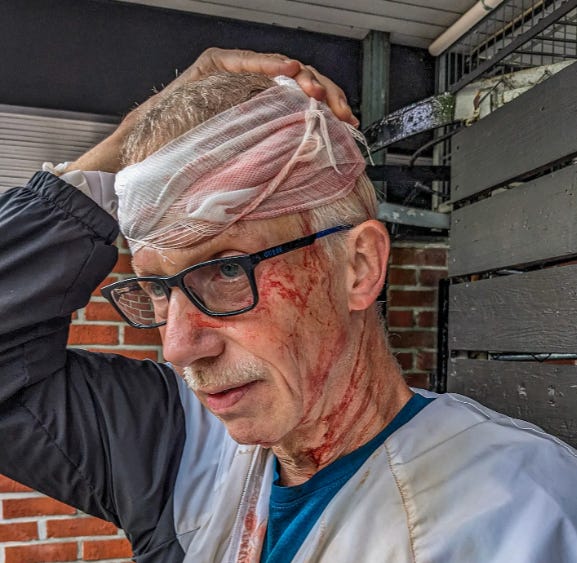
But he told Brent to watch me closely and gave me strict orders to rest my brain for four days. “No screens, no reading, and no writing, or you might make things worse,” he warned.
That left little for me to do other than go for walks. So the next day, after promising a worried Brent I would call immediately if I felt worse, I headed outside.
Ever since the accident, I’d felt disconnected — from the world, from Brent, even from myself. My head still ached, and I was hyper-aware of my footing and of how vulnerable I was.
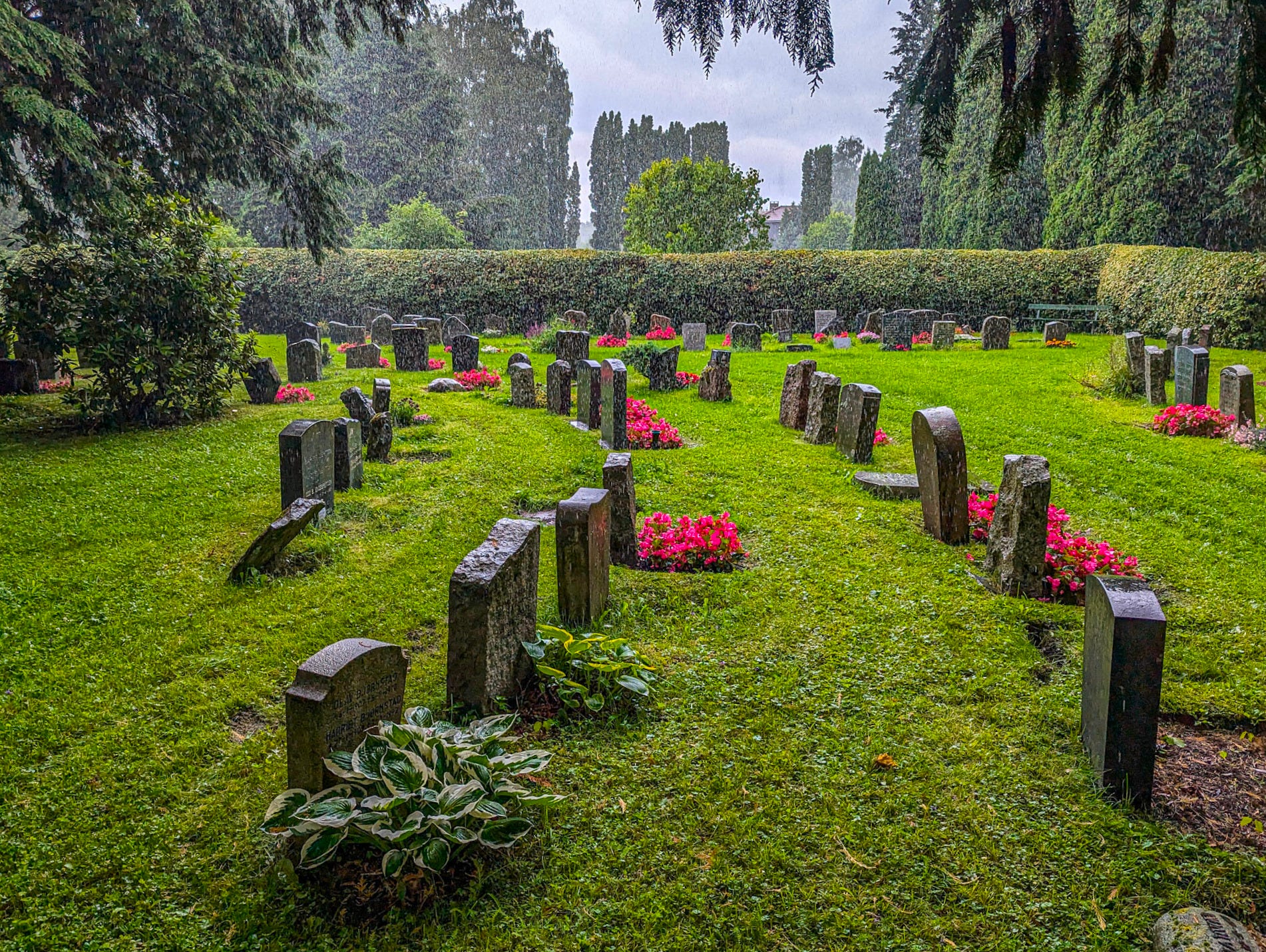
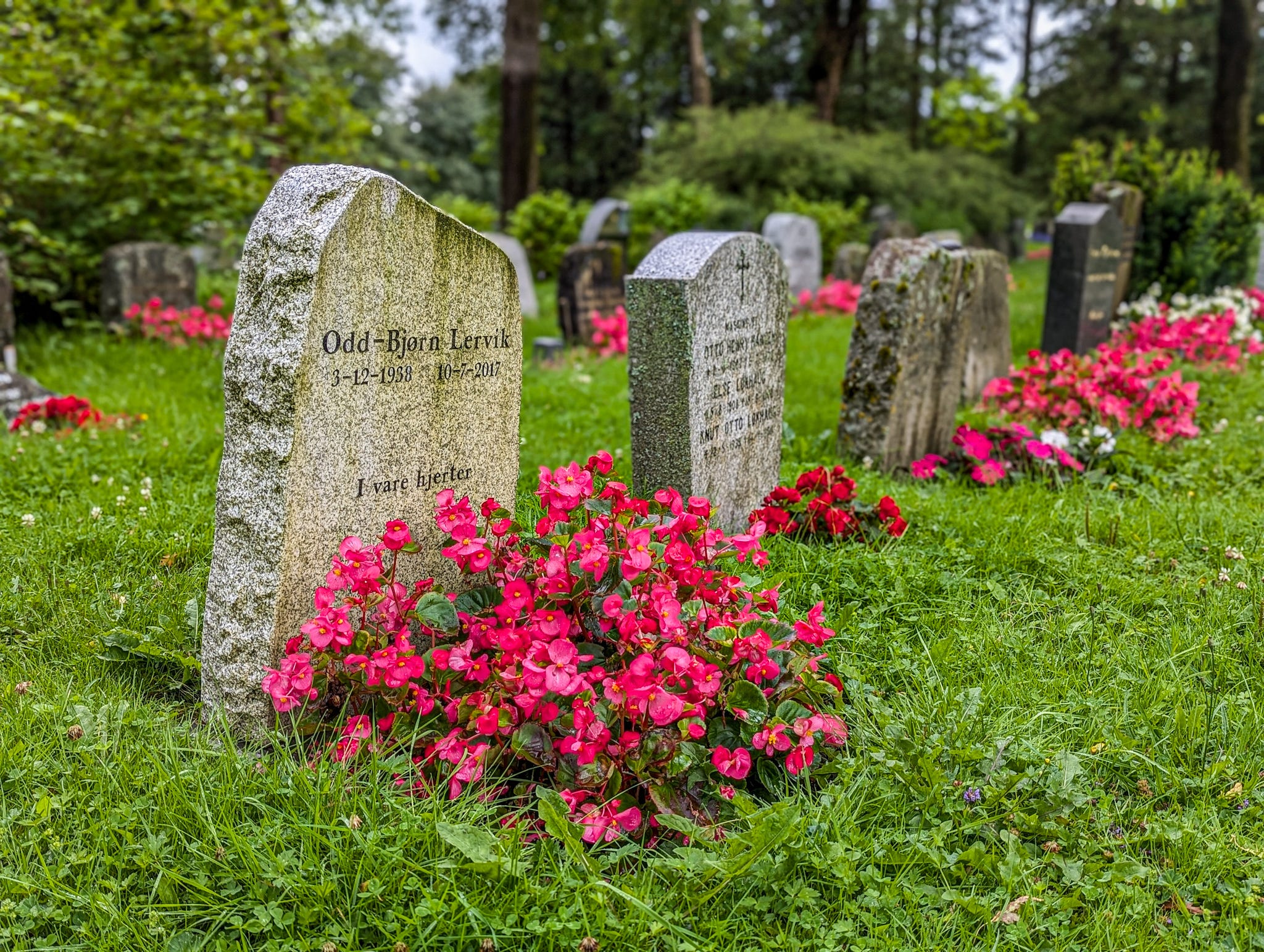
I soon came upon Gravlund Vestre, Norway’s largest cemetery.
The air was damp and cool, the sky a uniform gray. All the green felt soothing, and the cemetery’s quiet felt almost physical, as if it would wrap around and protect me if I stepped inside.
I entered.
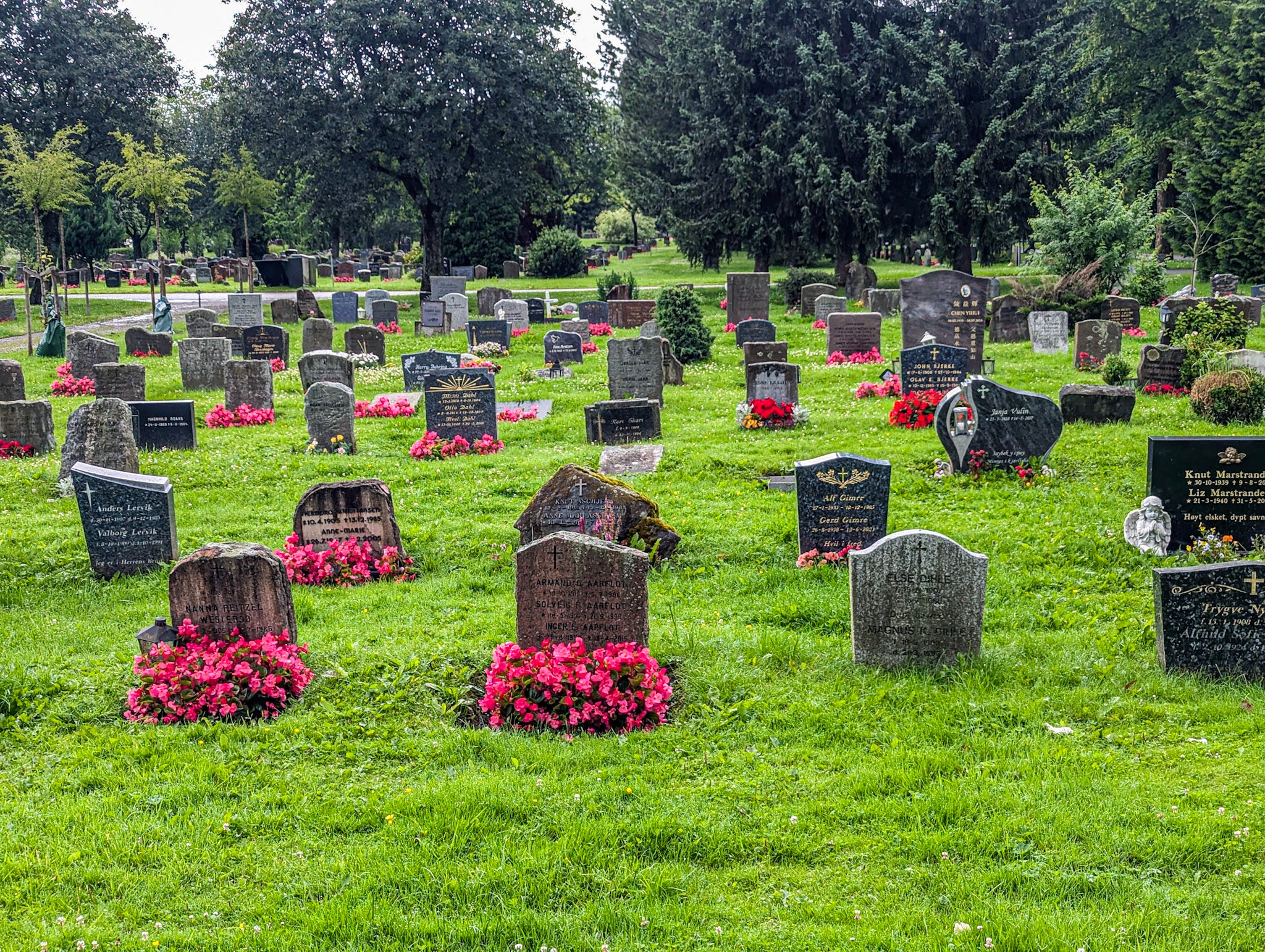
The graves stretched out in front of me, modest and uniform — simple headstones low to the ground. There was a kind of quiet discipline to it, a sense that no one was meant to stand too far above anyone else — a classic Norwegian idea.
At the same time, some of the headstones were askew and the rows curved just enough to be interesting.
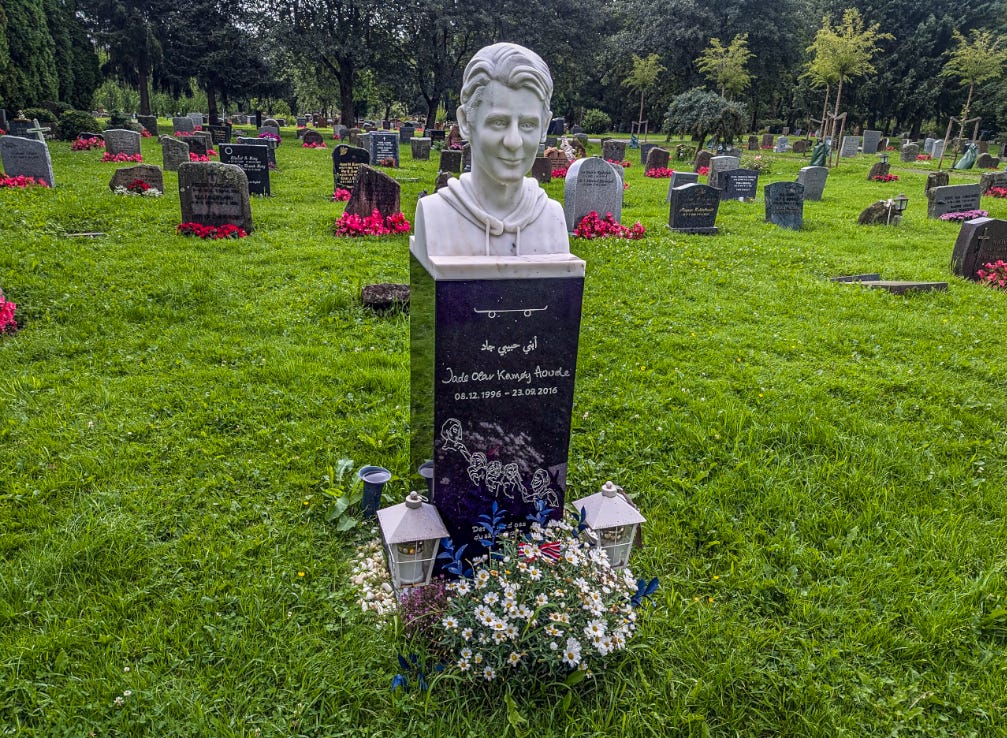
But one headstone seemed different from the rest: a white marble bust in a distant corner of the cemetery.
It stood out against the gray morning and green grass, set atop a black granite plinth. From fifty meters away, it seemed almost to glow. I assumed it marked someone notable — a writer, perhaps, or a musician — and I walked toward it.
Up close, I saw the name.
Jade Olav Kamøy Aoude.
Born December 1996.
Died September 2016.
A young man, only nineteen when he passed.
The bust showed a teenager in a hooded sweatshirt. His expression was soft, almost amused, as if he knew something you didn’t. Someone had planted daisies at the base, a Norwegian flag tucked in among them. Two white lanterns stood on either side.
A drop of rain clung to his cheek like a tear.
I stood in front of the grave, wondering about the story behind it. It was clearly designed to make sure the young man wasn’t forgotten, and it was obviously well-tended.
Movement nearby caught my eye. A man in his fifties headed my direction. He was the only other person in the cemetery.
He can’t be coming here, I thought. That would be too much of a coincidence.
But it seemed like he was.
I stepped away, down the row, just in case.
He nodded as he passed me, then stopped in front of the marble bust — the grave of the boy named Jade. He reached out to brush a leaf from the plinth.
Should I leave? I didn’t want to intrude. But I also wanted to say something to acknowledge what had happened to someone he cared about.
“I couldn’t help but notice the headstone,” I spoke at last. “It’s lovely.”
“Thank you,” he said. “This is my son.”
“I’m so sorry.”
He nodded graciously, but a bit like he’d heard the words a thousand times.
Then he stood there, just looking. He clearly belonged here, was rooted to this place in a way both terrible and beautiful.
I should leave. I turned and walked away.
But after twenty meters, I stopped.
It wasn’t his son’s birthday, and it wasn’t the anniversary of his death. The man was just there to spend time with him.
What if this were Brent’s grave? If a stranger had been standing beside me, would I want them to quietly disappear, or would I want to tell them about Brent?
After hemming and hawing a bit, I finally turned back.
“Excuse me,” I said. “I don’t mean to interrupt — but if you’d like to tell me about your son, I’d love to listen.”
He looked at me for a moment, then nodded. “I would like that very much.”
We introduced ourselves — the man’s name was Saleh. We shook hands.
“Your son looks like he was very kind,” I said.
“He was,” Saleh replied. “A good son. My wife and I were very blessed.” He looked at the bust. “I come here to talk with him.”
He said it simply, without emphasis. Just a fact about his life now.
I wondered how Jade had died. As if reading my mind, Saleh said, “He was at university in Sweden. Riding his bike. A car hit him.” He paused. “One minute he was here, and then in a split second, he was gone.”
My mind flashed back to the pool where I’d hit my head. If things had happened a little differently, I could have been gone in a split second too. I remembered how scared I’d been afterward, and how strange I’d felt ever since.
Saleh pointed to an engraving near the top of the plinth. A small skateboard.
“He loved skateboarding,” he said.
Below that, four figures reached upward, as if trying to reach Jade.
“That is his mother and sisters,” Saleh explained. “It says, ‘It is with us that you should have been.’”
We stood quietly for a moment.
I asked about the line of Arabic script above Jade’s name.
“It says, ‘My beloved son Jade,’” Saleh said. “I am from Syria and wanted him to feel connected to his Syrian heritage.”
“Do you like Norway?” I asked.
“Norway is a very good country,” he said. “People have been kind. Now I feel that I am both Syrian and Norwegian and have deep roots here.” He glanced around at the surrounding graves. “But we wanted something more for him.” He gestured to the sculpture. “We asked permission. They allowed it.”
I thought about what that meant: building a life in a new country, raising a son, but then losing him so young. How some hurts probably never heal.
“You must miss him terribly.”
“I do. I come here to tell him what is happening. What his sisters are doing. And I think about what he might be doing now if not for that accident. He’d be twenty-seven. He’d have his degree in cognitive science, maybe he’d have his PhD. Perhaps he’d be married. Coming here keeps him close to me.”
We talked a bit about what Brent and I were doing in Oslo, and what I thought of Norway. But the man had come to see his son, and I’d taken enough of his time.
“Thank you for talking with me,” I said.
“Thank you,” he said. “It’s good to speak of Jade.”
We shook hands, and I left him there with his son.
I walked slowly back past the rows of modest stones, under the same gray sky. My head still ached, and I was still all too aware of my own vulnerability.
But I no longer felt quite so disconnected.
I stepped out of the cemetery and home toward Brent.
Michael Jensen is a novelist and editor. For a newsletter with more of my photos, visit me at www.MichaelJensen.com.
Thank you for writing with such respect and compassion. A difficult decision: shall I speak to him or leave him alone at this private moment. I think the father loved to speak about his son.
I had a similar experience. My 60 year old brother died unexpectedly. The situation was very difficult for me. He had schizophrenia and these last months we were near each other like never before. But due to his illness, it was also difficult. I didn’t show enough understanding-in hindsight. My heart was very heavy and broken. Another woman came and stood at the same graveyard (a communal grave). After a while we began to speak. Turns out she mourned her brother who died the same age and was also schizophrenic. We had similar experiences and thoughts. It was so relieving for me to speak and someone would listen and understand.
I read this story with tears in my eyes. Life is so precious and fragile. I was born the same year as the son. I am often plagued by despair but at the end of the day, I am glad to be alive. Thank you for sharing this vignette.