
I Just Learned I Have a Rare Condition Where I Can't See Things in my Mind. It's Rocking My World.
My whole life I thought I was like everyone else. Nope.

Two months ago, a friend pointed at several baskets and said to Brent and me, “Study those. Then close your eyes and picture them with your mind’s eye.”
We both did.
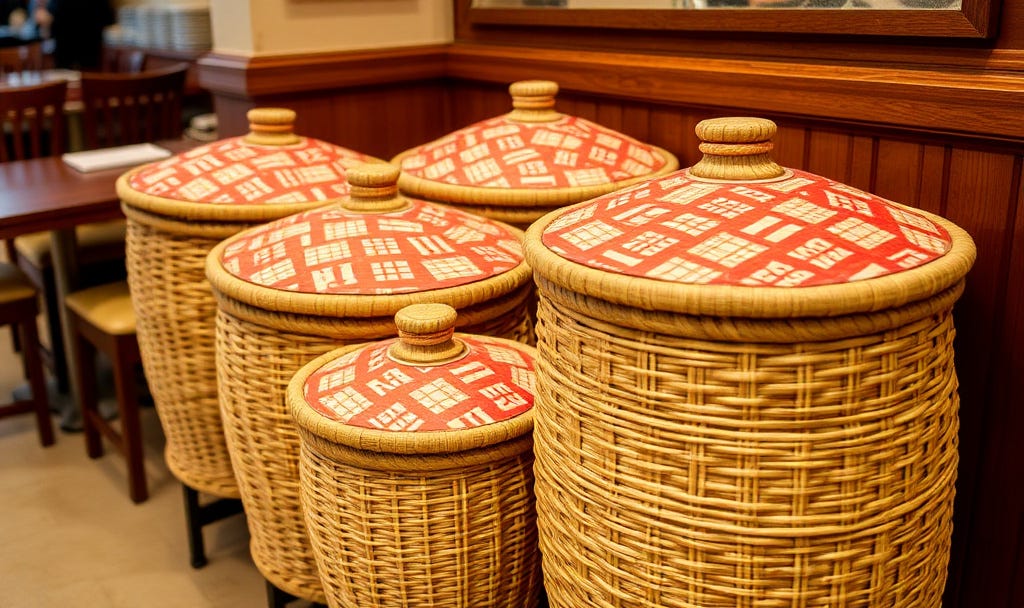
When we opened our eyes, he asked, “What did you see?”
“The baskets,” Brent said.
“Me too,” I replied.
“You literally saw them?” our friend asked.
Brent frowned. “Yes. Why wouldn’t I?”
Now I was confused. I hadn’t literally seen them — I hadn’t seen anything. When I’d “pictured” them, I’d described the baskets to myself in my head like I always do when I imagined something.
What I saw was blackness because — duh, my eyes were closed.
“Well, I can’t see them — not at all,” our friend told us. “I see only blackness. I recently learned I have a neurological condition called aphantasia.”
In that moment, I realized that he wasn’t just describing his experience — it was also mine.
Looking back, I wish that moment had never happened.
This discovery about myself has been extremely unsettling.
All my life, I always assumed everyone mentally experienced the world the way I did. I thought phrases like “take a walk down memory lane” and “picture this” were simply figures of speech.
They’re not: most people do visualize things in their “mind’s eye.” But somewhere between 1% and 4% of us are mentally blind.
As I’ve thought back over my life, a lot of things make more sense.
Years earlier, Brent had tried helping me deal with my insomnia using guided visualizations, a very common therapy technique.
“Picture yourself walking through a peaceful meadow,” he said. “Picture the grass and the birds and the sky.”
I tried, but I saw nothing — no meadow, no birds, and no sky.
Now I know why.
This state of being is only newly recognized by science.
In 2003, a British neurologist named Adam Zeman encountered a patient who, after having heart surgery, had lost his ability to visualize his grandchildren.
This phenomenon had been first recorded in 1880 by another scientist, Francis Galton, who was studying differences in people’s ability to visualize mental images. But after his initial discovery, he didn’t follow up — and no one else did either.
It wasn’t until 2015 that Zeman and his colleagues coined the term “aphantasia,” from the Greek phantasia (”imagination”) with the prefix a-, meaning “without.”
People also experience this condition on something of a spectrum.
There is a quick test to see where people fall. They’re asked to close their eyes and picture a shiny red apple.
Then they look at this chart.
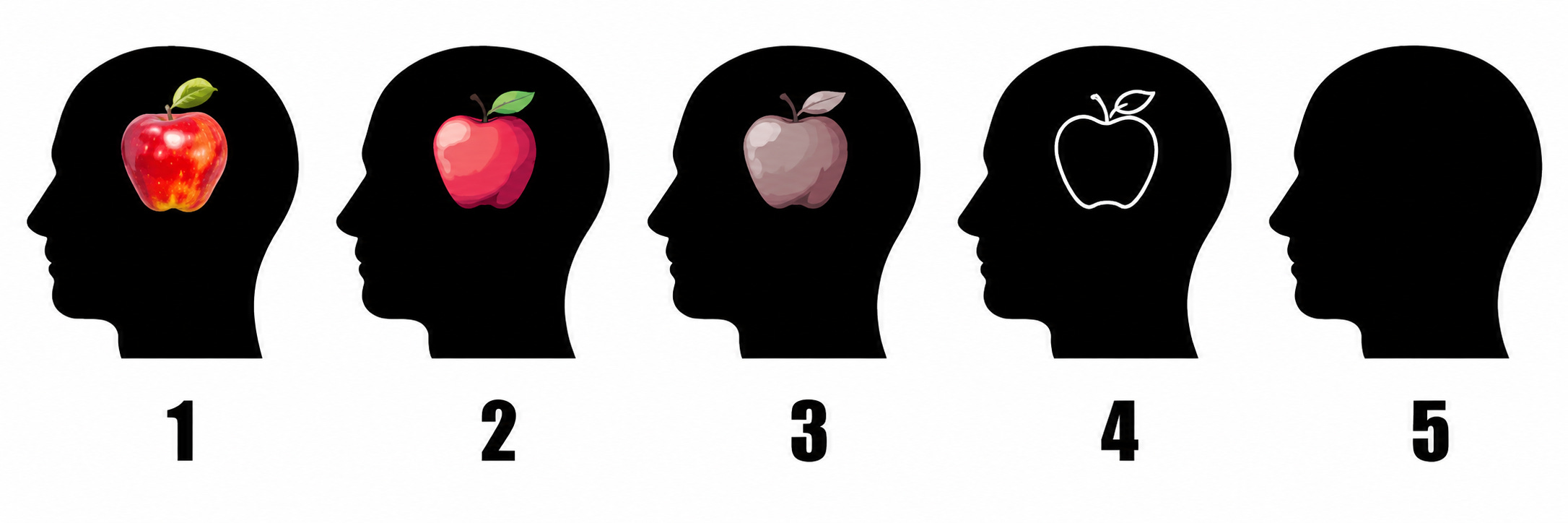
People who register on the far left of this chart can clearly visualize a bright red apple. In fact, some people see things so clearly in their mind that it can interfere with their daily functioning — a phenomenon called hyperphantasia.
Moving right, the image becomes progressively less vivid until, on the far right, people see nothing at all.
This group includes me.
So I lack imagination?
Visualizing an apple is only the beginning of what I can’t do. After learning I had aphantasia, I peppered Brent with questions.
“You can close your eyes and actually see someone’s face?”
“Uh, yes.”
“And you can revisit childhood memories? You can replay them like a movie”
“It’s not exactly like that, but, yes.”
For days, my questions were relentless.
I learned that, to varying degrees, Brent and most of our friends can mentally picture loved ones, visualize people and places from books, see their dreams, hear music in their heads, recall smells, tastes, and textures — and, of course, sexually fantasize.
Even now, I find that difficult to wrap my head around. For someone who experiences none of those things, it was almost like discovering that magic is real.
In private moments, I still place my hands over my eyes and try desperately to see that damned apple — or a frog, a sunset, anything.
I never do.
And knowing that I’m one of very few people like that has rocked my world. Now when I close my eyes in bed at night, it’s a very lonely experience.
But this realization really has explained many things.
My memory has always been poor — and aphantasia is likely part of the explanation. Many aphants report weaker autobiographical memories, and researchers think visual imagery plays an important role in how many people reconstruct memories of past experiences.
Last year, I even wrote an article about how I am a “dog” who doesn’t think much about the future or the past — and Brent is a “cat” who is obsessed with both.
I’ve also come to understand my recent passion for photography.
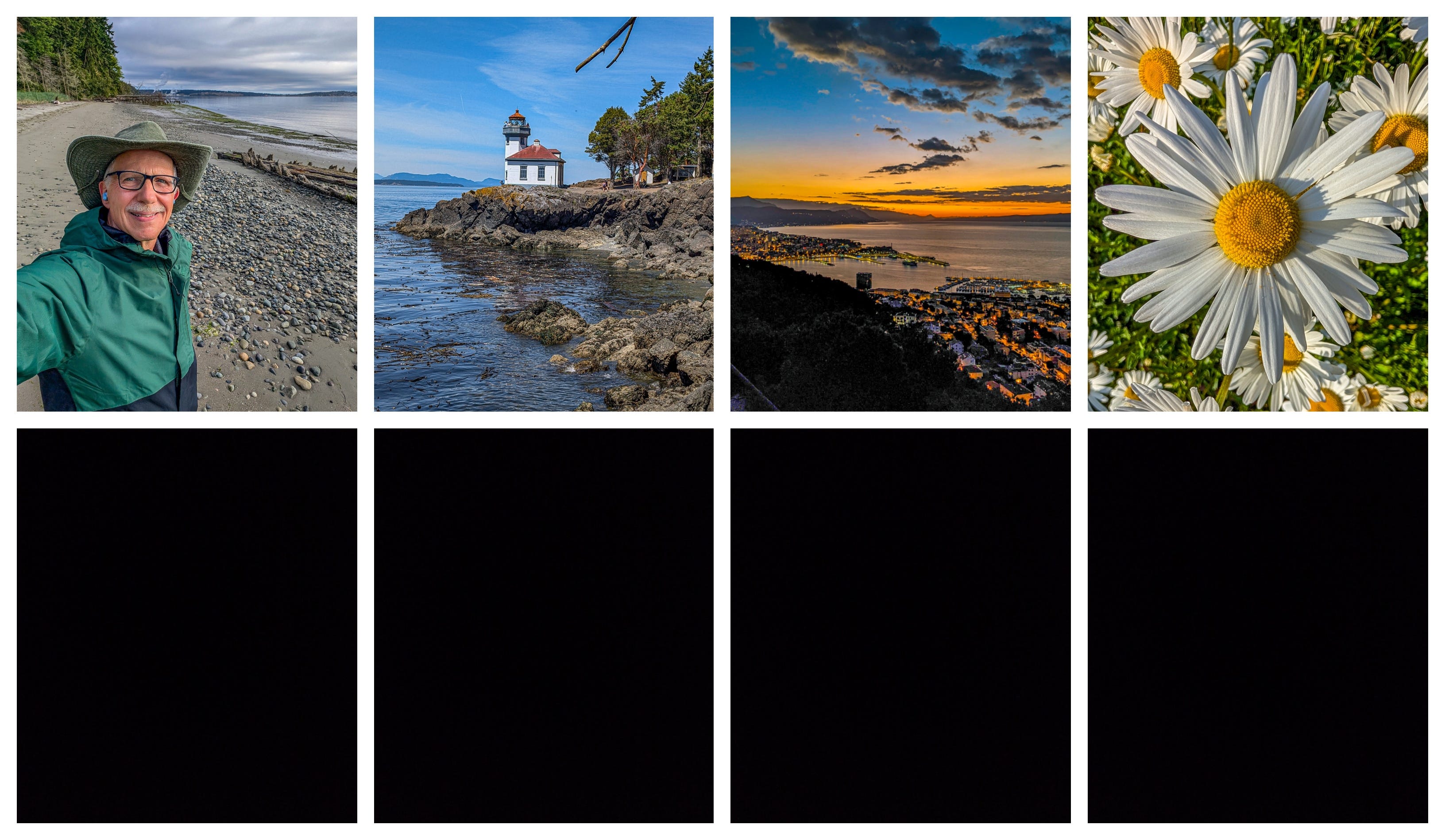
My photography has taken me on long walks through Istanbul, Bangkok, London, and countless other cities. It’s drawn me into the Thai countryside, the streets of Osaka at night, and the neighborhoods of San Miguel de Allende. It’s introduced me to remarkable people I never otherwise would have met.
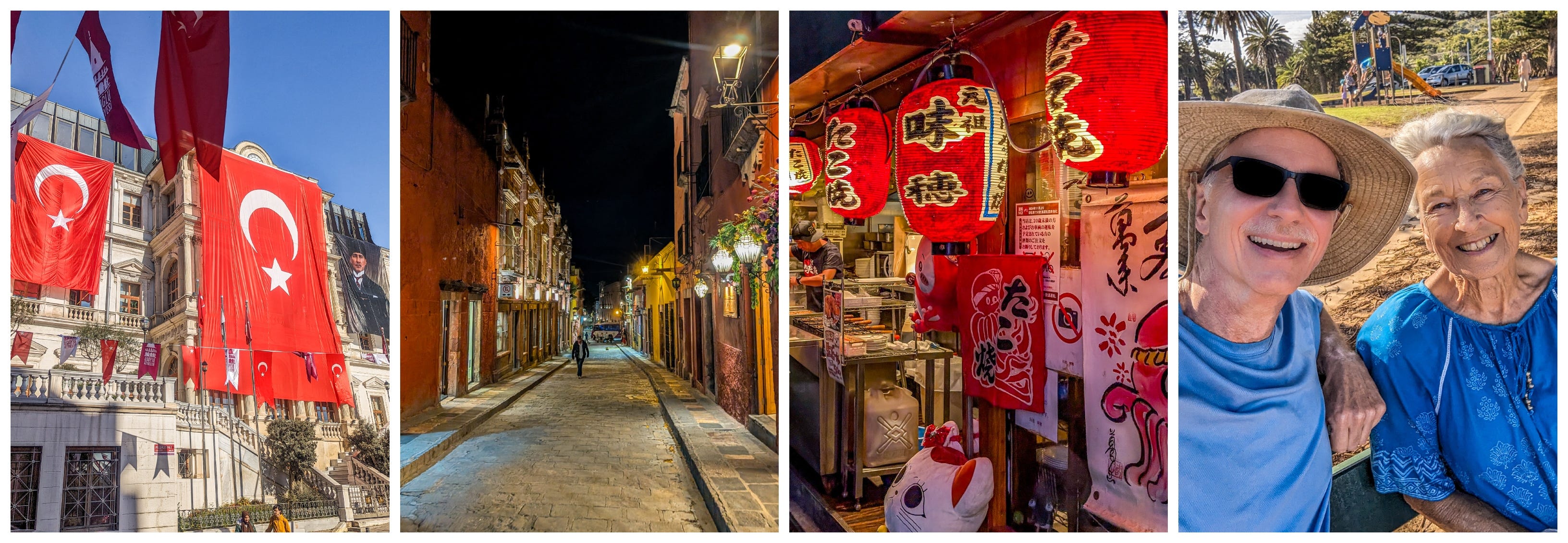
Photography has given me a ridiculous amount of pleasure.
Is my aphantasia part of the reason why? Did it become a kind of external memory?
My memories are often tied to specific photographs.
I know I visited Southern California as a child because I have a picture of me with my mom and brother on the beach.
But that’s almost all I remember about that trip.
I had a mentor as a teenager, Phil, and I only know what he looked like now because I have a picture of him standing in the backyard.
Unfortunately, I don’t have photos of everything. Much of my past is lost to me.
But because I began photographing everything when Brent and I became nomads ten years ago, my memories from that period are much more accessible.
I can remember a wonderful dinner with friends in Matera because I took a picture of a yellow wine jug — and looking at that photograph unlocks more memories from that evening.
When I think about our three months in Hoi An, Vietnam, many of the memories come through photographs: the water buffalo in the rice paddy, the old couple riding a bicycle along a street, the chaos of the outdoor market.

In a very real way, those photographs do what my brain cannot: they help build my memories.
I’m incredibly grateful to have them because it terrifies me how much of my life wouldn’t be accessible to me without them.
Is aphantasia a disability or a disorder?
Some aphants argue this condition isn’t a disability or a disorder — that it’s just another way of experiencing the world. Journalist Matthew Yglesias, who has it, says it doesn’t bother him.
Maybe my opinion will evolve, but right now, I think aphantasia is a kind of disability.
I recently wrote an article about how I don’t seem to make those long-term attachments that Brent does, and now I wonder if this is why.
What else am I missing out on?
Aphantasia hasn’t ruined my life, and I’m generally a happy person. There are even some benefits to the condition. Aphants can be less prone to anxiety, aren’t as haunted by past traumatic events, and can be better analytical thinkers.
But what will happen if Brent dies before me? I won’t be able to picture his face — just like I can’t “see” the rest of my past.
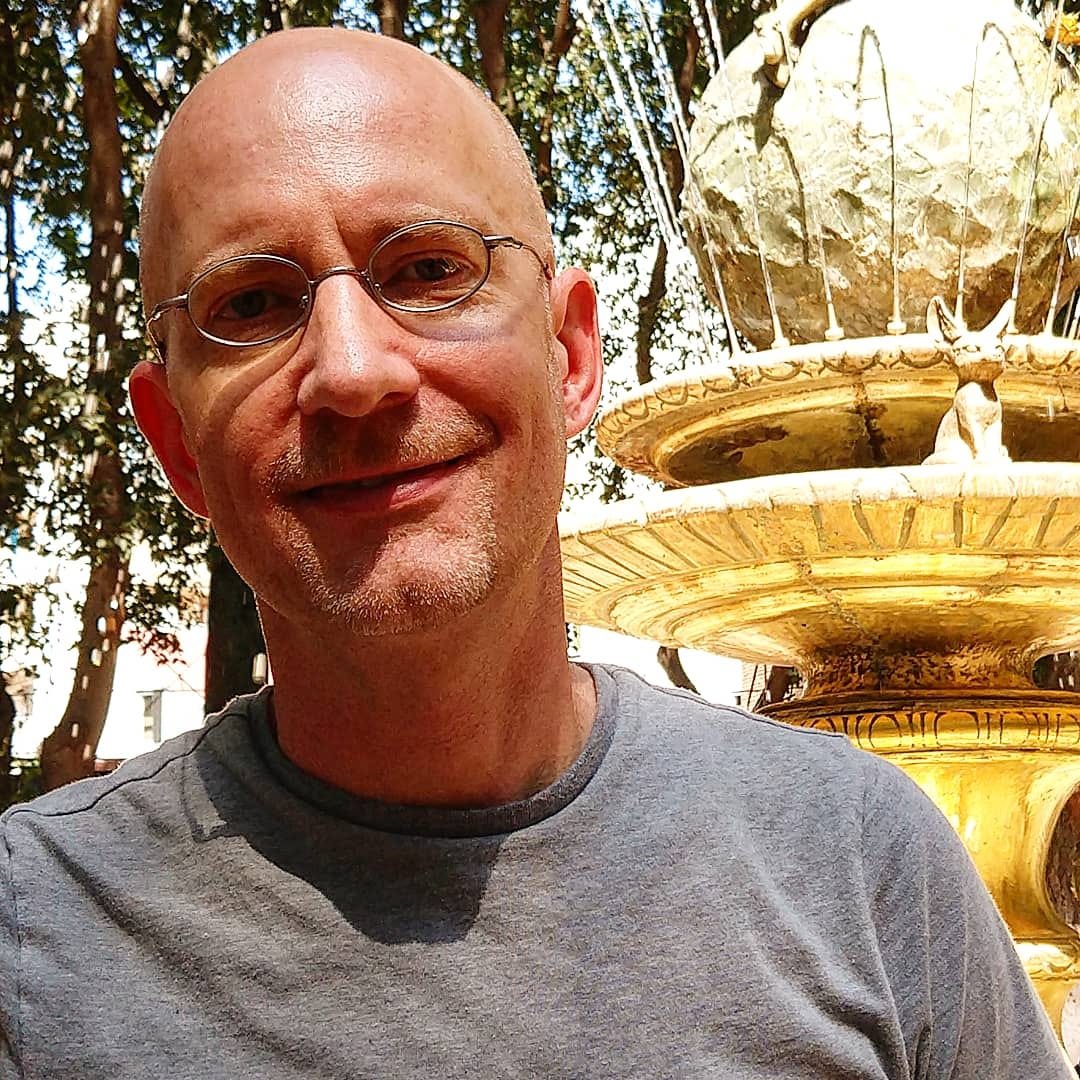
Is it a disability?
I don’t know, but I really do wish I had never learned this about myself.
Michael Jensen is a novelist and editor. For a newsletter with more of my photos, visit me at www.MichaelJensen.com.
Gosh I think I might have this too. Do you have vivid dreams in color? I don’t. So interesting. Thanks. Explains a lot.
Yes I have this too. I’ve known for a while now. It’s like the images are in another room and I’m describing them to myself. They are in there somewhere. I dream in color, very vivid. But images while waking are rare. When they do happen they are quite jarring.
It’s ok you’re not broken. You’re just different. There’s lots of people like us. And the people that aren’t like us are all different. They are not like us in different ways.
It’s fun to ask people about it. Some people have never thought about it at all. Others know right away. Some people have full color 3d rotations. Others have more 2d imagery in there. Ask your friends. It’s interesting.
Mine came with auditory processing superpowers like echolalia. You don’t just have a thing missing. You’ve got other stuff instead. You’re special! Explore what that means. I bet it’s something to do with words and sounds. You have a special brain with unique abilities. Find out what they are and enjoy them. You have a gift.