
Cambodia is an Amazing Country. And Tourism is Way Down, So It's a Terrific Time to Go.
And yes, despite recent military clashes with Thailand, it's still very safe.


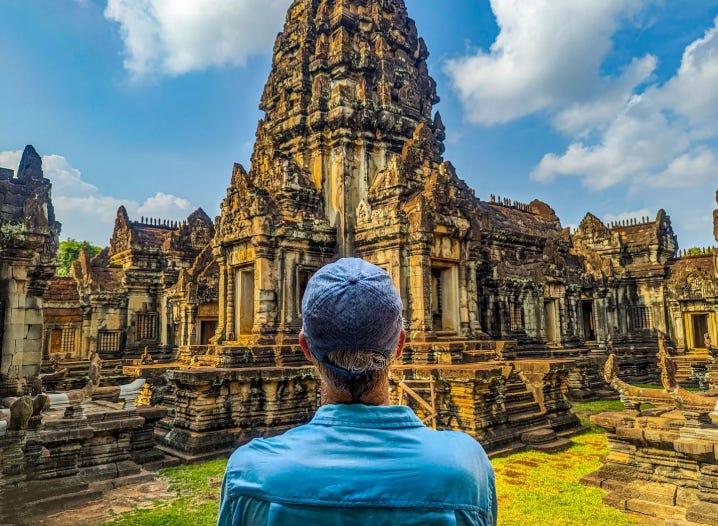
If Angkor Wat — Cambodia’s fantastic ancient temple complex — were in Europe, it would be one of the most famous, most celebrated places in the world.
That’s what we thought in 2023 when we visited Siem Reap, the city closest to the ruins.
Our visit exceeded our expectations in every way. We loved everything about the area: not just the ruins, but also the terrific food, the beautiful scenery, and the friendly people.
But Cambodia is not a rich country, with millions near or in poverty. The economy depends heavily on foreign tourism.
“Tourism is the main industry here in Siem Reap,” says Sophea Ting, the officially registered guide and expert we hired before visiting Angkor Wat. “We can’t afford to lose tourism here — tens of thousands would have no jobs.”
Unfortunately, Cambodia is currently seeing a massive drop in visitors: down 44% from last year at this time. Ticket sales to the Angkor Wat temple complex are down 32%.
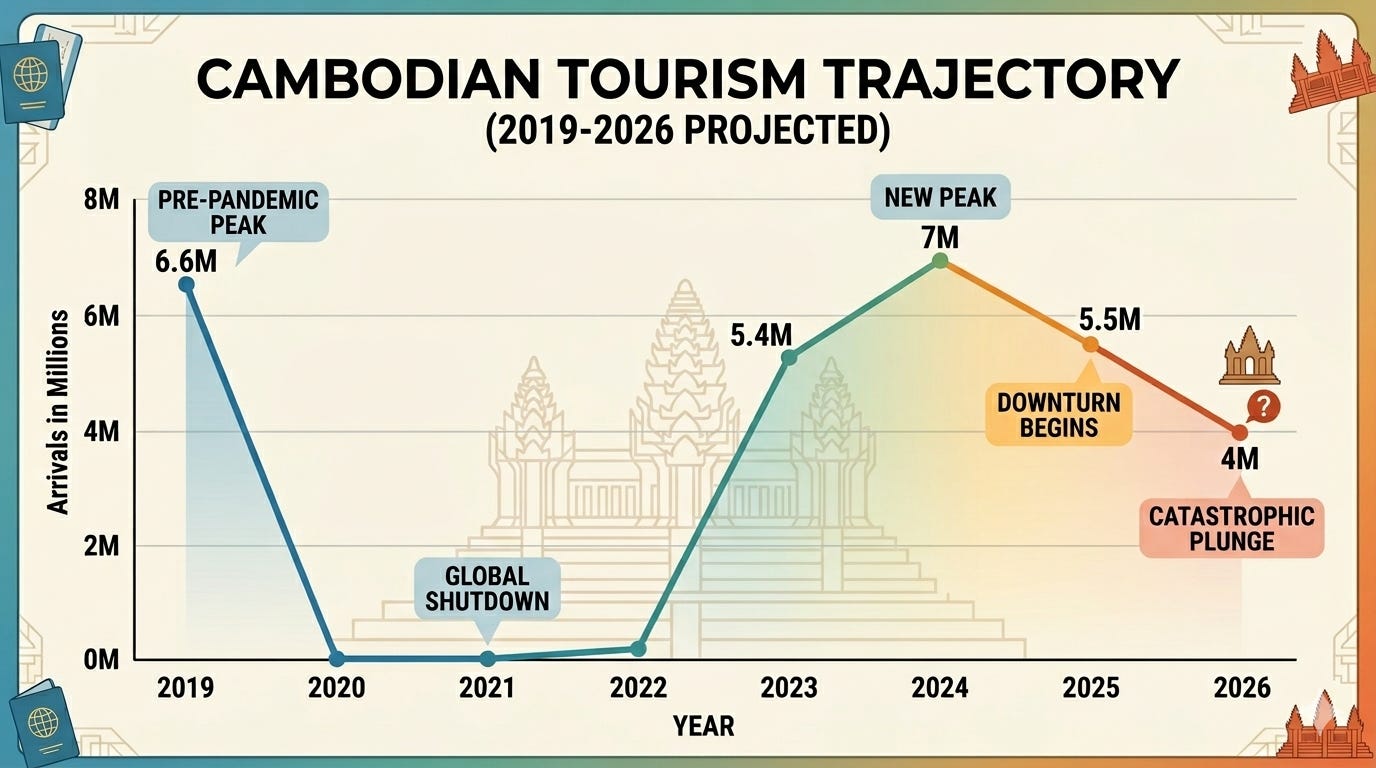
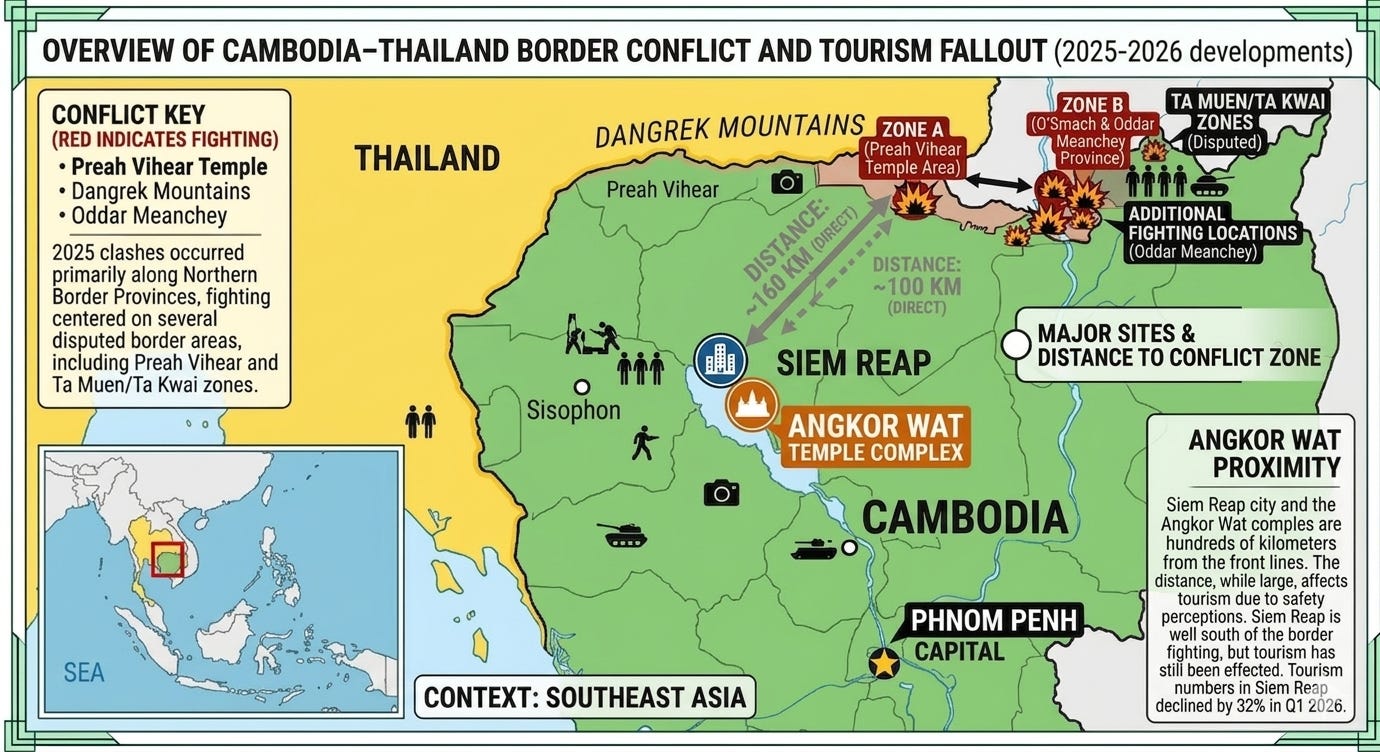
The drop is mostly due to the ongoing border conflict with neighboring Thailand, which last year led to a series of military skirmishes.
A rise in airfares due to the Iranian War is also discouraging visitors.
Finally, Cambodia has acquired a very bad reputation in Vietnam and China, which have accounted for 37% of its foreign visitors. International syndicates have trafficked some residents of these countries, forcing them to work in cyber-scam compounds in Cambodia. Both Vietnam and China are now discouraging citizens from visiting.
All that said, for Western tourists, most of the country is still very safe. Tensions with Thailand remain, and the land border is still closed, but there has now been a cease-fire for five months.
The U.S. State Department currently rates travel to most of Cambodia as Level 2 on a four-point scale, meaning: “Exercise increased caution.”
(But please note that anything within 50 kilometers of the Thailand border is rated Level 4: “Do not travel.” Many travel insurance companies void coverage on travel to such areas, and this could even apply to travel anywhere in Cambodia, depending on your policy.)
“Our government is doing everything it can to make sure tourists can wander around safely,” says Ting, pointing out that daily life in Siem Reap continued normally before, during, and after the conflict. “My kids still go to their classes, and my wife teaches in the public school. Hotels and restaurants are open. Tourists who were on tours with me had no problem — they just enjoyed the temples and flew home safely.”
Besides, he says, “The border is around 150 miles from the temples. This is not a war to invade lands and target civilians. It is a conflict over our 800-kilometer-long border.”
“Thailand has nothing to gain by bombing Siem Reap,” says travel writer James Clark, who specializes in Southeast Asia. “Indeed, doing so would be hugely controversial.”
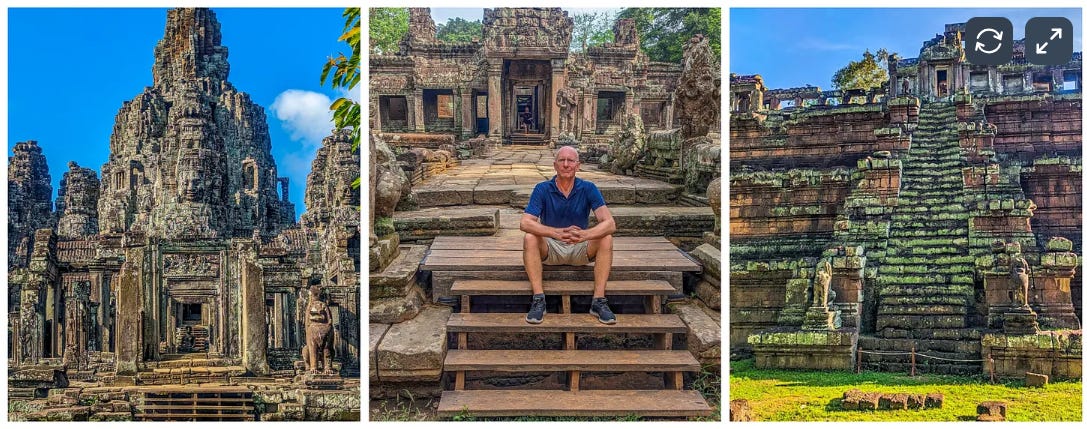
Angkor Wat is technically just one main temple complex, although many people also use the name to refer to the entire Angkor Wat Archaeological Park — the site of the former city of Angkor and home to dozens of other ruined temples. They were built by the Khmer Empire, which flourished from the 9th to the 15th centuries AD.
The area is also a UNESCO World Heritage Site, Clark says, and damaging it would result in worldwide condemnation.
Such an attack would also seriously damage Thailand's tourism, which is already down, though not nearly as sharply as in Cambodia.
There’s another reason why Thailand will almost certainly never target Angkor Wat or Siem Reap: antiquities.
“Thailand was, for decades — and some would say still is — the primary international clearinghouse for relics looted from Cambodia,” says Stuart McDonald of the Travelfish travel newsletter, which also covers Southeast Asia.
His advice to potential travelers? “Don’t worry.”
Meanwhile, recent visitors report no problems whatsoever.
“I never felt unsafe,” says Marcus Benecke, who just returned from the country. “The people were amazingly friendly and genuine, the food is incredible, and for us, everything seemed to be really cheap and affordable.”
“Overall, we felt safe and sad for the major hit on the economy there,” says Kathy Ray, who visited just weeks after the December cease-fire was announced. “Our registered guide at Angkor Wat said he was lucky to still have his job, since so many had to be let go due to the lack of visitors.”
“It seemed very safe,” agrees Heather Hamel-Velascor, who also visited this year. “Smaller crowds make the sites very accessible, so it could be a great time to go.”
In 2023, even after spending years in other Southeast Asian countries, we were shocked by how affordable Cambodia is.
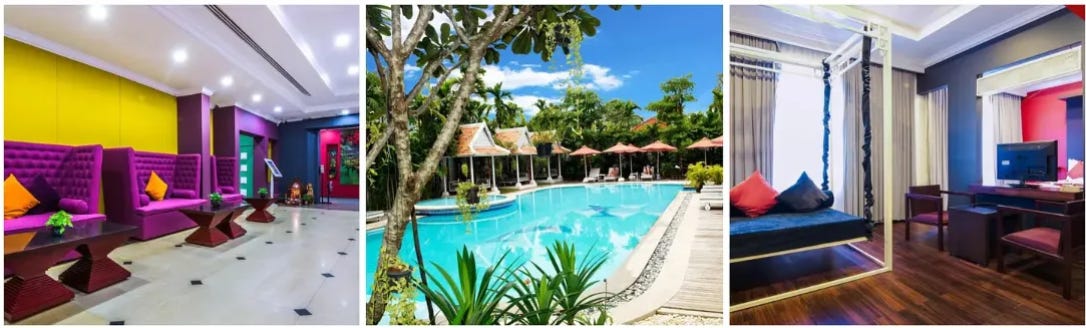
When we visited, we stayed in a full suite in a lovely hotel with possibly the best breakfast buffet we’ve ever had — all for $42 USD per night, including tax.
As of June 1, 2026, rooms at the same hotel are available for as little as $28.
We hired our guide, Sophea Ting, for three days. This included a driver and an air-conditioned van, for a total cost of $370 (and this included some more expensive backcountry exploration).
I also spent one day touring and photographing the Angkor Wat Temple Complex on my own. For that, the going rate for a tuk-tuk driver was $25 for the entire day.
(We generously tipped all our guides!)
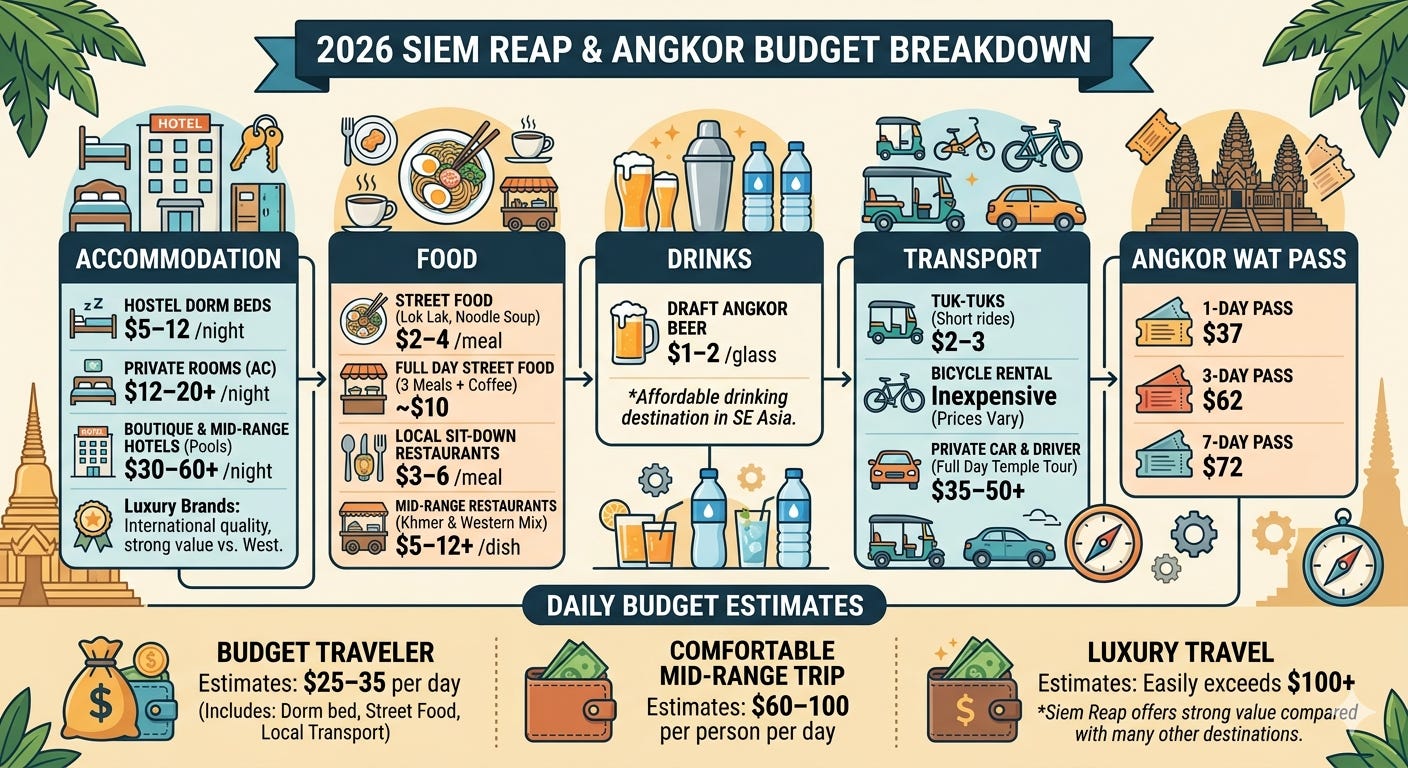
Here’s a breakdown of costs for budget, mid-range, and luxury travel in Cambodia:
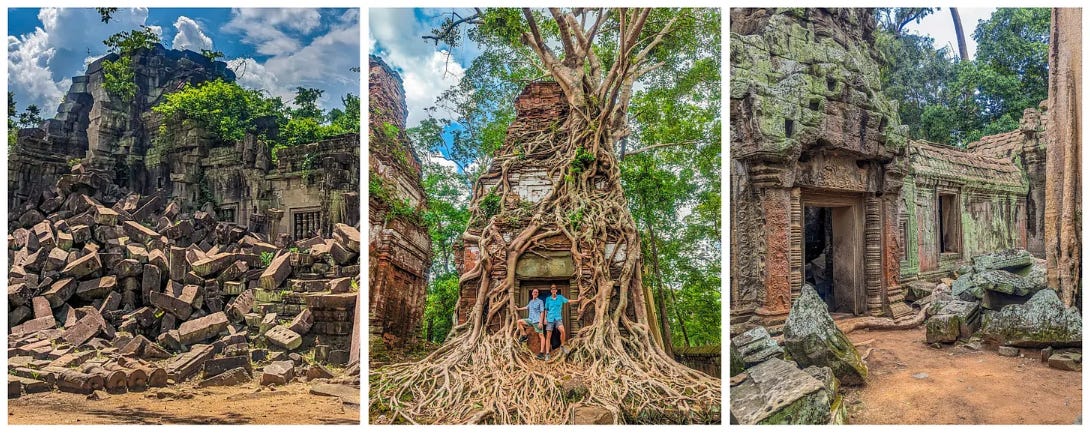
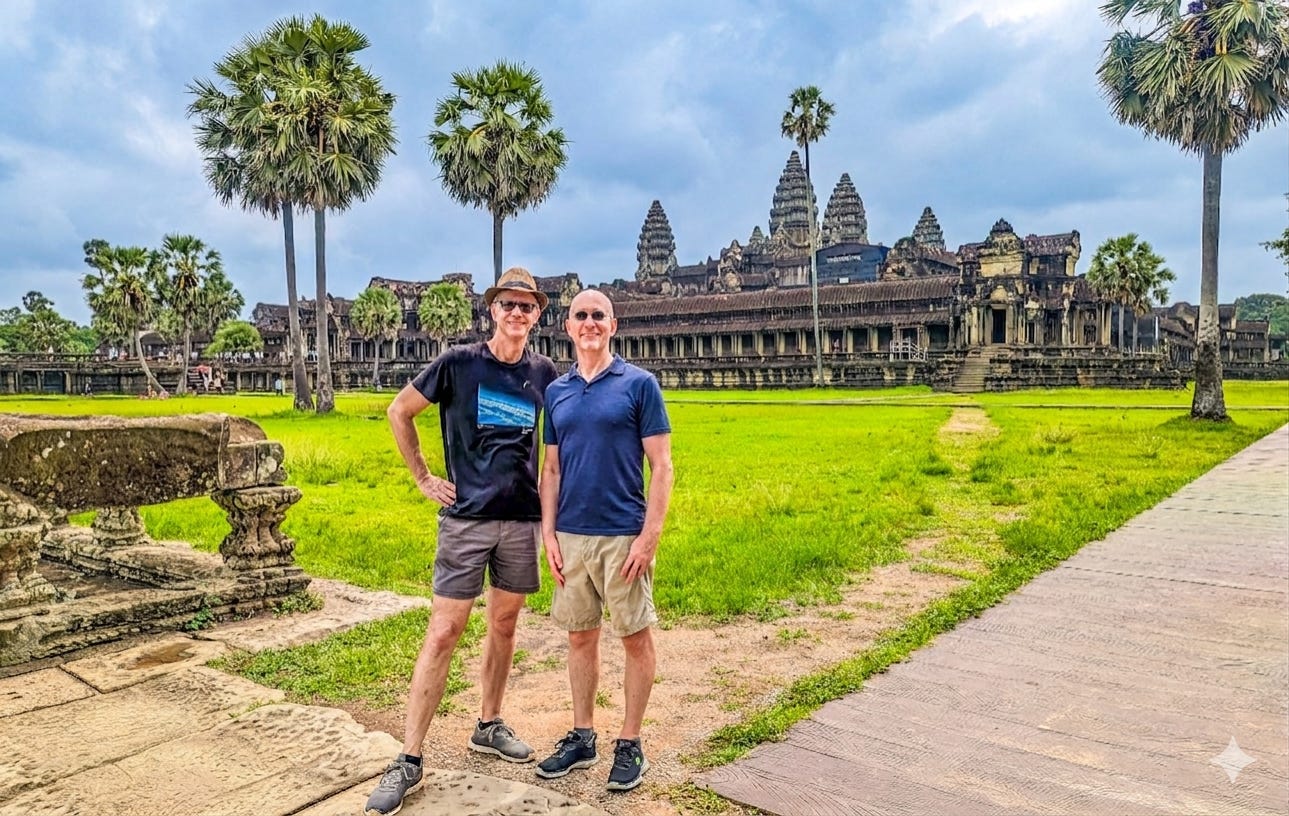
The greater Angkor Wat Archaeological Park is an astounding 400 square kilometers in size, and during our visit, we made a point of visiting many of the more remote temples, which required a fair bit of driving — and were often buried deep in dense jungle.
And in the end, while we were impressed by the famous main temple, we loved these other temples even more.
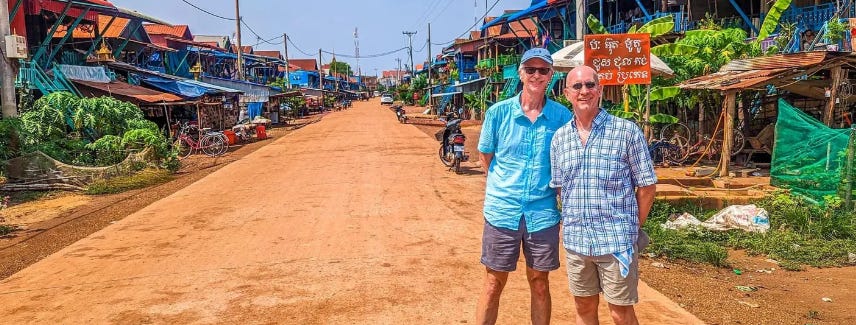
Since we were in the area, we also visited Tonlé Sap, Cambodia’s vast central lake, and the “floating village” of Kampong Phluk.
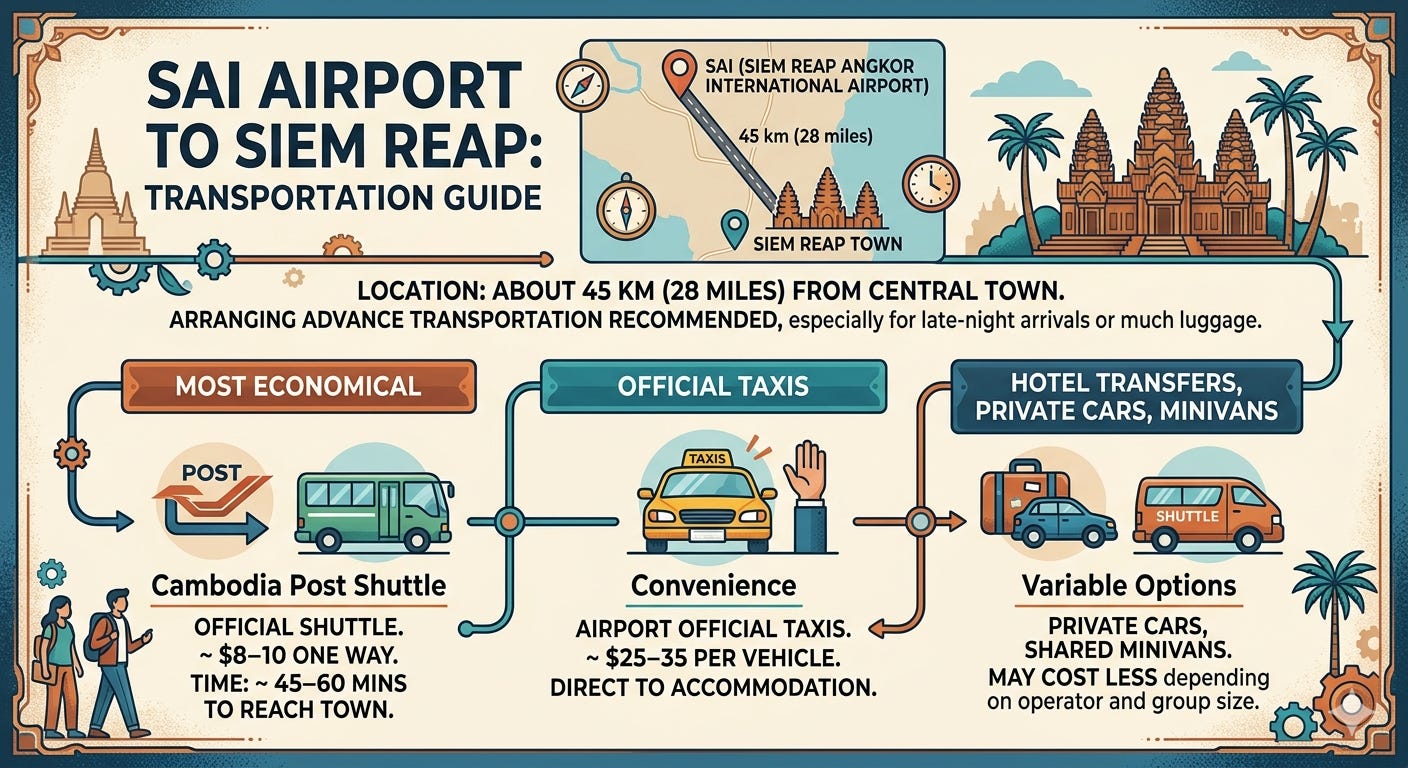
Shortly after our visit to Siem Reap in 2023, Cambodia opened a new international airport. Unfortunately, it’s much farther out of town — up to an hour depending on traffic.
You used to be able to take a simple tuk-tuk into town, but that’s no longer a good option. Whichever transport option you choose, it’s best to research it — and perhaps book it — before arrival:
We never made it to Cambodia’s largest city, Phnom Penh, or the coastal area with its offshore islands, but we’ve heard good things about both areas, and definitely plan to visit them eventually.
(Phnom Penh, unlike Siem Reap, has a reputation for petty crime.)
Keep in mind that most Western travelers enter Cambodia by air, but the land borders between Thailand and Cambodia remain closed.
Meanwhile, check out visa requirements here.
We think that this is currently a fantastic time to visit Cambodia. With one visit, you can accomplish two important goals:
You can see some of the most amazing places and sites the two of us have ever visited.
And you can help a group of lovely people who could really use the business.
We highly recommend our local guide, Sophea, who can be reached via WhatsApp at +855 12 501 377. His rates start at $50 a day, but he also offers more extensive packages.
Michael Jensen is a novelist and editor. For a newsletter with more of my photos, visit me at www.MichaelJensen.com.
Brent Hartinger is a screenwriter and author. Check out my new newsletter about my books and movies at www.BrentHartinger.com. And order my latest book below.

Cambodia is indeed an amazing place to visit. I also visited the Angkor Wat complex back in 2023 and was in awe of it. It's a shame that tourism is down there so sharply this year. I was in Phnom Penh for a few weeks back in February and loved it, my second time there. For anyone who is on the fence about going to Cambodia, you really should go. It's safe and affordable, the people are truly friendly and welcoming, and the new airports in both Phnom Penh and Siem Reap are beautiful and a testament to how this country is developing. Plus, you will be helping out the local economy and the wonderful people. Bonus: if you're from the US, there's no money conversion issues...they use the US dollar.
I was in Cambodia this past March for 10 days. I highly recommend it and agree with the post and Adrian’s comment above. The people are warm, friendly and resilient. Angkor Wat was very crowded as is the norm now but most other places were not. I also spent 3 days in Battambang. The city itself is okay but the surrounding area/countryside is worth seeing. Amazing local bike tours via Soksabike that take you into local homes making traditional products. Stayed in a lovely small family run hotel, Muni Residences, in a quiet neighborhood 8 min walk from downtown. They pamper and bring you homemade treats. Their guide Soon took us on a full day private tuk tuk of the surrounding area for less than get your guide. Besides seeing the sites, it was a treat spending the day with a local who shared life in Cambodia with us.