
U.S. Foreign Policy is Becoming a Huge Problem For Travelers — Especially Americans
Things are heating up fast.

A little over a year ago — three weeks into the second administration of Donald Trump — we asked a simple question:
Is travel going to become more difficult in the age of Trump?
Trump was embarking on an extremely aggressive and belligerent foreign policy: launching trade wars even with close allies, and also openly threatening the sovereignty of allies like Greenland and Denmark, Canada, and Panama.
We predicted that, as a result, travel might become more difficult, especially for Americans who could encounter a colder reception abroad.
But that didn’t really happen — not to us or any of our traveling friends.
That was then, this is now.
On February 22, the Mexican government captured drug cartel leader El Mencho. His arrest and subsequent death unleashed a wave of cartel violence across parts of Mexico, most notably in Puerto Vallarta, Guadalajara, and Cancun.
Brent and I have spent more than a year and a half living in Mexico, and we’re well aware of how cartel violence shadows much travel in that country. But at the same time, the cartels have long made a point to generally steer clear of tourist centers — in part, because they sometimes invest in and make money from those areas.
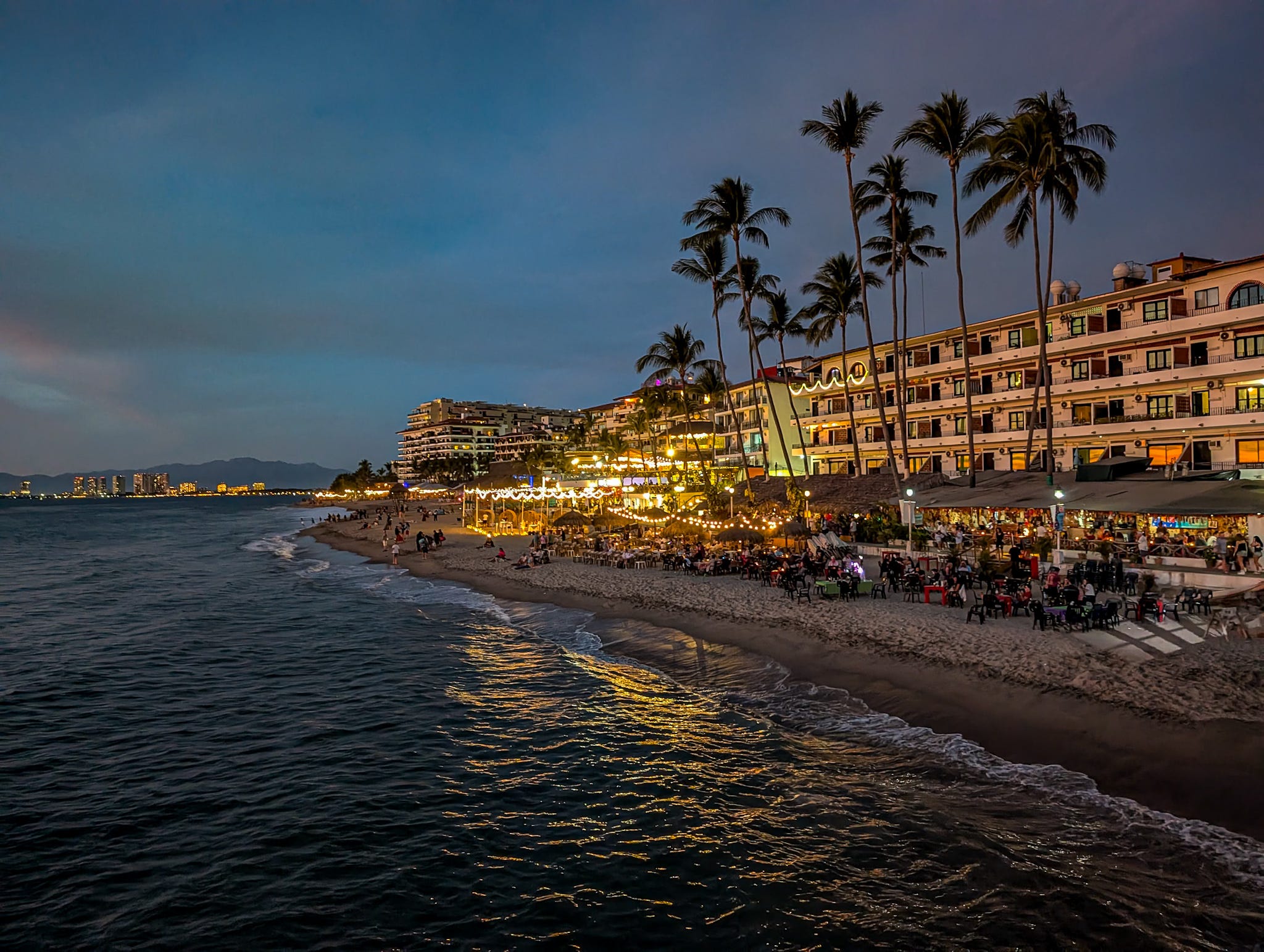
This wave of violence was very different: it happened in major tourist centers, directly ensnaring tourists. In Puerto Vallarta, people were forced from cars and buses, which were then set on fire. Businesses were also set on fire as terrified tourists looked on.
No tourists were killed, but in various cities, flights were canceled and airports closed, stranding thousands for days. Other tourists were instructed to “shelter in place” until the Mexican government reestablished control.
“The hotel staff kept telling us we were safe,” says our friend Ellen Zwalsky, who happened to be staying in Cancun at the time. “But we canceled an excursion, and on day two, I noticed a lot of the staff were missing, probably staying close to home. A van took us to the airport, and I saw police and military on the route to the airport.”
While it was the Mexican government that killed El Mencho, the operation reportedly came after sustained pressure and intelligence support from the Trump administration.
It’s too soon to know how this will impact Mexico, but in the days after the attacks, 20% of hotel reservations were canceled in the state of Quintana Roo, where Cancun is located.
“Will I return?” our friend Ellen says. “Probably not.”
Less than a week after those events, the U.S. and Israel attacked Iran.
Some 23,000 flights were soon canceled in Dubai, Qatar, Egypt, Kuwait, and Israel, and flights to Europe and Asia that normally flew through or near Iranian airspace were disrupted.
Meanwhile, tens of thousands of travelers were left stranded in what had suddenly become war zones. Airfares for the few flights getting out of the Middle East skyrocketed to thousands of dollars.
Compounding the problem, Americans were only told to evacuate after the war had started and airports were closed, and initially, the U.S. State Department said it would be offering no assistance — something that resulted in a furious blowback.

John Pine, another friend, was in Dubai with his wife when the war broke out, but they quickly changed their plans and headed by car to nearby Oman and then caught a flight to Turkey.
“Dubai felt very safe, but we wanted to keep options as open as possible,” he tells us. He admits to being very nervous yesterday, boarding the flight from Oman to Turkey, worried they might not get out.
Before the conflict with Iran, the U.S. had already bombed six other countries, including Venezuela — a presidential record in the first year — and Trump is now openly boasting Cuba will be next.
And thanks to the war with Iran, oil prices recently hit $120 a barrel and could go higher. This has caused the price of jet fuel to rise 50%, with further hikes almost certain.
Life is obviously much worse for the victims of the world’s various wars and military operations than it is for most tourists or travelers.
That said, whether you approve of U.S. actions in either Mexico, Iran, or elsewhere, these actions are obviously making travel more difficult.
We’re barely into the second year of Trump’s second administration, with almost three years left to go.
And more chaos seems almost inevitable — maybe a lot more.
The war in Ukraine shows no signs of letting up — largely because Russian president Vladimir Putin senses, correctly, that Trump feels little obligation to either Europe or NATO, the international alliance that has (mostly) maintained world peace since the end of World War II.
And given Trump’s ongoing chumminess with Putin, Europe fears, also correctly, that Russia will continue its ongoing campaign of sabotage and terrorism throughout the continent — and may even be emboldened.
How might more Russian attacks on the European power grid — or airports — affect travelers?
There’s also an increasing chance that the war in Iran will inspire terrorist attacks in the United States and elsewhere. On March 8, the U.S. Embassy was bombed in Oslo, Norway. Norwegian police haven’t made any arrests, but they think the attack was likely in response to U.S. actions.
Meanwhile, over in the Pacific, war between China and Taiwan seems increasingly likely, partly due to Trump’s unraveling of international law, and partly due to China’s perception that the U.S. is distracted by the military action in Venezuela and now also Iran.
Any action there would probably be even more disruptive than what’s happened in the Middle East.
Then there are the events that no one is yet predicting.
All this leads us to the question of anti-American sentiment. The reputation of the United States is in free-fall all around the world — something we also predicted last year.
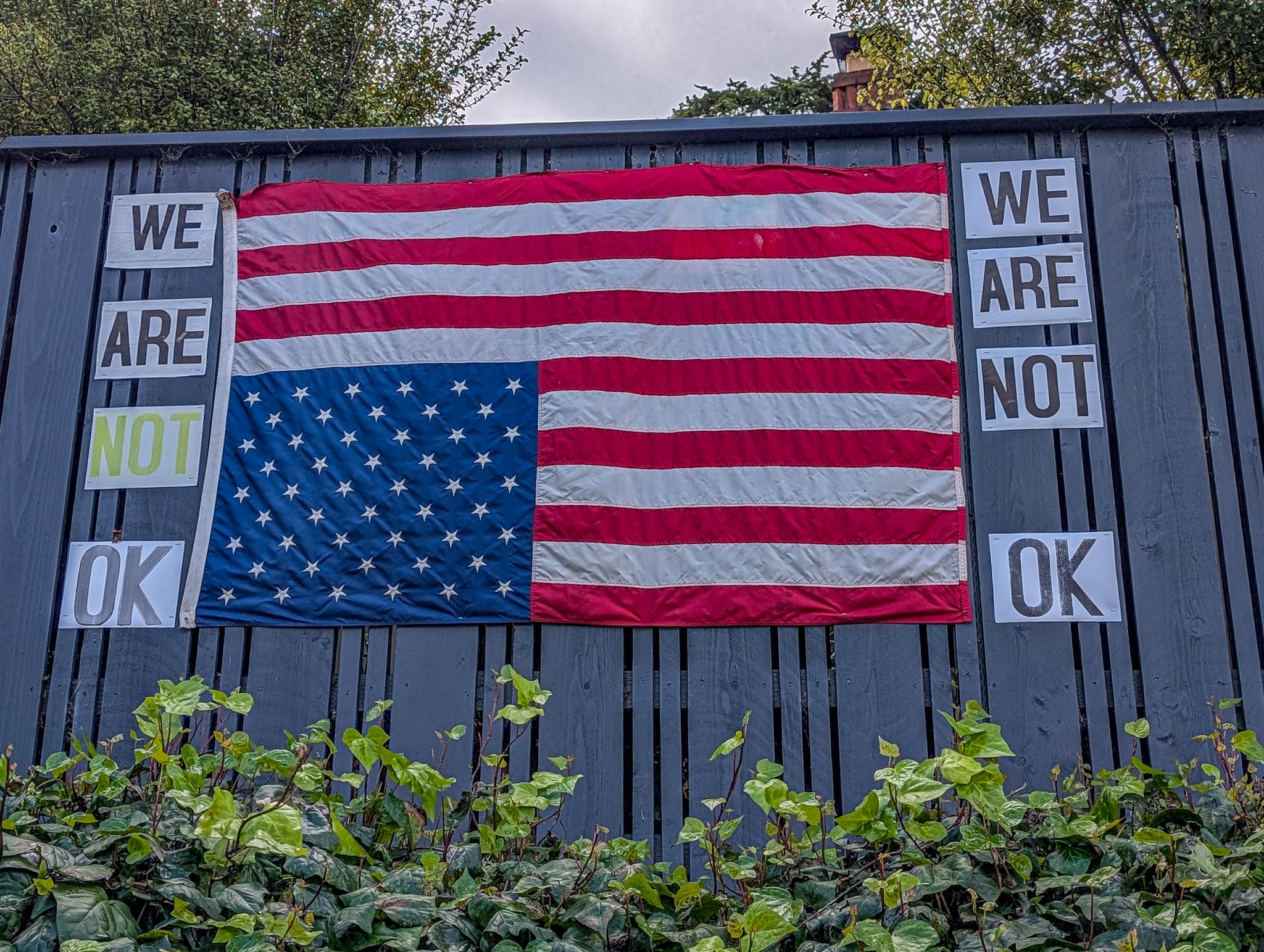
And the decline has been especially strong in formerly close allies like Canada (where support for America has dropped 44 points) and South Korea (where it’s dropped 38 points) — exactly the kinds of countries where Americans are most likely to travel.
When we wrote about this topic last year, people pointed out that outside of the U.S., people are fairly sophisticated, separating their dislike of America’s actions from individual American travelers who may oppose the Trump administration.
And in nine years of travel, this has been Brent’s and my experience too.
But in addition to impacting travel, all of this instability and chaos also increases the likelihood of a global recession — which stood at a 60% chance before the war in Iran.
That war is now massively disrupting a world economy that was already struggling, in part due to Trump’s ever-changing tariffs. In addition to causing oil prices to spike, the cost of natural gas is soaring, especially in Europe and Asia.
At some point, the more U.S. policies directly hit people’s wallets and daily lives, we think the distinction between the American government and individual Americans will get much blurrier.
“Last night I sat at an open-air restaurant in Albania,” a nomad friend recently posted online. “The tables surrounding me were filled with men scrolling through social media showing news of the wars the United States is waging around the world. More than once, I heard the phrase ‘Fu*k Americans.’
“This is the first time in my seven years of nomading across every continent where it feels dangerous to be an American,” she added.
Last year, we predicted that a second Trump presidency would make travel more difficult, especially for Americans.
It didn’t happen quite as quickly as we predicted, but it sure seems to be happening now.
Michael Jensen is a novelist and editor. For a newsletter with more of my photos, visit me at www.MichaelJensen.com.
I had a foreboding feeling it was going to get difficult moving around the world.
But something is happening here in the US that isn't being addressed, acknowledged, or even being spoken of in mainstream conversation.
It is getting extremely challenging to move around inside our own country.
Housing is outrageous. I can't find a decent affordable rental anywhere worth living. I have been searching for almost six months. The closest I've come is a studio for $970 a month in Huntsville, Alabama. I suppose moving to Nebraska or Iowa might yield better results but I don't want to get trapped on the plains. If I want to move to an area with excellent medical, things to do, and a mild climate... $3,000 a month for a one-bedroom, a decent one bedroom
Hotels (really crap chains) are charging near $170 a night. Going to recon pleaces before moving costs as much as a once small vacation. Heaven forbid you have a pet, $100 a night.
The electric car thing is a joke. Try driving from Buffalo to Los Angeles. Bring a tent. You will somewhere to rest during charging.
Let's not go into the airline industry... but I am doing so, but briefly. $700 to fly from Grand Rapids, MI to Las Vegas. NV unless you choose to ride in their deluxe cattle car accommodations.
I don't have an answer. But this started around 2021. When I was roaming around the country in 2020 I saw the beginning of it.
At the moment i'm trapped inside a mortgage at 2.15%... my husband died, I don't want to live here anymore... but my choices have narrowed considerably. I'm 68 years old. I can't afford to make mistakes. I still hold out hope I can move to Colombia. But the door is closing.
I have no solutions. But there is a chaos and world order being shifted... and only God knows who will come out on top and be the next superpower. We can blame it on us and Trump... but I believe that this is too narrow a place to blame.
Don’t pussy foot around it. Trump has destabilized the world. USA is feeling it and we are wrecking havoc on other nations. This is a sad sad time to be an American.