
Seabrook, Washington: Coastal Utopia Or Stepfordian Hell?
We recently visited this "planned community" on the Washington coast. I loved it, Brent hated it.

We’ve all seen the movie: at first glance, the town looks perfect. But behind the pretty facade, it hides a sinister secret.
Is that true of Seabrook, a small community of some 600 houses and apartments nestled in the woods overlooking the coast of Washington State?
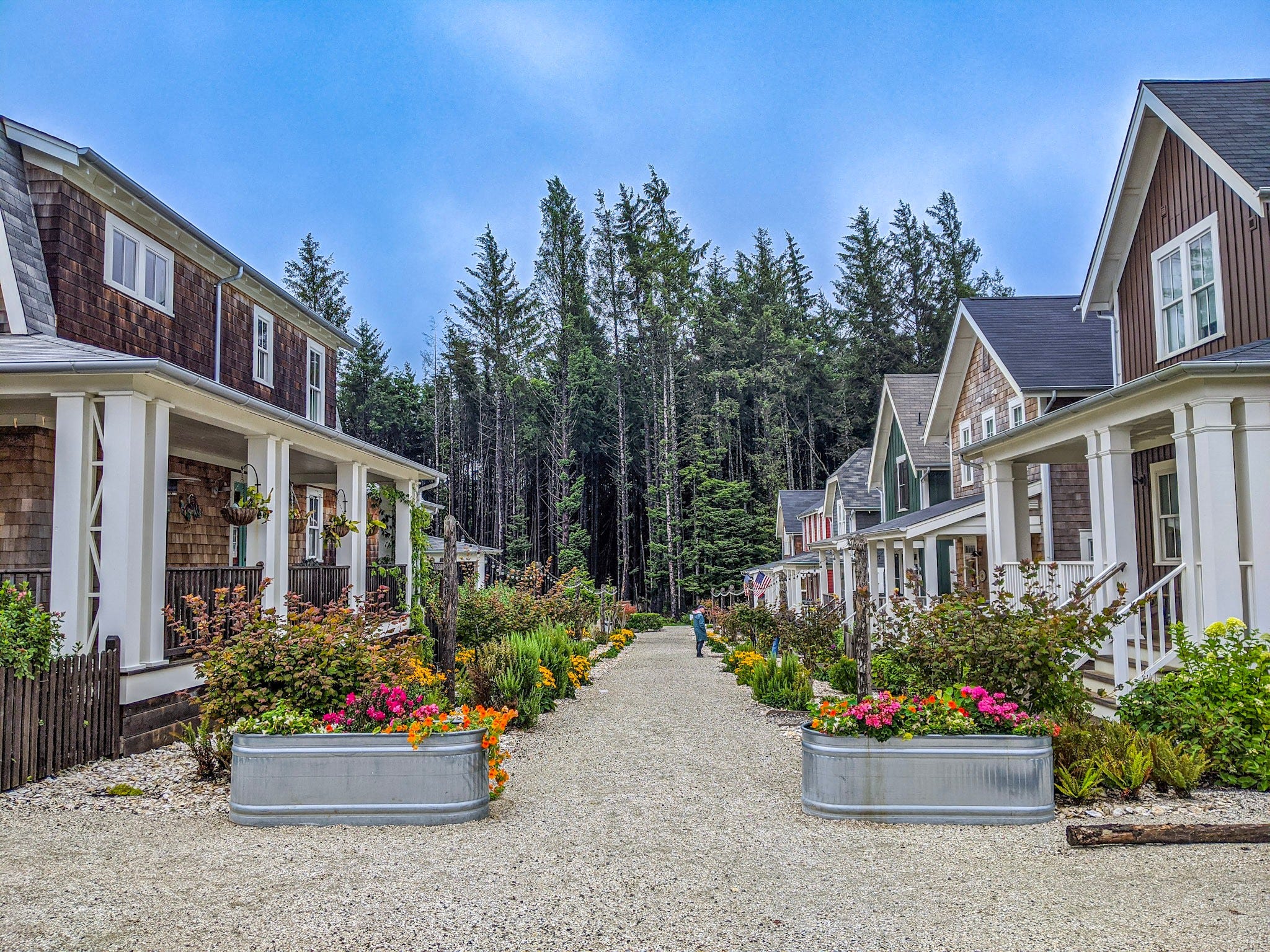
On one hand, Seabrook does look pretty perfect.
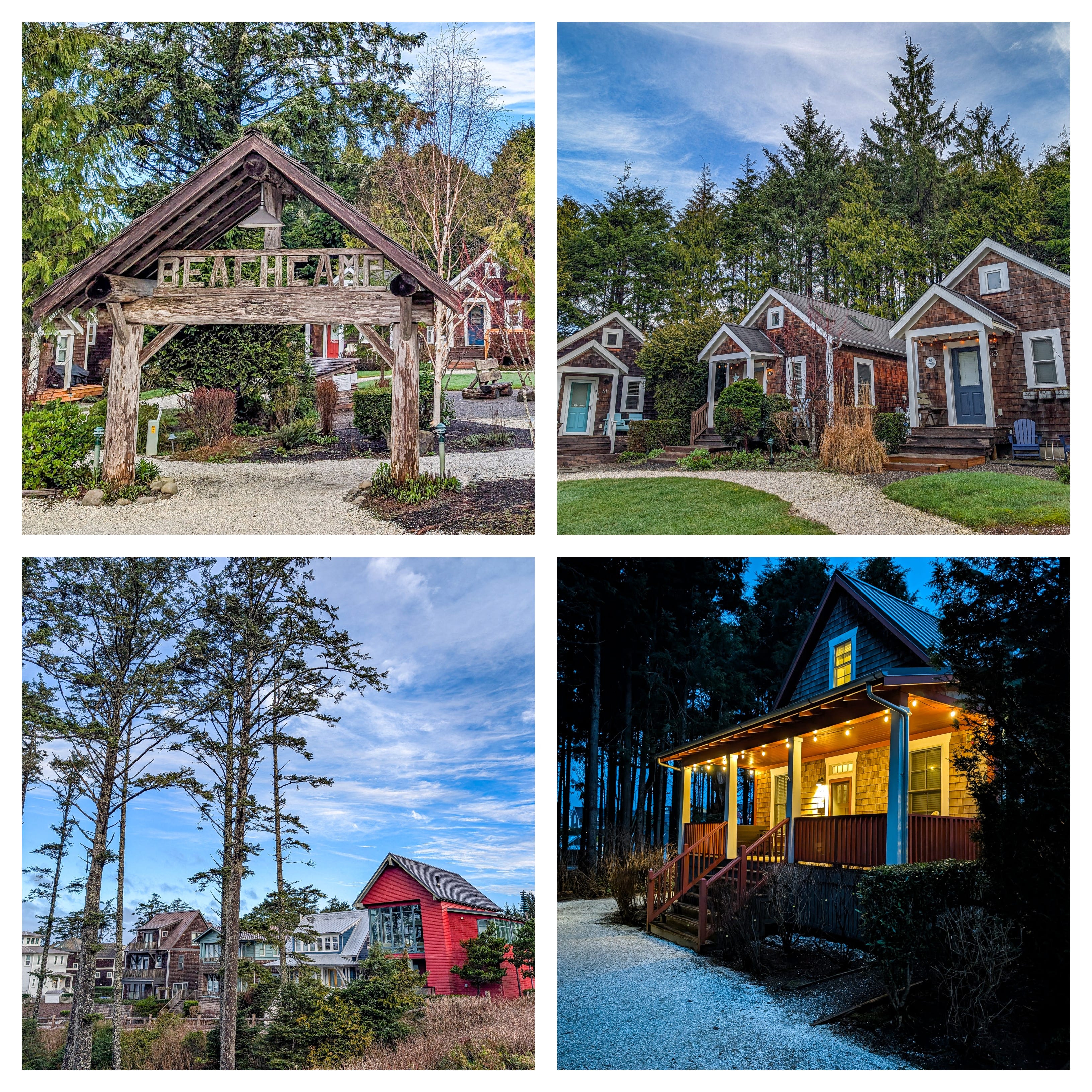
It’s a “planned community” with a uniform Americana look. The houses — a few modest cottages, but mostly multi-story showpieces — adhere to the design principles of “new urbanism.”
Front porches are big, and garages and parking areas are always in the back.
Meanwhile, the surrounding community is walkable and human-scaled, with a tightly controlled mix of homes, shops, parks, and amenities. The houses are built in clusters around public areas, with outdoor fire pits, benches, and even a giant carved Bigfoot.
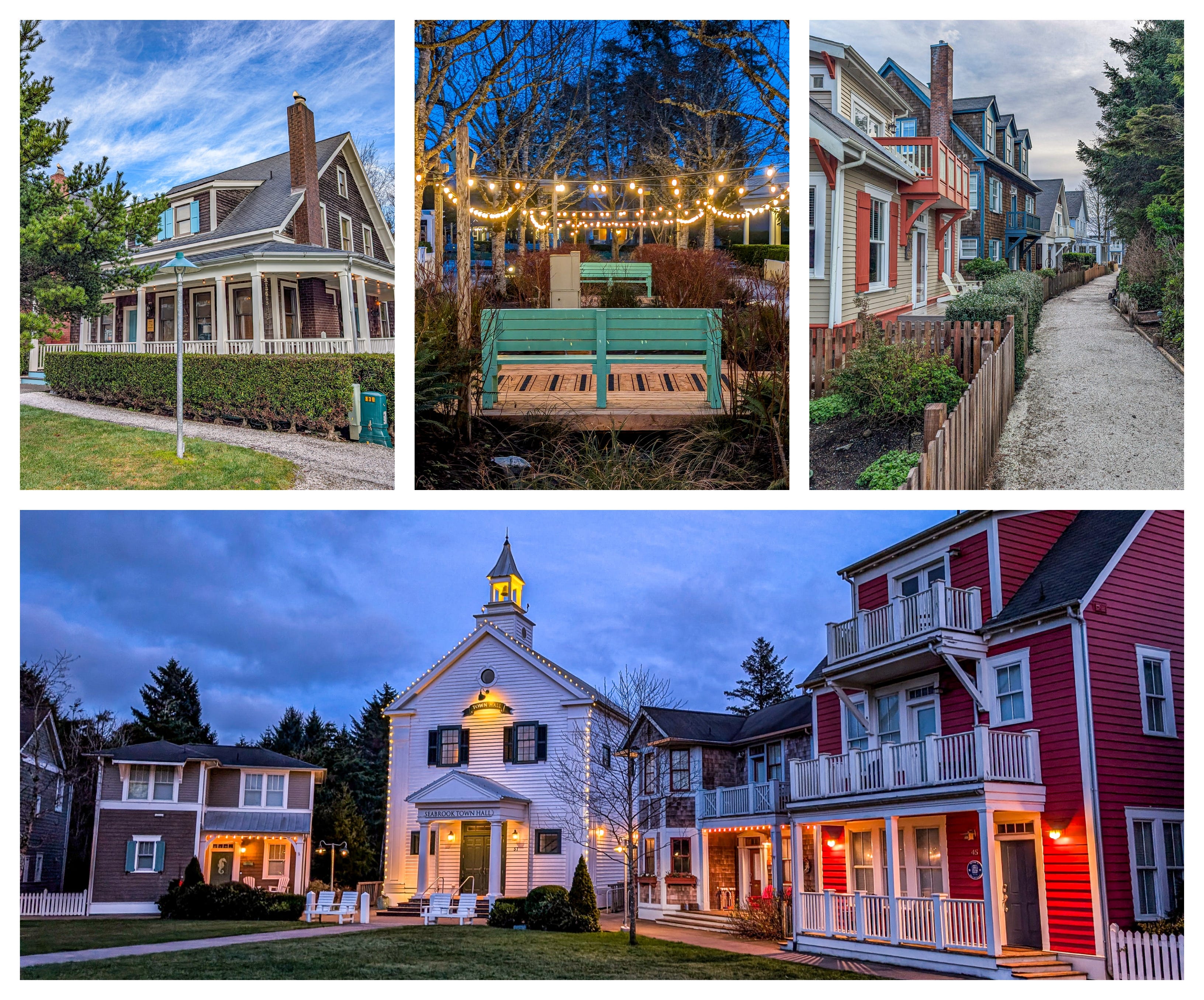
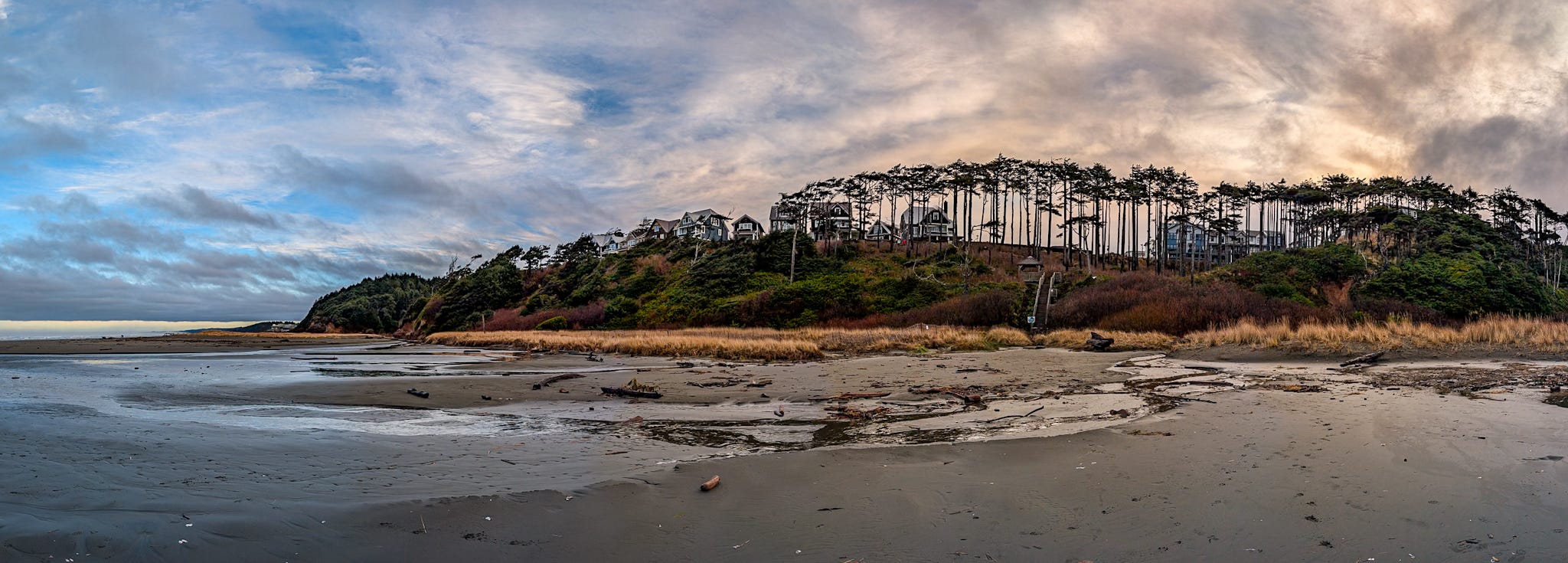
But unlike the similar town of Seaside in Florida, Seabrook is fairly remote. Non-Washingtonians don’t always understand that the Washington coast is surprisingly rugged — and fairly difficult to get to. It’s 140 miles from Seattle, separated by long and meandering Puget Sound, not to mention an entire mountain range called the Olympic Mountains.
So what’s the truth about Seabrook? Is it a coastal utopia evoking the American dream — or some kind of modern-day “Stepford,” with enforced conformity and a lack of diversity?
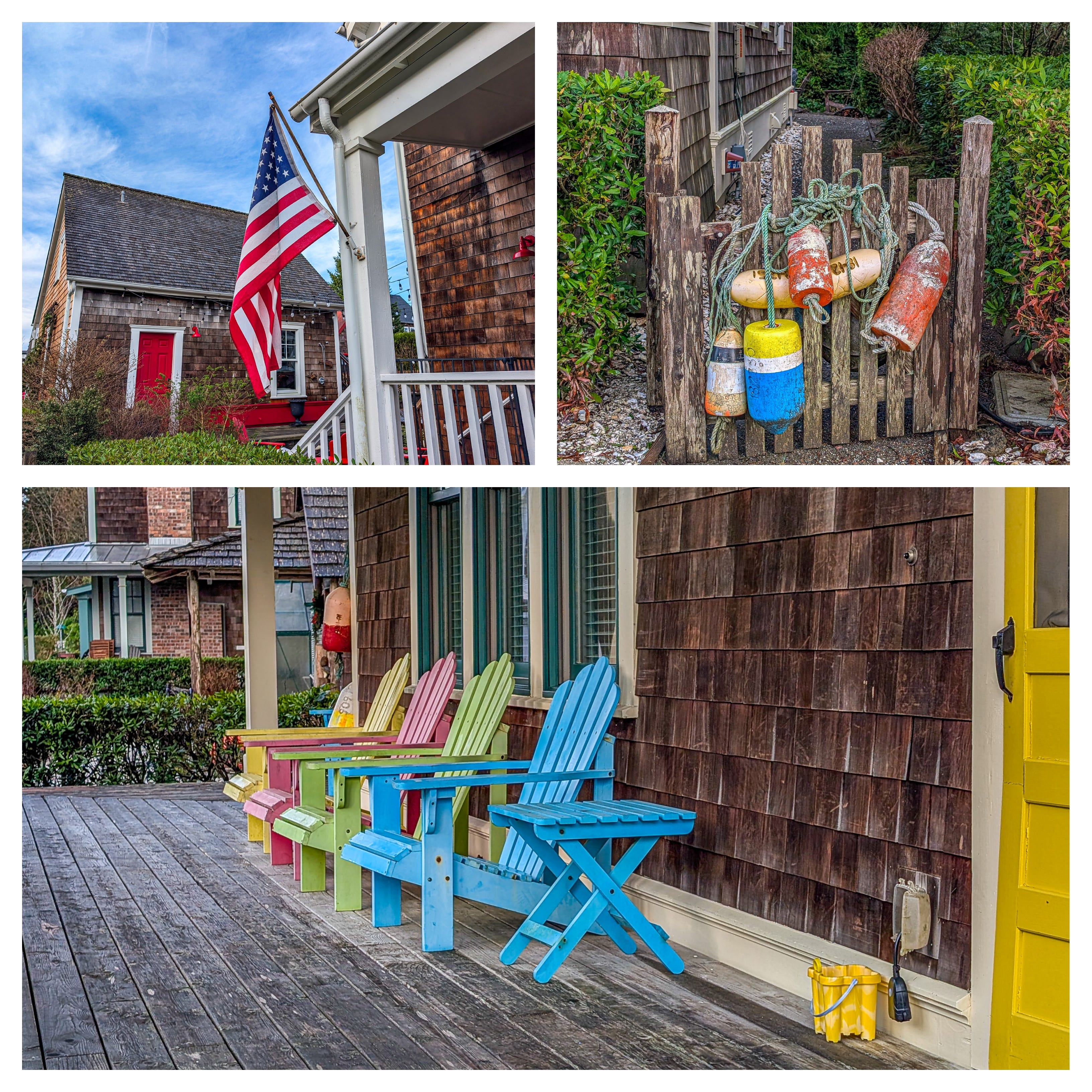
Seabrook was founded in 2004 by developers Casey and Laura Roloff, but Brent and I first discovered it in 2007 on one of our many getaways to the Olympic Peninsula.
Back then, Seabrook had fewer than two hundred houses and a single business: a small cafe.
But boy, did the Roloffs have vision! We spent an afternoon with Casey, who showed us his plans for a community swimming pool, many more houses, and even an entire “downtown” area that had been staked out in an area cleared of trees.
Despite Seabrook’s very unfinished state, we were charmed. Since we’ve always been remote workers, we even briefly considered buying a house there.
In the end, we decided it was too far from Seattle and too expensive: $620,000 for a modest three-bedroom house (though it did include an adorable “carriage house” — a detached garage with a studio apartment upstairs).
Mostly, we were skeptical that the developers would actually follow through with their grand designs. Having looked at hundreds of homes over the years, we’ve heard many developers promise great things — and looking back now, almost none of those visions actually came true.
Still, we liked Seabrook enough that we occasionally took advantage of their rental program — like Airbnb, but strictly controlled by Seabrook’s management — renting various houses for weekends with friends.
In 2017, we became nomads, traveling the world continuously, and we didn’t see Seabrook again until this February.
To our surprise, Seabrook has grown to include nearly 600 homes spread across eight distinct “neighborhoods,” with evocative names like the Sunset District, Fernwood, Alderwood, and Greenway.
The houses all have names too, like Whale Song, Ocean Breeze, and That’s What Sea Said.
More importantly, the promised downtown has actually come to pass. It includes a surprisingly large gourmet grocery store, a coffee shop, a pizzeria, a bakery, a wine bar, a candy shop, gift shops, and more.
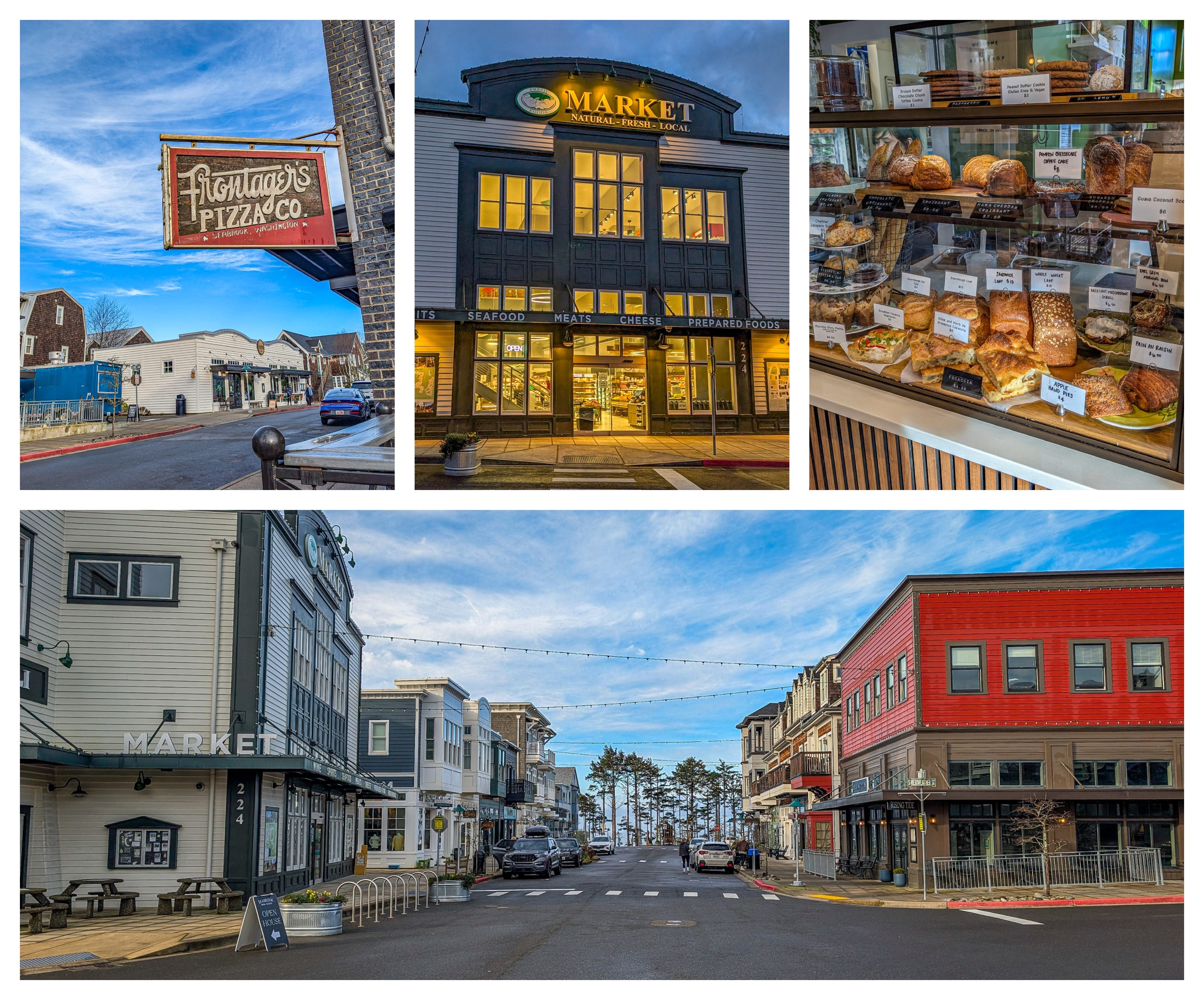
Seabrook currently has plans for another 1,300 homes, and they’re in the process of building a luxury hotel.
Meanwhile, Seabrook’s rental program is very popular — and very expensive. We spent three nights there in a one-bedroom condo in the heart of downtown.
We paid $582.86 for three nights, or $195 a night.
But this was also in gray, gloomy February, the lowest-of-the-low season, and we had taken advantage of a Cyber Monday sale that saved us 30% — only for off-season dates.
It was also a small, one-bedroom condo — among the cheapest available lodging.
Had we wanted to go in July, the five-night minimum for our unit would’ve cost us $4,138, or an eye-popping $827 a night. To participate in the rental program, Seabrook charges owners an equally astounding 37% administrative fee.
Owning a home in Seabrook isn’t cheap either.
The house we almost bought in 2007 would now sell for about $900,000 — less than we expected, actually. But a 416-square-foot cottage currently sells for $525,000, a smaller three-bedroom home for $834,000, and large, stately homes for several million dollars — even more if they have sea views.
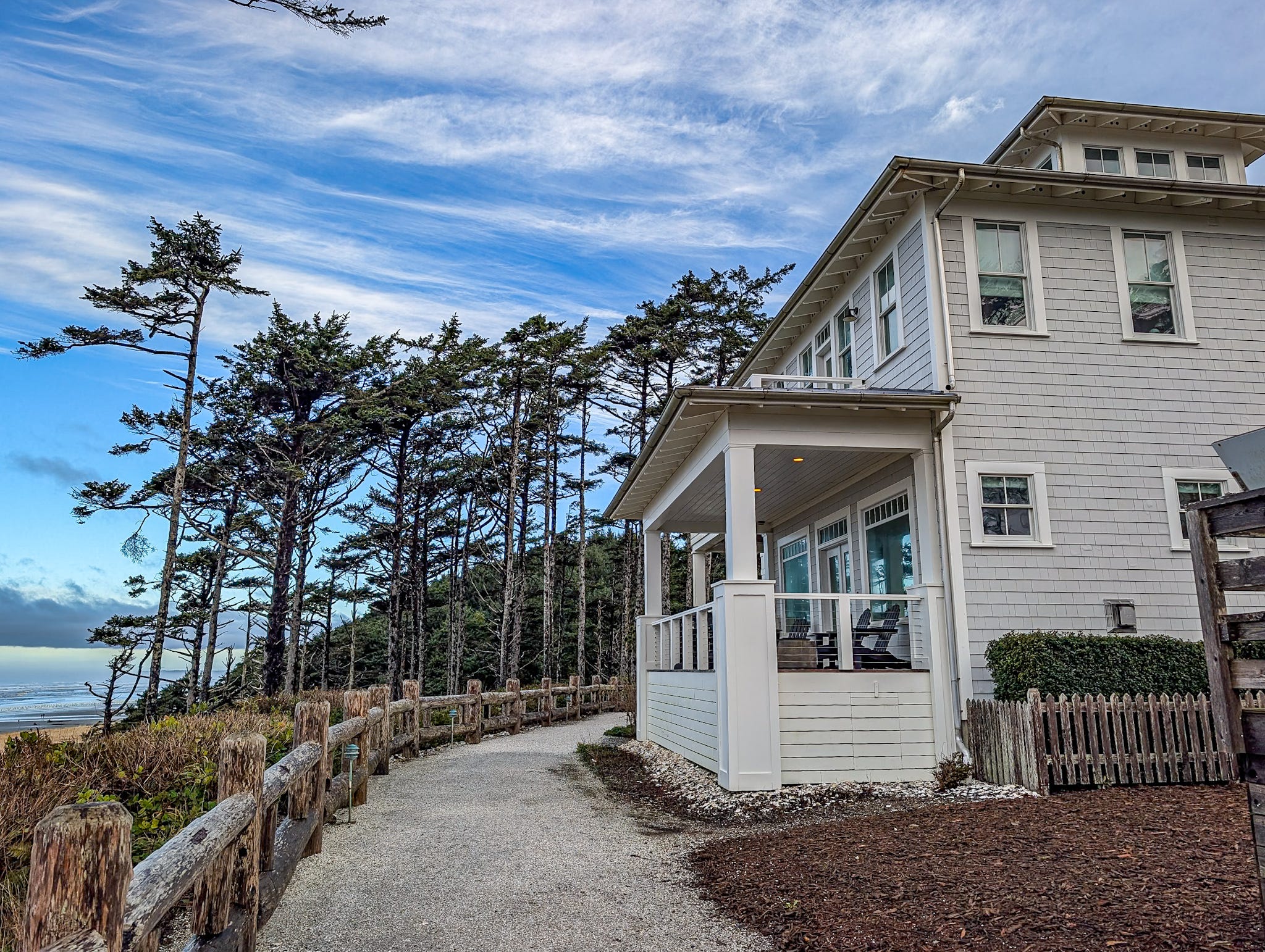
These high prices are among the biggest criticisms of Seabrook. As a result, people say, it’s become a playground for rich Seattleites.
Other criticisms include:
The rigid control of Seabrook’s “look,” which detractors claim makes the town look sterile and Stepfordian. A common comment on Reddit — where there are a lot of Seabrook haters — is that it resembles The Truman Show and that residents are “cosplaying” living in a small town.
That it really isn’t a town. Some 80% of the houses are “second homes” — many serving as vacation rentals. The town has more year-round residents than ever, but they still number fewer than 200.
That it detracts from the Washington Coast’s real character and harms nearby communities.
That it’s bad for the environment.
Brent and I have different takes on Seabrook. He’s become a bit of a hater too.
He thinks the cost is absolutely outrageous for what you get. That one small apartment we rented was so small, it didn’t even have a dining room table, just a breakfast bar.
And the construction quality seemed poor (though in fairness, we’ve been in other houses that do seem better-built).
He also agrees that the sky-high prices have created an artificial town for the rich, completely lacking in diversity. While he likes Seabrook’s original neighborhoods, he dislikes the newer ones that are harder to reach and seem more cheaply built.
He agrees Seabrook doesn’t even feel like a town, just a collection of vacation rentals. It promises “community” that it doesn’t really deliver.
He also laments how much tourism the town has attracted to the area, which used to be more working-class or a place where people could drop out.
As for the Washington coast, it’s “beautiful” in a way — but also harsh and rugged, especially in winter. The town is trying hard to be a cozy New England beach community that it can’t ever really be.
Brent also notes that the entire Washington coast sits right next to one of the planet’s biggest fault lines and that it’s only a matter of time before a massive tsunami engulfs the entire area.
Do I think Seabrook is perfect?
No, but I quite like it and am genuinely perplexed by all the negativity.
I appreciate the work that has gone into creating a place that aspires to be more than just a random collection of buildings thrown up without thought. I love how walkable it is, how many parks and green spaces it has, and, yes, even that old-fashioned feel. Where others see conformity, I see thoughtfulness.
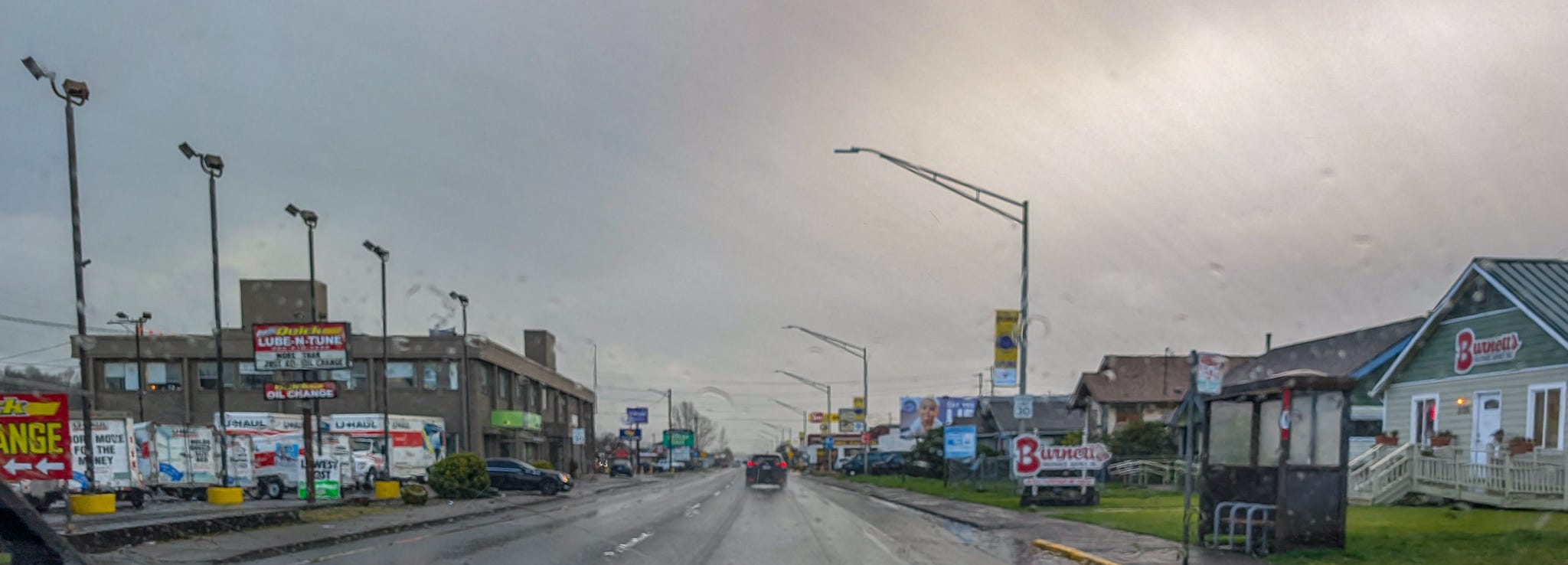
Honestly, the U.S. has so many towns built entirely around the car and overrun by ugly strip malls, fast-food chains, and endless sprawl that I’m glad Seabrook exists to show there’s another way.
It’s not yet another subdivision or poorly planned town.
Seabrook’s year-round population might be only 200, but as more homes are added, that number will grow. And with it, a greater sense of actual community.
And I’ll take Seabrook over the sprawling resorts that have gobbled mile after mile of, say, Mexico’s coastline and that then send most of their revenue to big corporations.
Speaking of which, I think it should be noted that Seabrook isn’t owned by a massive real estate conglomerate. It’s a relatively small operation that has stayed very close to its local roots and was created by folks taking a very real chance on building something different. Indeed, the first years of Seabrook were very dicey, and at one point, it looked like they might lose everything.
As for the attractiveness of the Washington coast, it’s true: it ain’t all that. The coast is often flat, gray, and melancholy. It’s more Wuthering Heights’ windswept moors than the Beach Boys’ Southern California.
The Roloffs did choose an attractive place on a bluff overlooking the ocean, and the long beach is great for walking. And isn’t it better that Seattleites have the option to drive to a beach holiday rather than flying to California or Mexico?
As for the cost, do I wish Seabrook were more affordable and more diverse?
Absolutely. Frankly, I’d love to be able to afford a house there.
But the Roloffs took a huge chance building a town where absolutely no one else dreamed anything could be built. People have responded by happily buying and renting there, and the creators deserve to be rewarded for their work.
It should also be noted that Seabrook has forged connections with the local community. They have worked with the nearby Quinault Indian Nation, using some of the three million dollars in assets from the Seabrook Community Foundation to improve education across the region.
As for those lamenting Seabrook’s impact on the area, I’ll point out that Grays Harbor County, where the town is located, consistently ranks near the bottom in terms of economic indicators, including higher rates of poverty and lower yearly income than most of the rest of Washington State.
Seabrook might be an expensive place to rent or buy, but there’s no denying the town has brought much-needed jobs to the area.
As for the environment, the land it’s built on has already been logged once and would likely have been logged again. And trust me, the clear-cuts spread across the Olympic Peninsula are neither attractive nor good for the environment.

So is Seabrook a coastal utopia or a Stepfordian hell? There’s no dark secret, so it really depends on your point of view.
Brent still dislikes it, but for me, the pros far outweigh the cons.
Michael Jensen is a novelist and editor. For a newsletter with more of my photos, visit me at www.MichaelJensen.com.
I have to agree with you Michael. I grew up in one of those strip mall suburbs of NY with a mish-mosh of housing, apartments, and stores with very little walkability. I now live in the Virginia suburbs of Washington DC in a planned community that is very walkable, with plenty of parks, walking trails and green spaces as well as a variety of housing types. They also require a certain percentage of the housing to be affordable for people making below a certain income level so there are a mix of socioeconomic groups. People are required to maintain their properties and the neighbors look out for each other. It’s so much more aesthetically pleasing than the area I grew up in and has a “real” community feel. I think if you build it with the right values it will attract like-minded people.
What disturbs me most is the 80% of second-home owners. You can't create community with such a high ratio of part-timers (AKA Airbnb hosts)! They don't really have a stake in the place, other than economically. Why would that change simply by expanding the number of homes? It hasn't happened yet...