
People Are Complicated, and Relationships Are Messy
But that's partly why they're so great.

For the audio version of this article, read by the author, go here.
I have a friend who’s always at least twenty minutes late to everything. And you can’t do that thing where you tell her a fake-early time, because somehow she senses it and still shows up twenty minutes late.
I have another friend who made me feel like I wasn’t much of a priority in his life, especially after I left the United States to become a digital nomad.
And my friend Laura, who died last month? I wrote about her here, and everything I said was true. But there’s more to the story.
I said before that Laura was “fiercely non-judgmental,” which is a wonderful quality in both a person and a friend. But it also led her to sometimes befriend people that I didn’t particularly care for.
Often, they were “wounded-bird” types, and sometimes they were just odd ducks. And they found well-needed support in my friend Laura.
But they also sometimes disappointed her when they ended up being unreliable — flaky, it seemed to me.
People are complicated.
I’m lucky to have a strong circle of friends: an “inner circle” of about eight — one less now that Laura is gone — and another fifteen or so with whom I’m almost always in close contact.
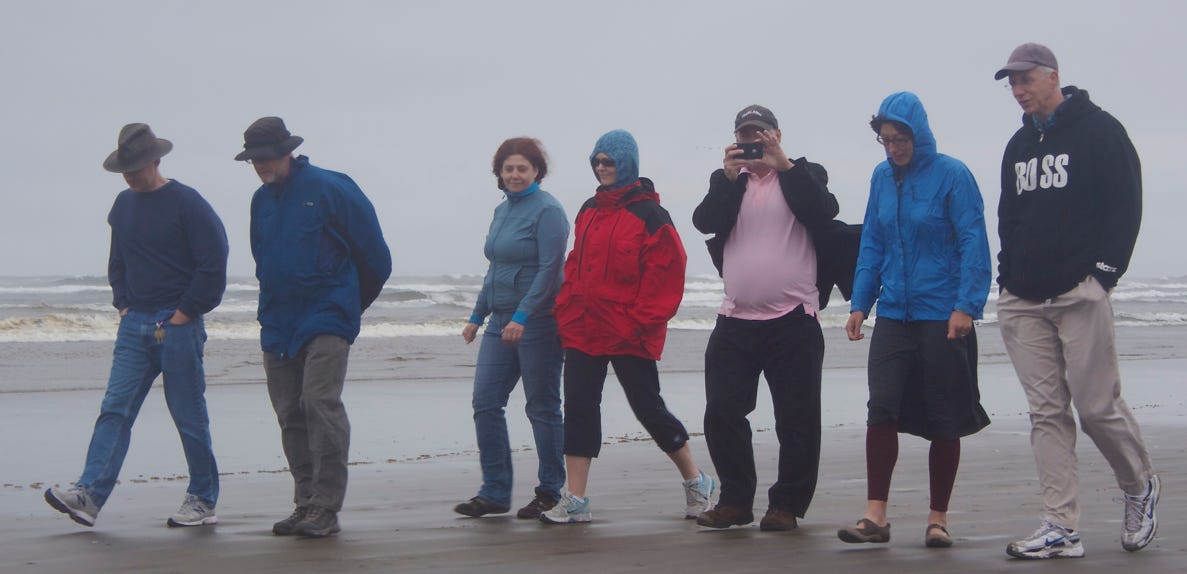
But when I run down the list of all these folks, I realize that all but about three have some quality that I have at least occasionally found frustrating.
(And if you’re one of those friends reading this article, congratulations! You’re obviously one of the three completely non-frustrating ones!)
People are complicated, and relationships are messy.
Then again, the reason these people are my friends is that any fleeting frustration I’ve felt is nothing compared to all the joy they’ve added to my life.
The woman who’s always late? She eventually showed up one time when I really needed someone — the only person who did.
And the guy who made me feel like I wasn’t a priority? We talked it through, and he acknowledged I had a point and made a real effort to change. At the same time, he made me realize that I had some unrealistic expectations about him dropping everything on the weeks that I breezed into town, gracing him with my presence.
As for Laura, well, as we got older, our lives went in different directions — in part, because of those friends of hers. But we never lost the connection we had, and now, two months after her death, I wonder when the day will come when I’m not overcome with sadness.
People are complicated, and relationships are messy, but the “pros” of all my good friends still massively outweigh their “cons.”

Of course, I’ve also met plenty of people whose cons did outweigh their pros.
There was the passive-aggressive wife of one friend who always used guilt to try to get her way. She sometimes complained she didn’t have many friends, and I always wondered if she had any idea why no one wanted to be around her.
Then there was the annoying ex-husband of another friend — a braying jackass who wouldn’t ever shut up with his never-ending opinions, each one more idiotic than the last.
Incidentally, I’m fully aware my impressions here are entirely subjective. And I am certain that there’s someone somewhere who thinks of me as the braying jackass with the idiotic opinions.
More relevantly, I am sure I sometimes frustrate my friends too.
So what’s the point of my publicly trashing them like this?
America is currently in the grips of a fairly shocking “friendship crisis.” In the last thirty years, Americans’ average number of close friends has been cut in half — to about three, but a rapidly rising number of people have no close friends. And the amount of time people spend with friends has fallen in half too.
It’s even worse for men than it is for women, and it’s worst of all for teens.
There is no upside to this. The result is an epidemic of loneliness and anxiety, shortening lifespans, and a rapidly imploding civic life.
If anyone still needs proof that online friends aren’t the same as real ones, this is it.
And if America proves to be the bellwether that it’s been for other social trends, this dire state of affairs is, no doubt, already spreading to the rest of the world.
The reasons for the Friendship Apocalypse are complicated. If you’re a liberal, you might say it’s economic forces: how the high cost of living forces people to work longer hours, and also that the tech companies have embarked on a deliberate strategy to addict people to their media devices to fatten their own bottom lines.
If you’re a conservative, you could pin the blame on cultural factors: the rise of self-centered ideologies like “therapy culture,” which tells people that the most important thing is their own immediate comfort and satisfaction — and also good, old-fashioned laziness.
Personally, I blame all of the above — but I also think it’s all connected: therapy culture is a consequence of social media, for example, and everything is the direct result of out-of-control consumerism.
But I also think there’s a serious misunderstanding of what friendships and relationships are.
Movies, books, and TV do a good job of showing the “extremes” in people — plucky friends who can somehow afford ridiculously spacious apartments in New York, or the anti-hero meth dealer who selfishly destroys his entire family.
In love stories, it’s almost always about external obstacles keeping the lovers apart. It’s almost never the story of two generally decent people sometimes butting heads but still trying to work out how to live together.
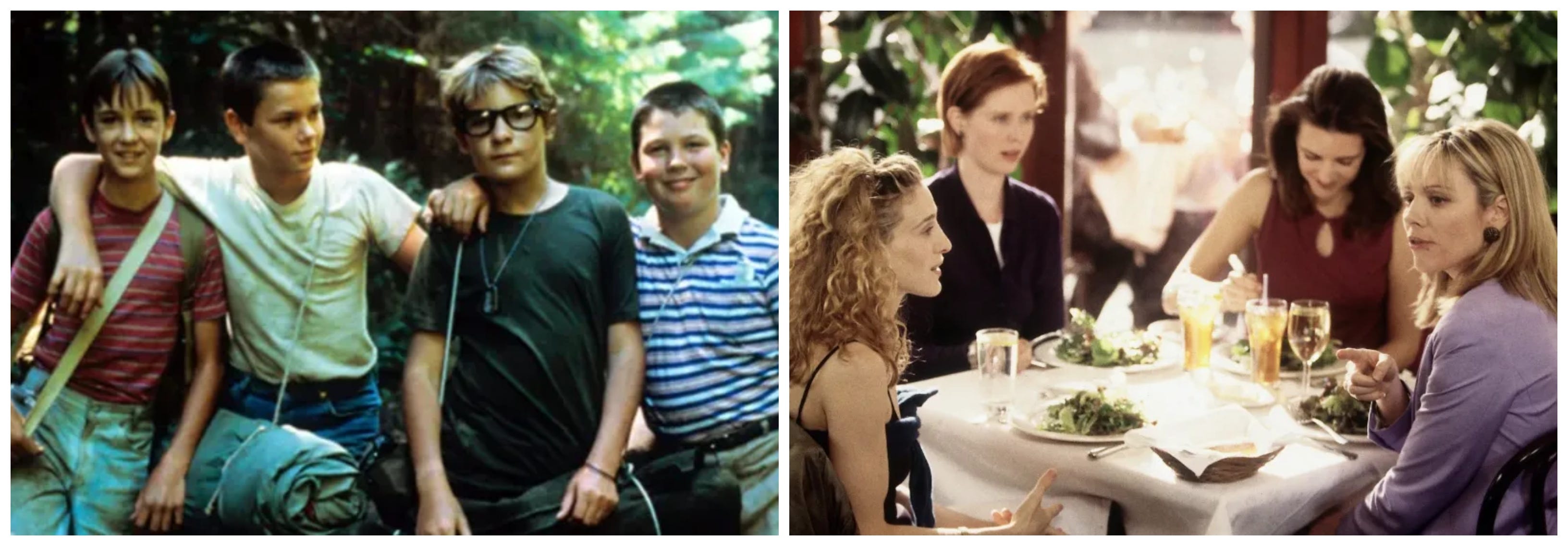
The reality is that, well, people are complicated, and relationships are messy. When it comes to human interaction, occasional conflict and frustration are the norm.
And that’s a good thing.
I spent most of my twenties living with groups of friends — always including Laura. Money was tight, and we sometimes got in each other’s faces.
But I ended up having the absolute time of my life.
In my forties, Michael and I moved into a house with some other friends for a year, and we had a few conflicts to work through then too.
But once again, I had the time of my life.
And in my fifties, as a nomad, I discovered something called “co-living” — living for months at a time in complexes designed for long-term travelers. The whole point was lots of human interaction.
You already know what I’m going to say, but I’ll say it anyway: there were frustrations, but once again, I had the time of my life.
Spending time in close contact with other people has always made my life richer and more interesting.
As for the frustrations, I think they made me a better person — more open-minded and understanding, and also more resilient.
I take some credit for making friends a priority in my life, but I think I was mostly just lucky to grow up in a time when it was much easier to make and keep friends — and to come from a family that valued friendships.
I know I’m pissing in the wind here, as usual, and I also know that if I say, “People who don’t make friendships a high priority in their lives are making a huge mistake!” I’ll sound really old.
But, well, people who don’t make friendships a high priority in their lives are making a huge mistake.
Brent Hartinger is a screenwriter and author. Check out my new newsletter about my books and movies at www.BrentHartinger.com. And order my latest book, below.

This is one of the best articles about friendship I've read. It gets beyond the clichés, identifying the bruises and bumps that come with having friends. It's so hard these days, with politics the way they are, to maintain friendships with people one is convinced are deluded at best, and supporting evil at worst. I've lost a few due to my big mouth (big even outside of politics!), and I have many regrets. Congratulations, Brent, on hanging on to so many good friends.
Love it!
I’ve noticed that many times, the frustrating aspect of a friend has a flip side that is what makes them fantastic. The friend who is scattered and always late might be energetic and down for adventures; the too-serious, gotta-be-organized friend is dependable and will show up consistently. It’s helped me reframe the annoying stuff (plus know that I am equally annoying in my own ways!).
Here’s to friends. They’re the best.