
The Split Personality of Split, Croatia!
Split in summer = total bummer. Split in winter = it's a winner!

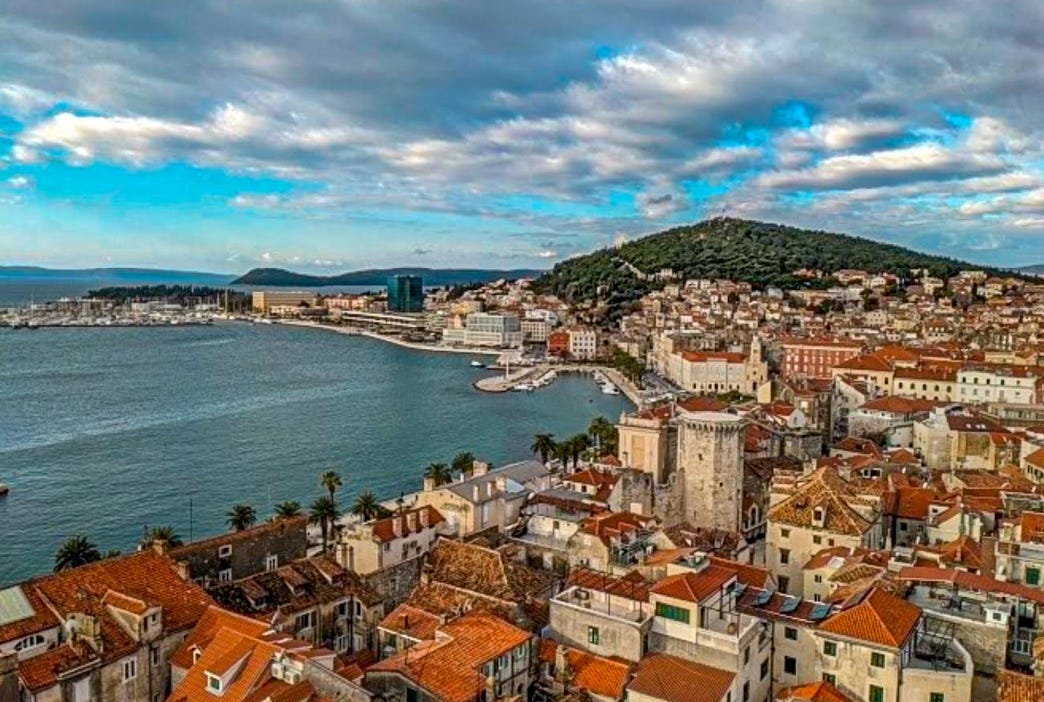
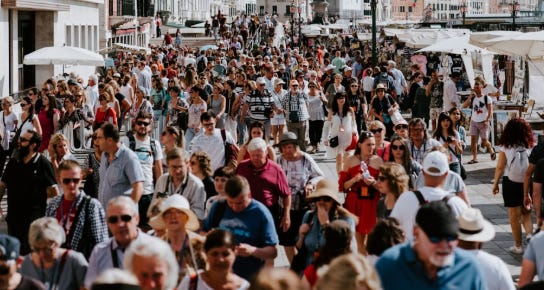
A freakin’ mosh pit! That’s what the seaside town of Split, Croatia, was like when we first visited in the summer of 2019.
It was beautiful, sure, but the crowds were so insane that we felt like slices of local pršut ham crammed into a baguette.
We’d come just for a day to visit two friends, Gillian and Tyler (and to meet Tyler’s new partner, Kris), and it really was wonderful to see them.

But afterward, we said, “This place is awful! We’re never coming back here again!”
And yet, a few years later, in 2021, we’d run out of time in the Schengen Zone — the 29 European countries that all share a common border and operate under a common visa policy — and we needed someplace outside the Schengen to hole up for the winter.
Croatia was not yet part of the Schengen — it joined in 2023 — and Brent and I were already in the general area. We’d heard the crowds were much lighter in winter, and when we checked weather forecasts and the cost of living, it seemed like a good option.
We booked for a single month to see what we thought — and ended up extending to stay for the full 90 days of our visa.
In other words — as you can guess by our headline — we loved it.
What a difference the season — and lack of crowds — made.
You might even say that Split has a “split personality”!
And it’s puns like that that have made us your favorite travel writers, right?
RIGHT?!
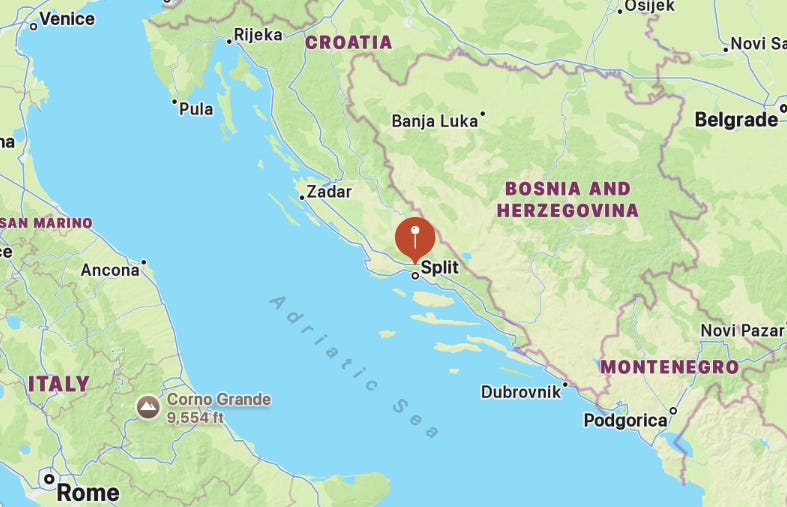
How about a little history?
Split, with a population of 152,000 — or 310,000 in the greater metro area — is Croatia’s second-largest city after Zagreb, the capital.
Split was founded in the late 3rd or early 2nd century BC by Greek colonists. Shortly thereafter, it was taken over by the Romans, and it became a forgotten backwater for nearly 400 years.
Then in 295 AD, Emperor Diocletian decided to build his retirement villa there — and Diocletian’s Palace is still the fantastic centerpiece of this amazing little city.
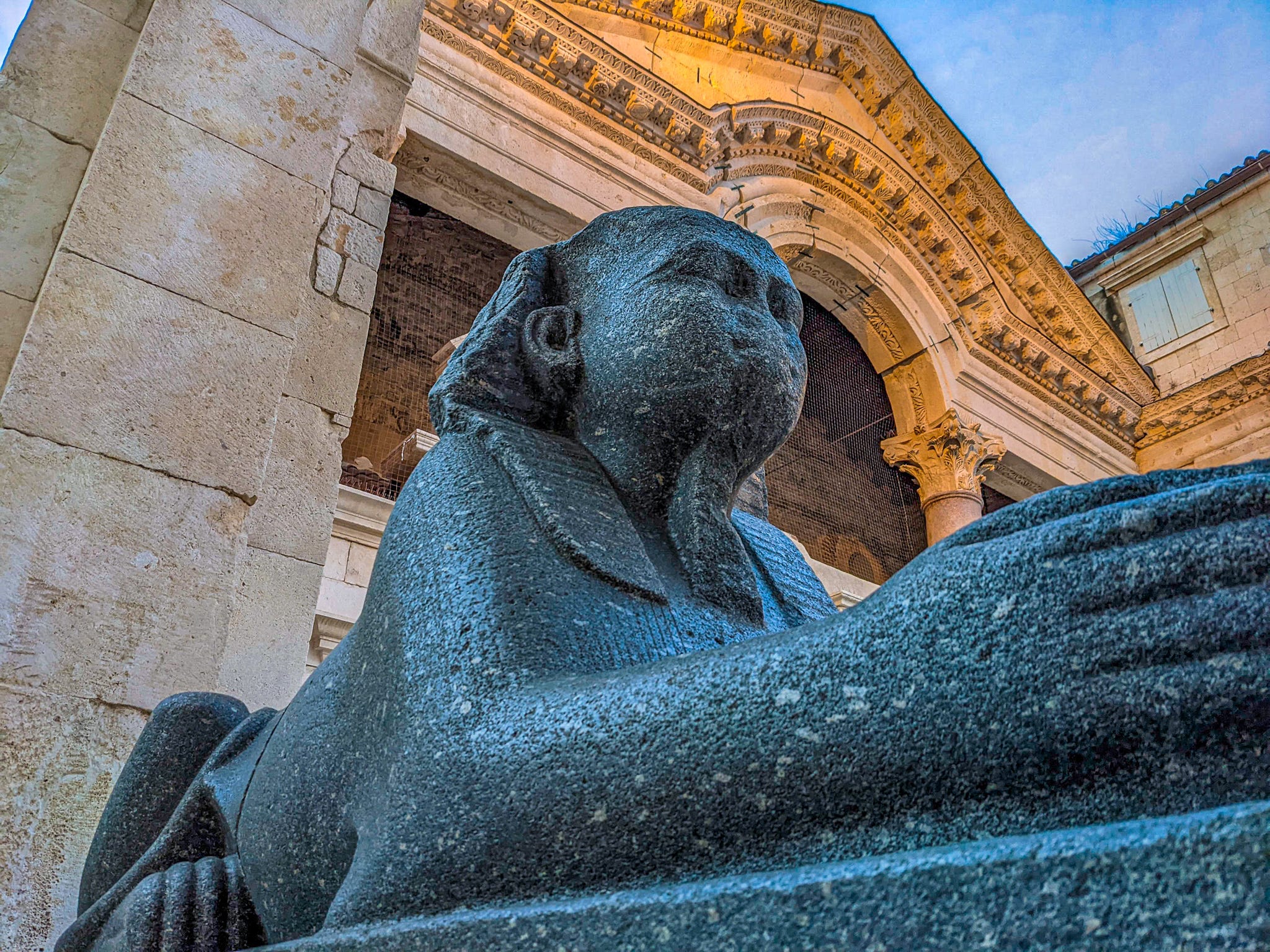
After the fall of Rome, Split got passed around like a football in a World Cup series played by barbarians, Slavs, Hungarians, Ottomans, Venetians, and Austrians.
And there was more tussling after the collapse of Yugoslavia in the late 1980s and early 1990s. Serbian forces, determined to maintain control of the city, sailed into the harbor and began shelling it.
But thanks to a surprisingly robust defense by Croatian forces, the Serbian Navy was driven away, sparing most of Split from devastation and securing Croatian independence.
Now Split is too busy — at least in summer.
If you’ve visited any of Western Europe’s most famous places in summer recently, you know that crowds can make even the most gorgeous places unbearable.
But in winter, Split was empty. We had the city almost entirely to ourselves.
Sure, some restaurants were closed, but there were still plenty to choose from, and we never had a wait. Prices were better too.
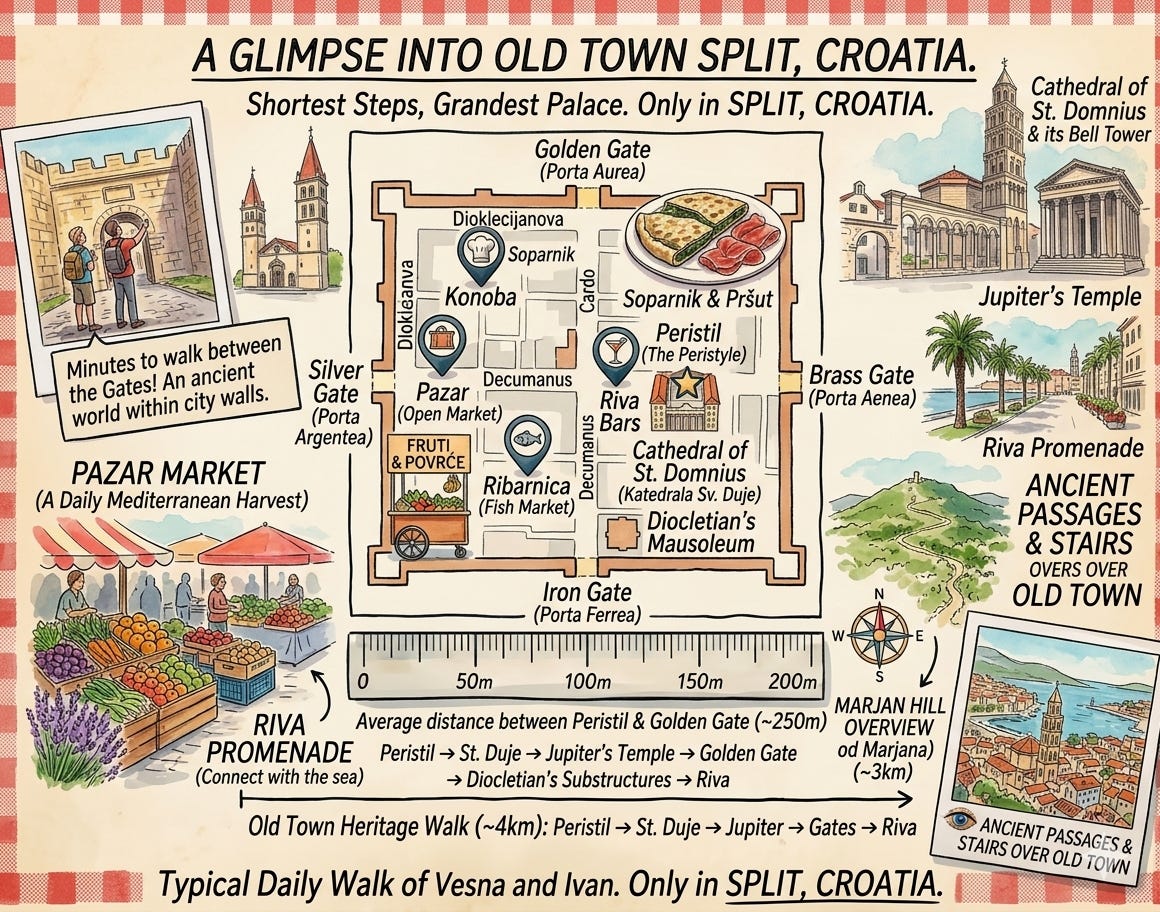
And the local farmers’ market was as large and vibrant as ever — just without gawking cruise ship passengers.
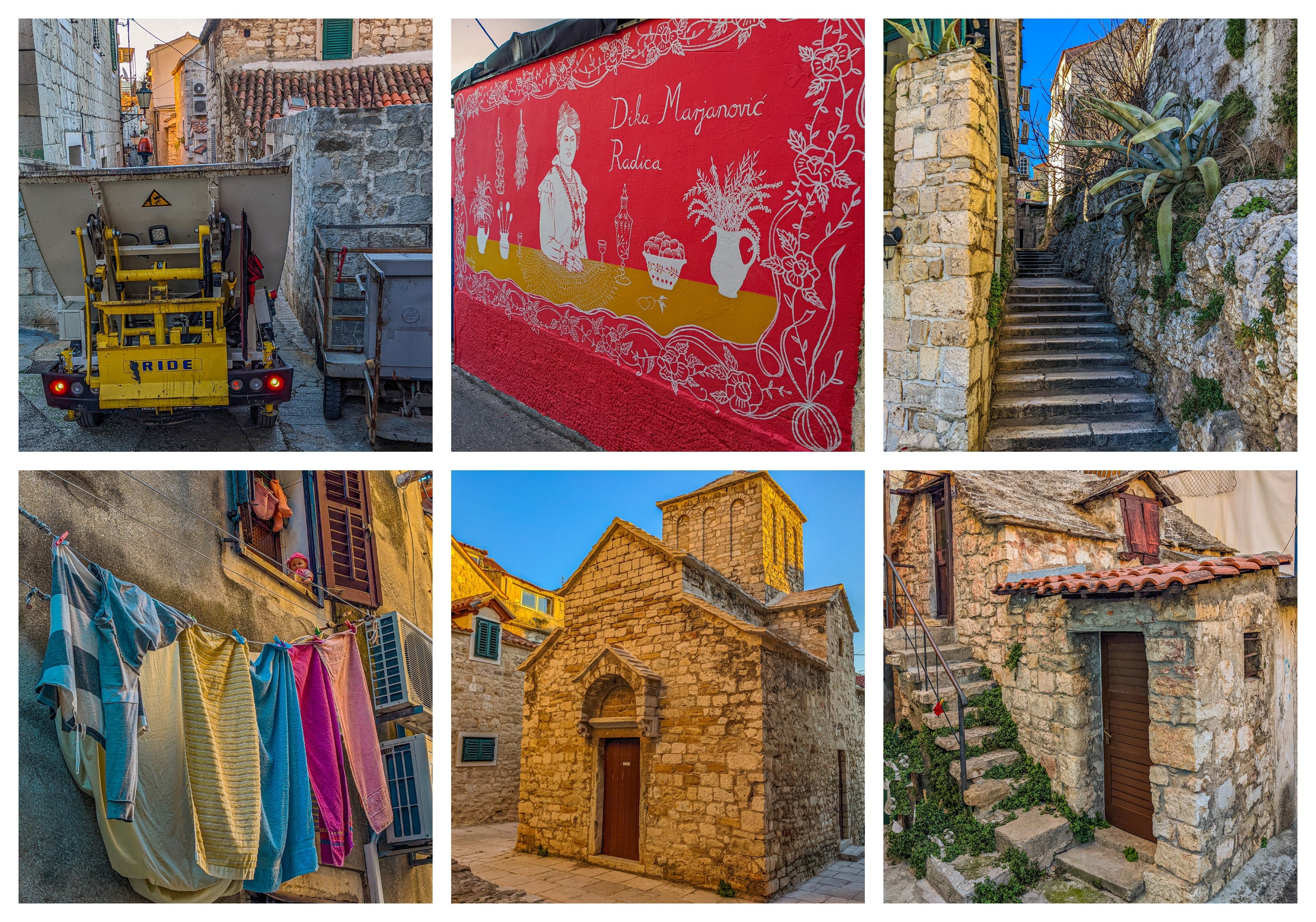
I especially loved the city’s narrow streets — many too narrow for most vehicles (except for specially designed tiny garbage trucks, and even they need deft handling by the drivers).
It was easy to feel like we’d gone back in time.
Then there was the Riva, Split’s world-class promenade. Here’s what it looked like in summer:
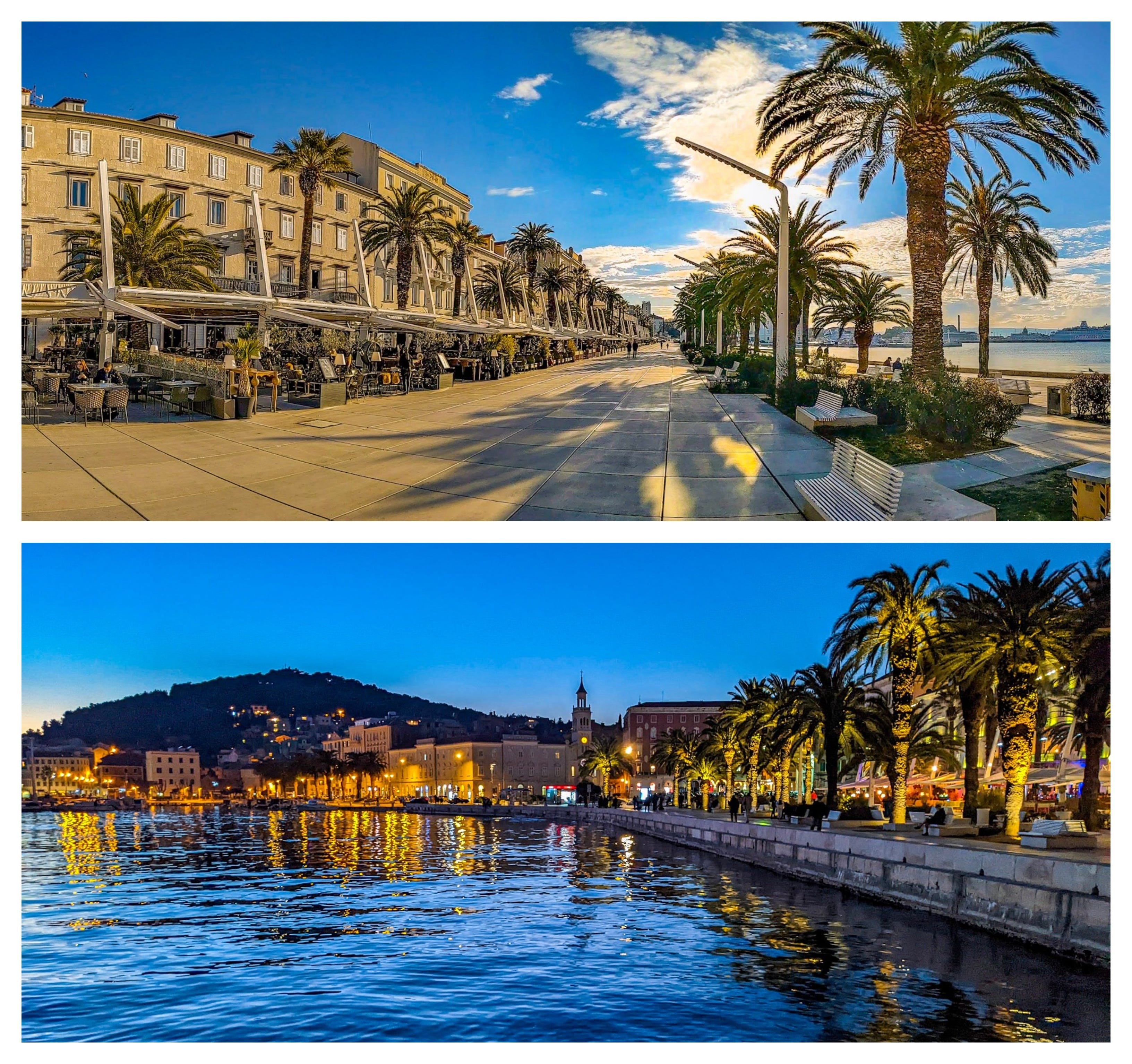
In winter? Photos barely do it justice:
Much of the old town is inside the emperor’s villa.
I mentioned Diocletian’s Palace before? It was so large that the eastern half of Split’s Old Town is inside the walls of the former villa’s grounds.
