
Kyoto, Japan, is the Most Overtouristed Place We've Ever Been. Does That Mean We Didn't Like It?
Either way, the city taught us a genuinely profound lesson.


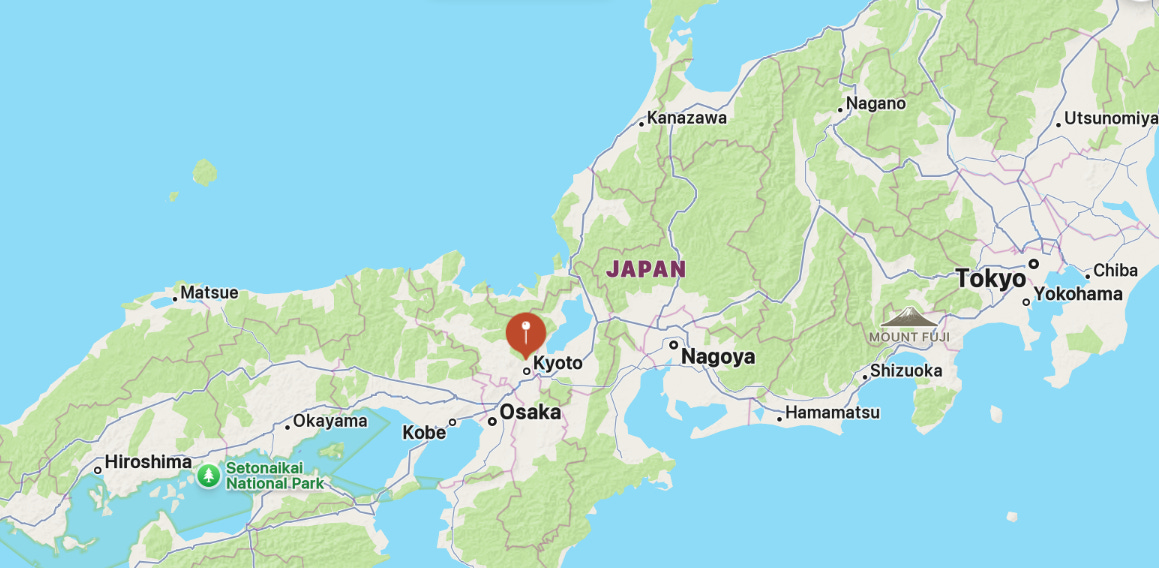
Living in Osaka, Japan, at the end of last year, Brent and I decided to spend a few days in Kyoto, which is less than an hour away.
We’d heard good things, and the city is one of Japan’s top tourist attractions.
On the other hand, it is one of the country’s top tourist attractions. Would we have a problem with crowds?
But how could we? We planned to visit in December.
Besides, we said to each other, it was a city of almost 1.5 million people. How bad could the crowds ever be?
And somewhere, a long-dead shōgun laughed.
It turns out the crowds can be really, really bad, even in December, which is actually the tail end of one of Kyoto’s two high seasons. In summer, the weather is too hot for many visitors, so people mostly come in spring (for the cherry blossoms) and in autumn (for the turning of the leaves).
We’d initially planned on living in Kyoto for a month, after leaving Osaka, but we couldn’t find anything decent or affordable, which should’ve been a tip-off that this was a heavily touristed place.
In retrospect, it was probably a good thing we didn’t live there.
The truth is, we’re not sure we’ve ever seen such crazy crowds — and we’ve been to the Cinque Terre, the Vatican Museums, and Disney World in summer!
But did all those people ruin our visit?
Read on to find out!
Japan’s former capital — and a city of shrines and temples
Kyoto is one of Japan’s oldest cities, and in AD 794 Emperor Kanmu selected it as the seat of the imperial court.
It remained Japan’s capital for more than the next millennium — until Tokyo replaced it in 1869.
Serving as the capital for so long left the city with an incredibly rich legacy — and also some 1600 Buddhist temples and 400 Shinto shrines.
And because it had little industry, it was largely spared the devastation suffered by much of the rest of the country during World War II.
These days, 17 of the city’s monuments, temples, shrines, and one castle have been designated as UNESCO World Heritage sites, and the organization has collectively designated them all as the Historic Monuments of Ancient Kyoto.
But there sure are a lot of people!
In the last few decades, Japan has absolutely exploded in popularity as a tourist destination, going from 3.3 million tourists in 1995 to an incredible 36.9 million tourists in 2024.
Thanks to a weak yen, things may be even crazier now.
And Kyoto is widely considered to be the epicenter of Japan’s overtourism problem. In 2024, 11 million people came to this city alone.
We picked a hotel in the Gion area — the famous “geisha” district — because it’s centrally located.
And we had absolutely no idea what we were in for.
