
I Loved Washington's San Juan Islands. Have They Been Ruined?
I recently visited after ten years away.

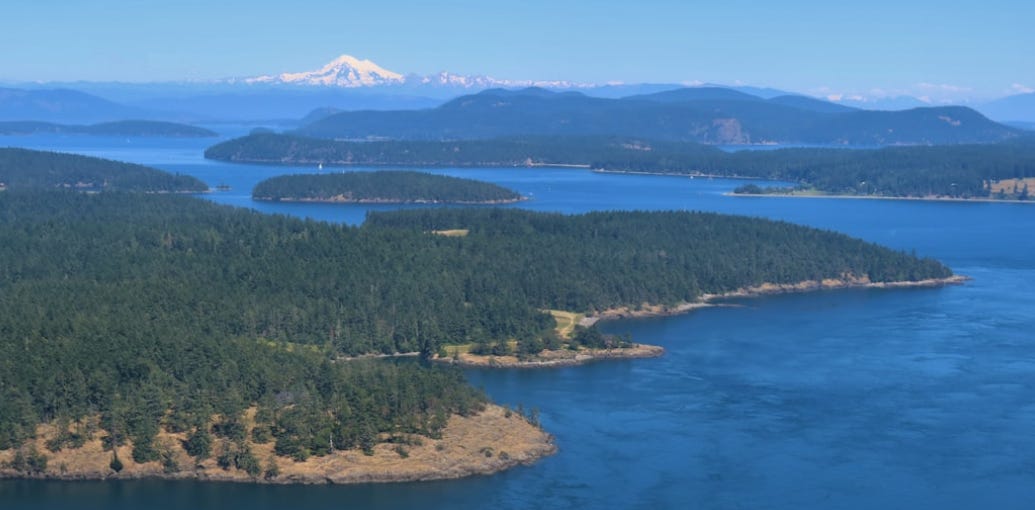
I grew up in Washington State and have long loved the San Juan Islands — part of an archipelago in northern Puget Sound on the border with Canada. (The Canadian islands in the same cluster are called the Gulf Islands, and they’re great too.)
The area is extraordinarily beautiful — famous for its scenic vistas, fantastic boating possibilities, and vibrant wildlife, especially the many killer whales, which include three “resident” pods (that eat Chinook salmon) and various “visiting” pods (which primarily eat marine mammals like seals).
But Michael and I are back in Washington State for the summer, living here after ten years away as digital nomads, and I’ve been shocked and disappointed by the ugly sprawl and congestion that has engulfed far too much of the Puget Sound area — spreading out from booming Seattle like the orc armies in The Lord of the Rings marching outward from Mordor, destroying everything of beauty that gets in their path.

Naturally, I wondered, “Have the orcs reached the San Juan Islands? And even if they haven’t, are the islands suffering from overtourism like so much of the rest of the world?”
We decided to visit to find out. And honestly, the answer really surprised me.
Here are all the ways one of my favorite places in the world has changed in recent years — for better and for worse:
The islands can be crowded, but the tourist season is very short.
An islander told Michael and me that the high season of the San Juan Islands is from Memorial Day to Labor Day. “But things don’t really pick up until after the Fourth of July,” she added.
We were there in late June, and frankly, the crowds seemed very light. “Bookings have been slow this year,” she admitted.
But the day we were leaving, I saw a preview of the months ahead: an absolute crush of people getting off the morning ferry — more walk-ons than I’ve seen on any Washington State Ferry ever.

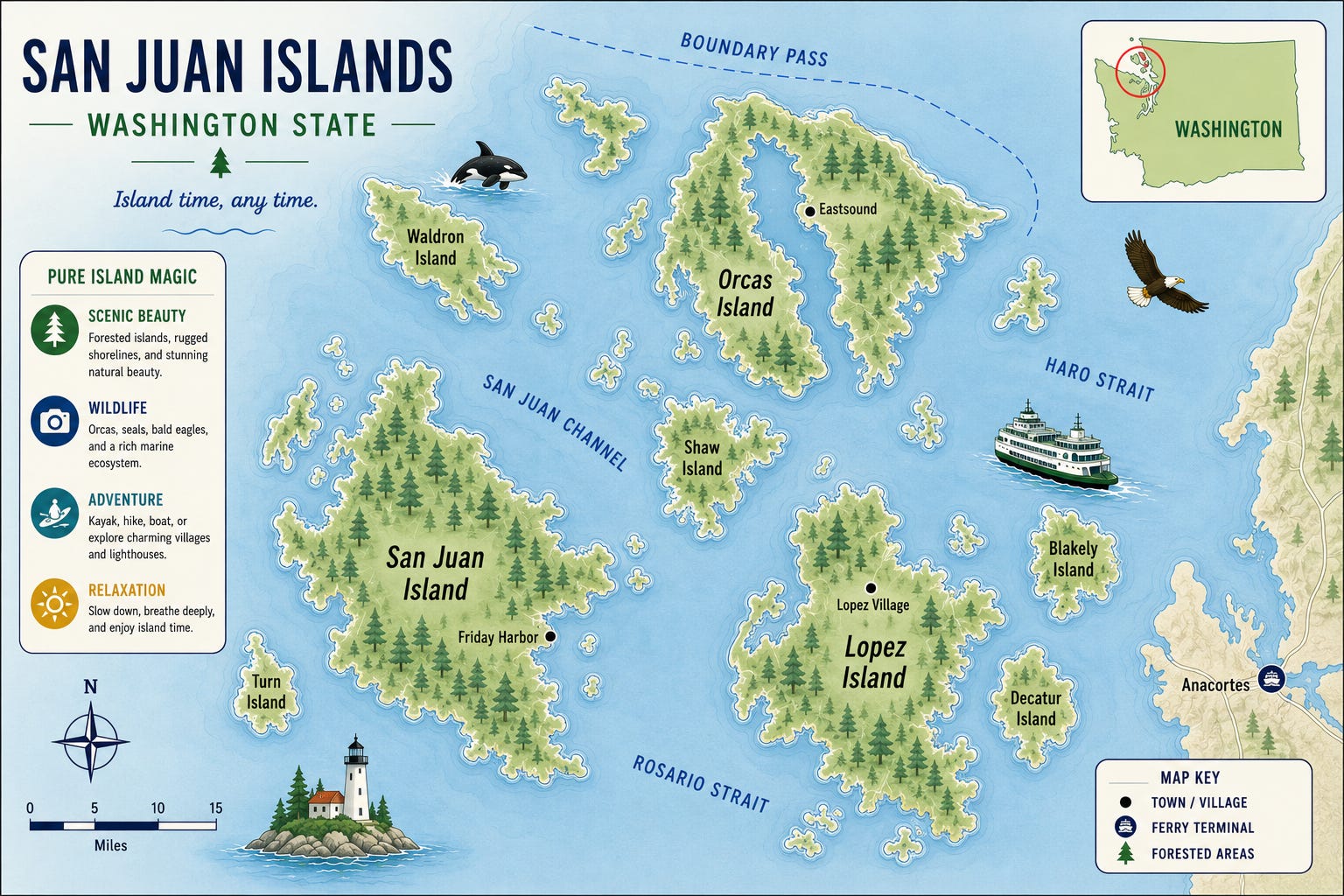
Four of the San Juan Islands are served by these ferries. Of these four, here are the islands’ notable qualities:
San Juan Island: The most populous island, home to the islands’ only incorporated town, Friday Harbor, and about 50% of the islands’ total residents. But with a summer population of 20,000 — and a year-round one of less than 9000 — it still doesn’t feel very populated. This island is a collection of bucolic farms, lush forests, and fantastic parks, many right along the water, and is also home to Roche Harbor, a high-end marina and housing development that I wish I didn’t find as charming as I do.
Orcas Island: The largest and also the hilliest, with Mount Constitution, which, at 2,400 feet (730 meters), offers truly breathtaking views of the surrounding islands. All the islands have a funky, drop-out vibe (and are very LGBTQ-friendly), but Orcas is probably the funkiest, especially with Doe Bay Resort, where you can stay in a yurt, eat fantastic vegetarian meals, and soak naked in the hot tubs. Fun fact: contrary to what many assume, Orcas Island was not named after the local orca whales but after the person who commissioned an early expedition to the area.
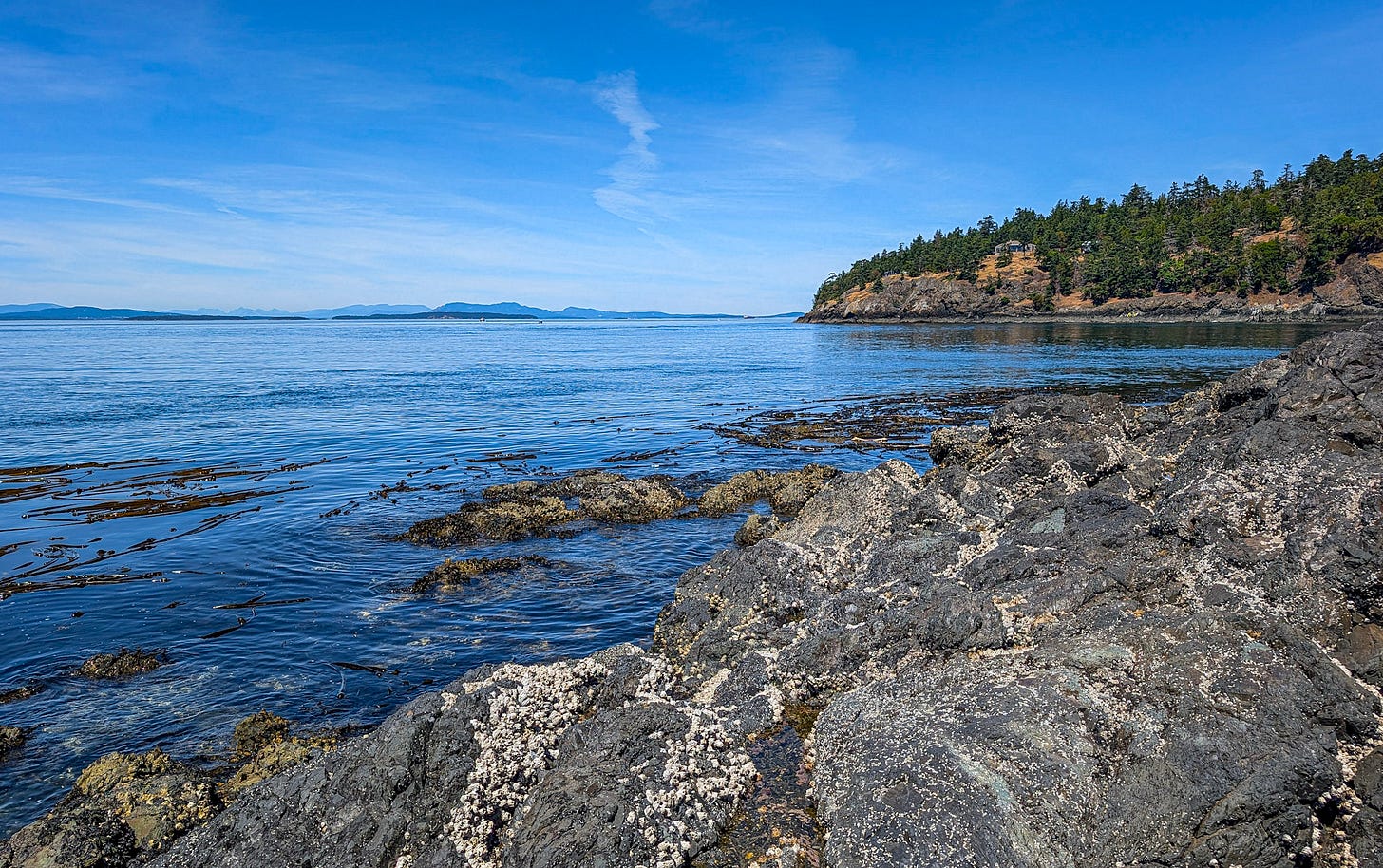
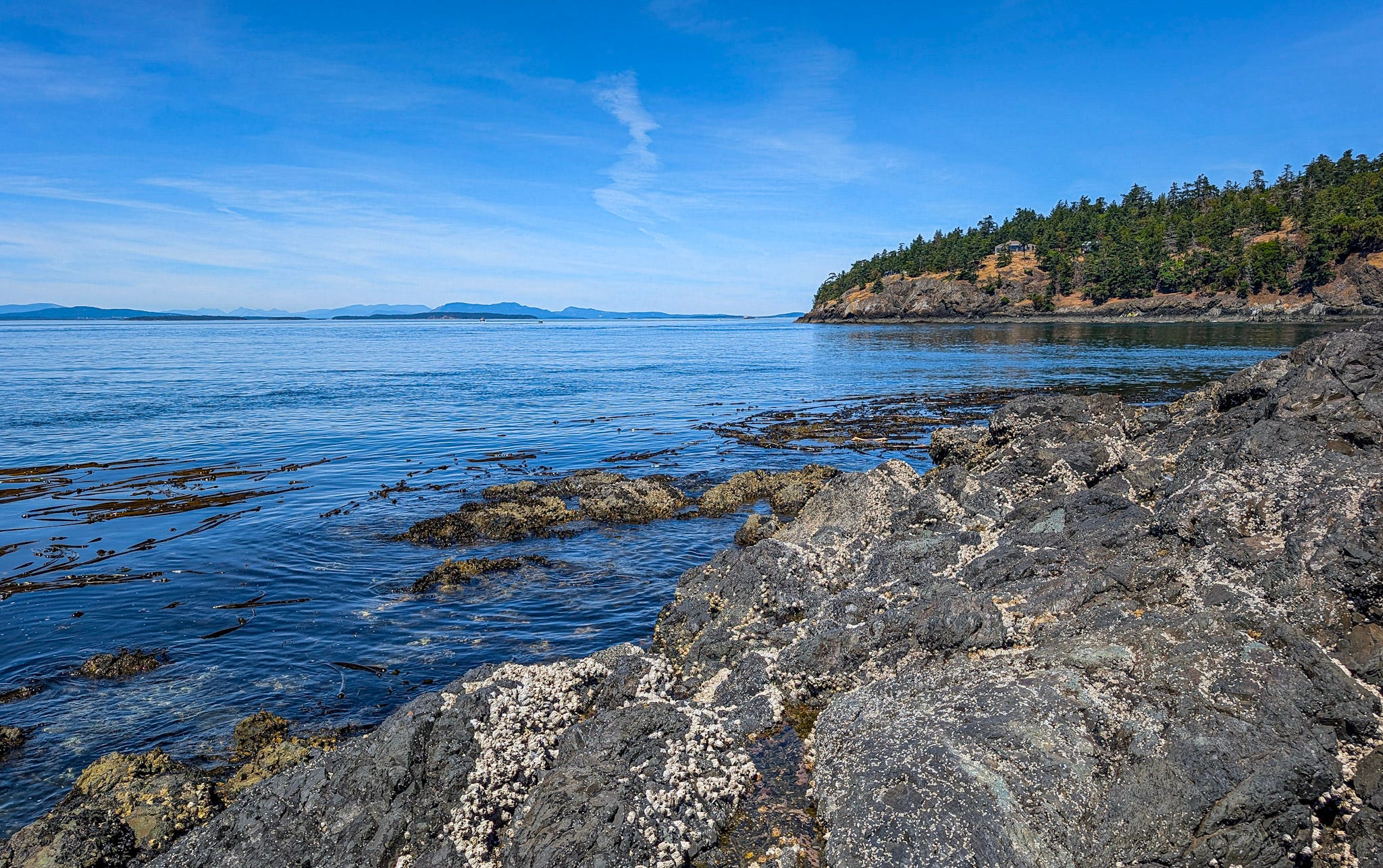
Shaw Island: The least developed island with no overnight lodgings except for a small campground, the smallest year-round population — less than 200 — and exactly one amenity: a small store at the ferry landing. But the island makes for a wonderful afternoon bike ride.
Lopez Island: The flattest island and the best for biking — the first hill after the ferry landing is a killer, but it’s mostly fine after that. Don’t miss Shark Reef Sanctuary at the southern end of the island, a wooded park that offers amazing views of the reef-strewn passage between Lopez and San Juan Islands, where you will almost certainly see seals sunning themselves and great plumes of seabirds fighting over whatever it is seabirds fight about. But alas, I’ve been here at least a dozen times and never seen an actual shark. (I would make a joke about how maybe it wasn’t named after marine animals either, but a person — John L. Shark — but it was actually named by another early explorer who thought some of the rocks looked like a shark.)
Expert Tip: Washington State’s tourist season is so short because the weather is absolutely wonderful in July and August — and outright crappy or at least “unpredictable” the rest of the year. But with climate change, things are shifting, and the hordes don’t seem to have caught on just yet. Go in July or August if you must, but I recommend late May, June, or especially September, when the weather will probably still be great, but you’ll have the place almost entirely to yourself.
The killer whales are starving, but there’s still lots of stunning wildlife.
The San Juan Islands may be most famous for the killer whales, but here’s a sad fact: the three “resident” pods are slowly starving, because human development and climate change have seriously impacted the local salmon population.
I want to say to these whales: “You’re supposedly so smart, but you can’t just switch from one specific species of salmon to other fish — or eating seals like the transient whale pods? You’re so picky with your eating habits that you’d rather die?”
But that’s blaming the victim, isn’t it?
(And all joking aside, the truth is that the resident whales have evolutionally lost the ability to eat seals and, at this point, have jaws that can only manage fish. So this tragedy really is all humanity’s fault.)

It’s a bit of a local debate about how many islands are in the San Juan chain, in part because the tides expose various islands, rocks, and reefs, and even the number of named “islands” is in dispute — somewhere between 125 and 178.
Four of the islands are served by the Washington State Ferries. Twelve more have year-round residents, but can only be reached by boat, water taxi, private ferry, or plane. And ten of the islands are marine parks, accessible only by boat, some of which allow overnight camping.
Lopez Island is lacking in public space, but San Juan and Orcas are teeming with massive parks and wildlife preserves that are big enough to include long, satisfying hikes, often with stunning views. (As old islanders die, they’re donating huge swaths of their land for preservation, and we thank them heartily for it!)
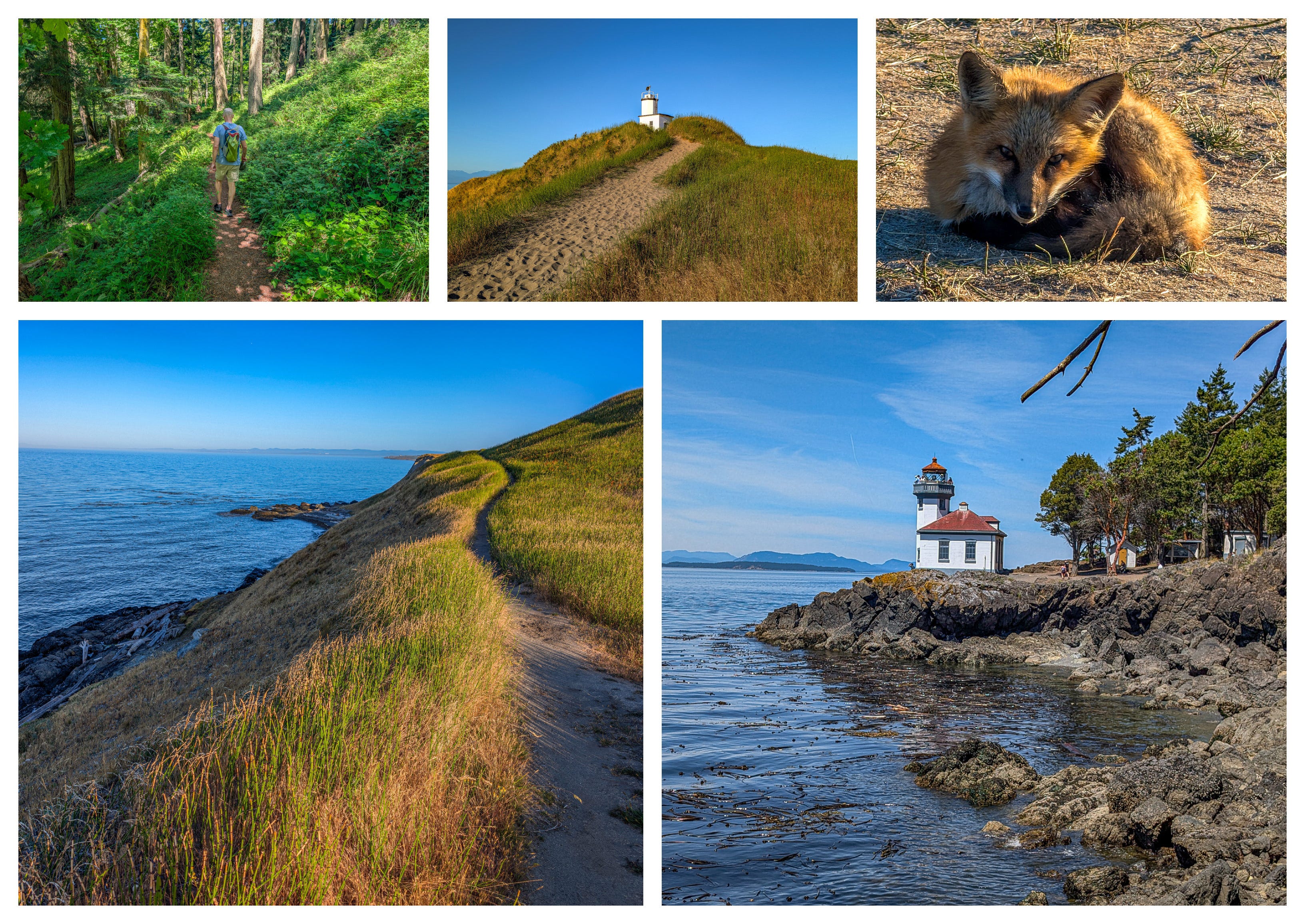
Expert Tip: A new park has opened on Shaw Island, the Marilyn and Fred Ellis Preserve, which includes a lovely four-mile loop forest trail with water views. The preserve is a mere two-mile walk or bike ride from the ferry landing — and by far the most scenic route is the one that goes by Reef Net Bay.
The ferry system tells a great story, but it’s a hot mess.
When you first leave on the ferry from Anacortes, the scenery isn’t that spectacular. But then you pass by the first island in the archipelago, the mainland falls away behind you, and you enter an absolute paradise of scenic wonder.
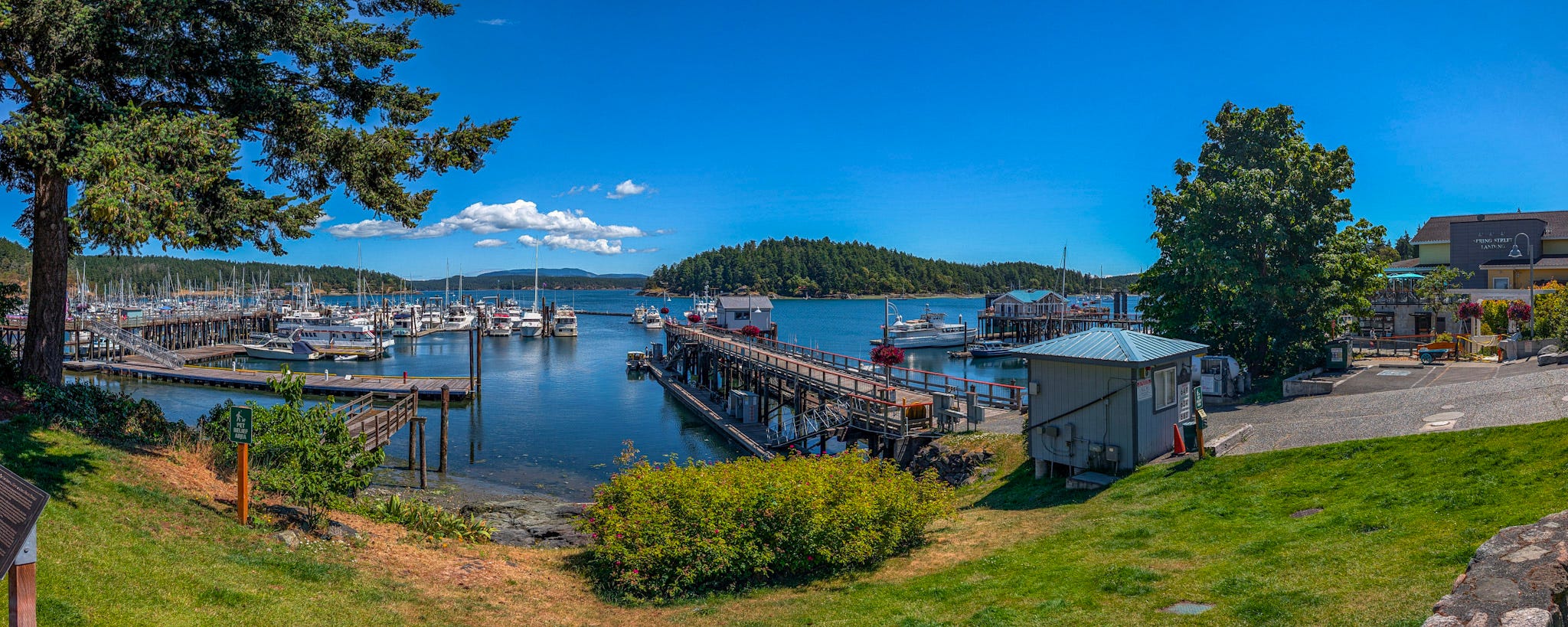
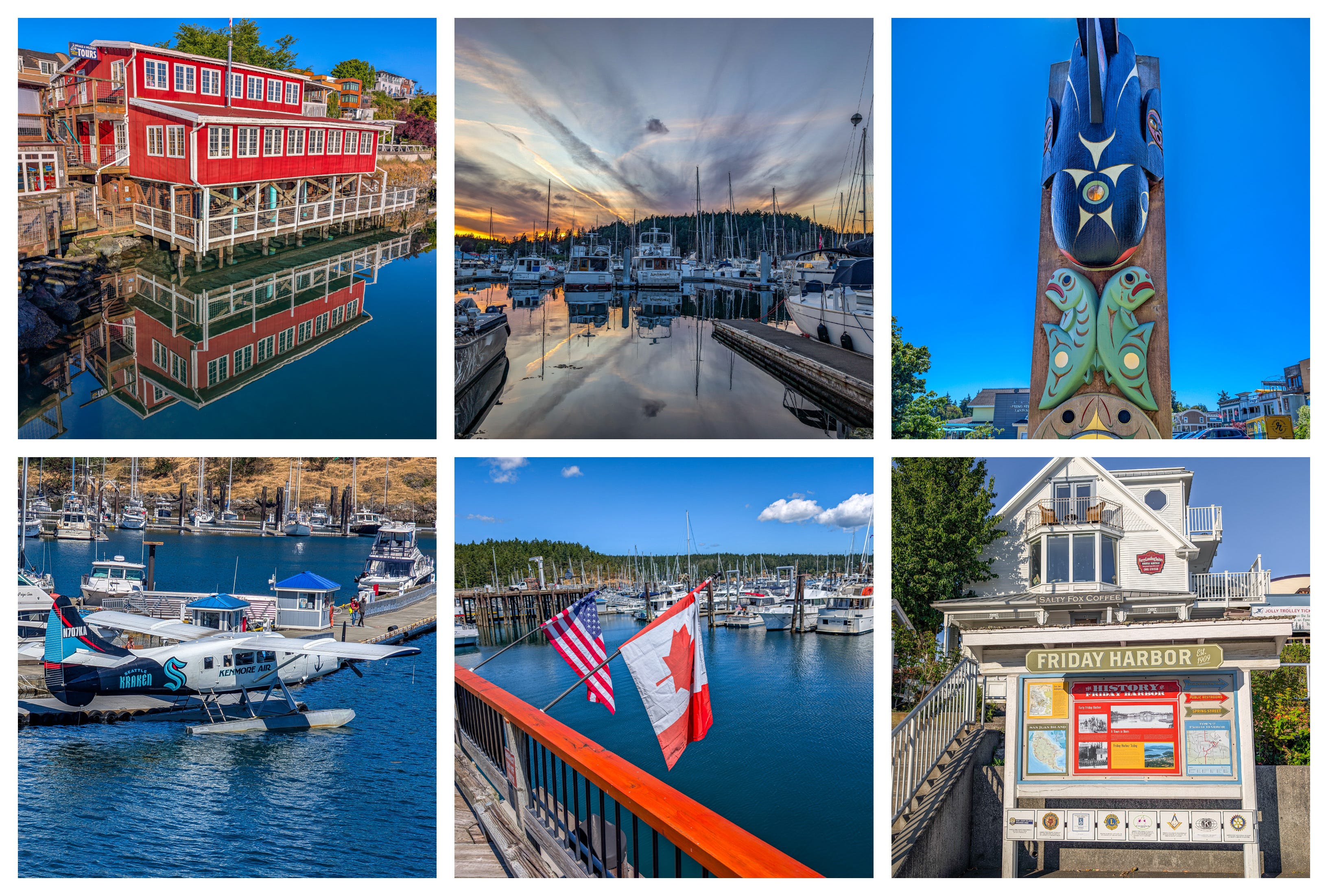
And at the very end of the line — San Juan Island, the farthest island in the run — the boat docks at what is surely one of the most picturesque towns in the entire world, Friday Harbor.
You only pay to ride eastbound ferries, so you’re essentially paying for a round-trip ticket when you first board. Once you’re on the islands, you can ride for free in any direction on foot or by bicycle — but if you’re visiting multiple islands by car, you should start with the island farthest to the east; otherwise, you’ll have to pay a small additional fee.
One of the things I most love about the San Juan Islands is that, unlike Canada’s Gulf Islands farther north, the ferries run multiple boats to all four main islands all day, so you can “island hop” as much as you want — taking, say, a morning boat from Orcas to Shaw for an afternoon bike ride, and still be home for dinner.
All this said, the ferry system is a bit of a hot mess. We found the boats chronically late, and the operators repeatedly canceled runs to specific islands to make up for lost time. There are posters on the boats bragging about the system’s high on-time arrival rates, but what these posters don’t say is that I suspect if you looked only at the summer months, their on-time rates would be crap.
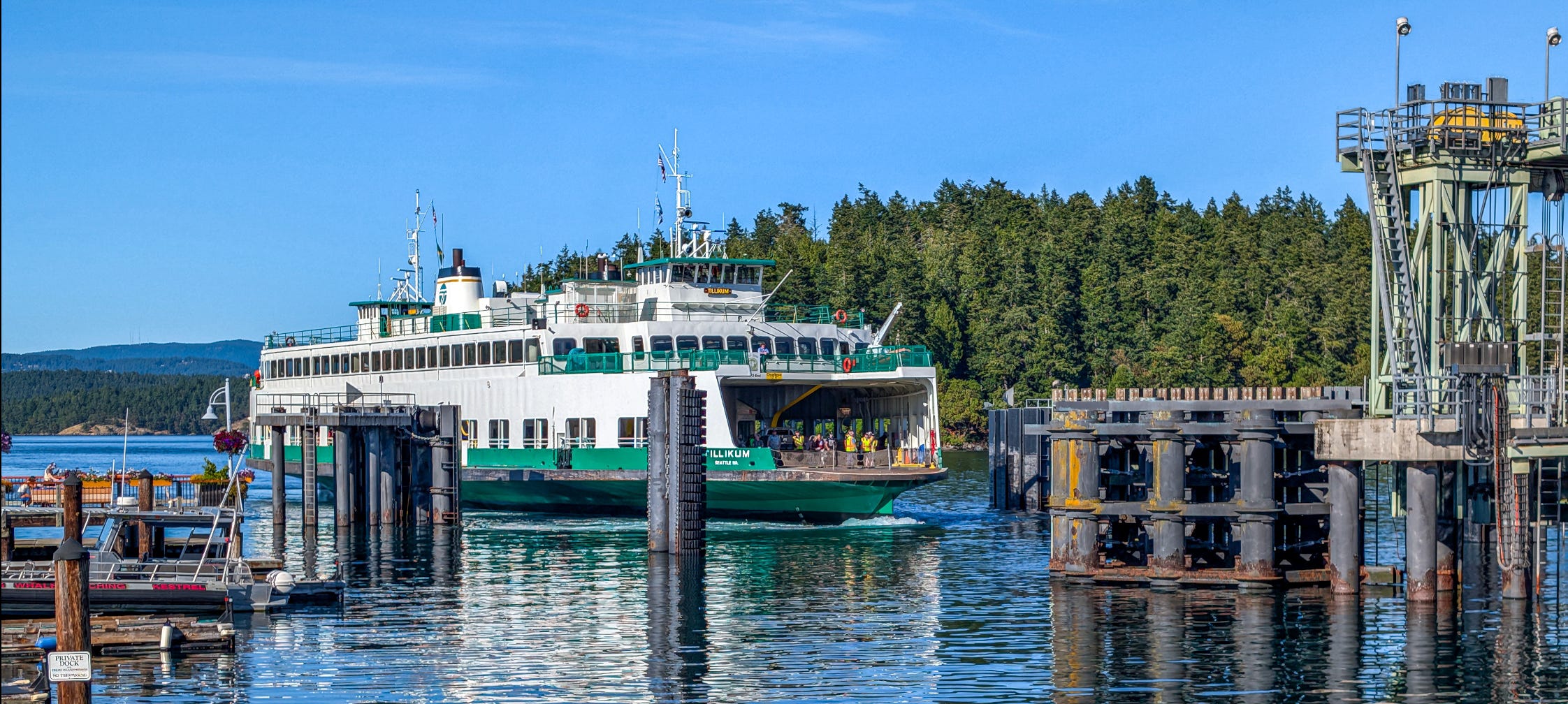
Unlike when I was younger, the ferry system has now instituted a reservation system for cars — and while they set aside a few standby slots on all the boats, reservations are absolutely required in both directions during the summer months. Otherwise you could literally be waiting all day. But walk-ons and bikers don’t need reservations (and there’s a large paid parking lot at the ferry landing on the mainland).
Expert Tip: The “town center” of Orcas Island, Eastsound, is in the middle of the island, not at the ferry landing. But there’s an old hotel right at that landing, the Orcas Hotel, that gives you easy access to all four main islands without a car. Book a room here, spend a day or two exploring Orcas via the local shuttle [currently down for maintenance], then you can easily ferry-hop to the other islands for the afternoon or whole day. You can also rent cars on Orcas or San Juan, arranging the shuttle in advance or having a car left for you at the ferry landing.
Prices are high, but most of the businesses seem locally owned.
In nearby Seattle, I recently bought a ridiculously expensive loaf of bread at a bakery — and the touchscreen made it very difficult for me not to leave a minimum 20% tip. (For what exactly? Literally handing me a loaf of bread?!)
Since prices are so insane in Seattle, I expected them to be even more ridiculous in the remote San Juan Islands.
And they… weren’t nearly as high as I expected! Even though it was the high season, we found a small but lovely one-bedroom Airbnb in Friday Harbor for one week for $1,600 USD (all fees included).
Better still, we saw zero fast food restaurants or chains of any kind anywhere on the islands. Almost all of the businesses seemed locally owned and operated.
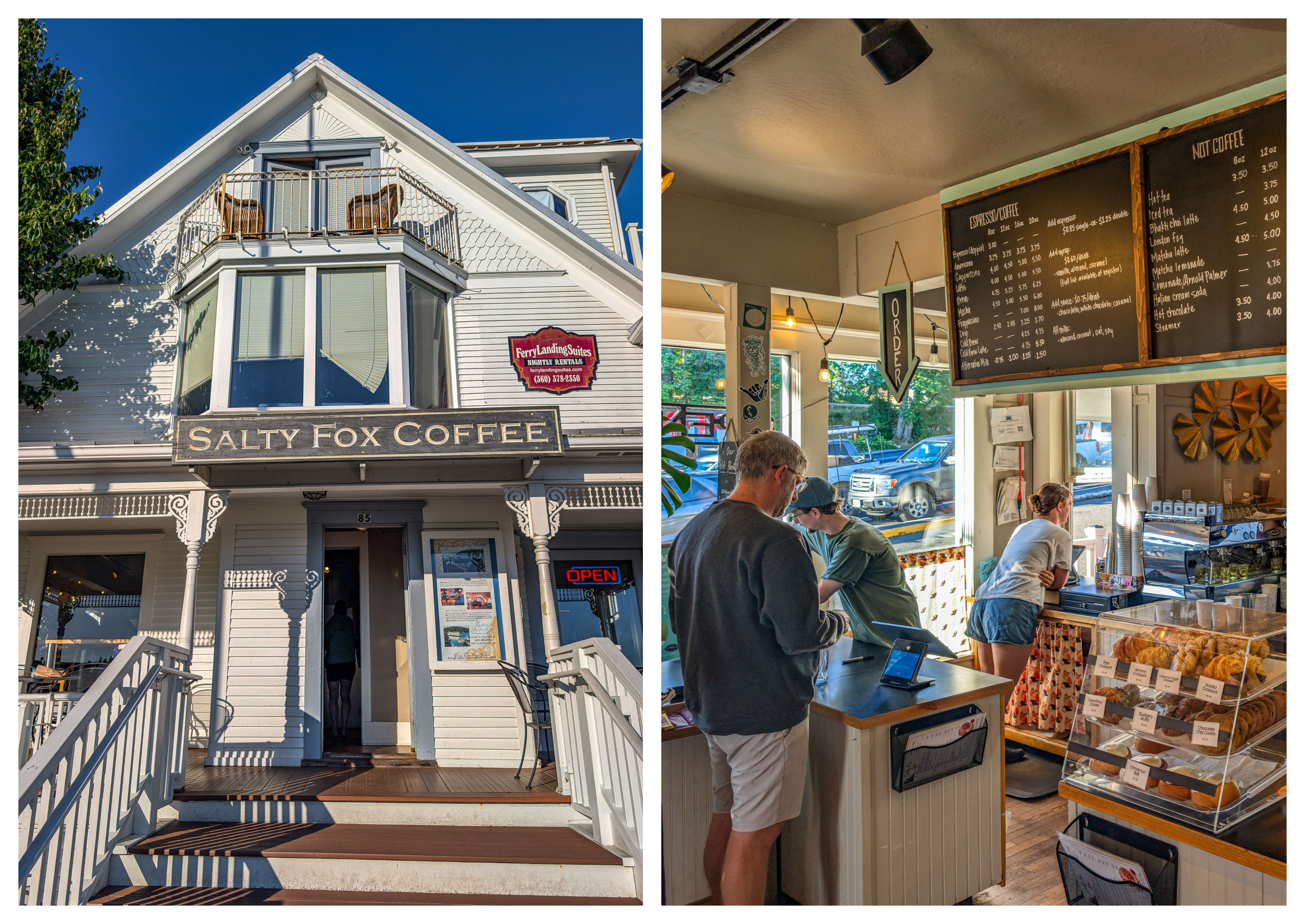
And, granted, it was the very start of the high season, but the service seemed surprisingly friendly and competent. But as with any high-tourist area, research restaurant choices carefully, because those in prominent locations are often subpar. The gems tend to be more hidden.
Expert Tip: Because the islands are so remote, we expected prices at the local supermarket to be sky-high, but they were… also quite reasonable! To avoid eating all your meals out, get a place with a kitchenette.
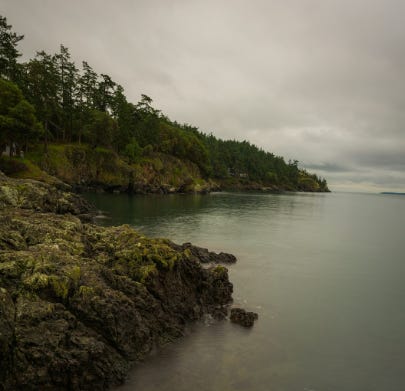
So have the San Juan Islands been ruined?
No! The orcs of Mordor have not yet reached one of my favorite places in the world!
This outcome really did surprise me. On one hand, the ferry system — and its hit-or-miss operation — can make it fairly frustrating to get to and around the San Juan Islands, especially in the summer months.
On the other hand, I think it’s absolutely the frustration factor of the ferries that has helped preserve the character of one of my favorite places on earth, at least for a few more years.
Brent Hartinger is a screenwriter and author. Check out my new newsletter about my books and movies at www.BrentHartinger.com. And order my latest book below.
