
How Do You Celebrate Father's Day When Your Father Was an A**hole?
I celebrate three other extraordinary fathers I have known.

For the audio version of this article, read by the author, go here.
My father was an abusive jerk.
He cheated on my mother, driving her to crazy extremes, and she often took her frustrations out on my younger brother and me.
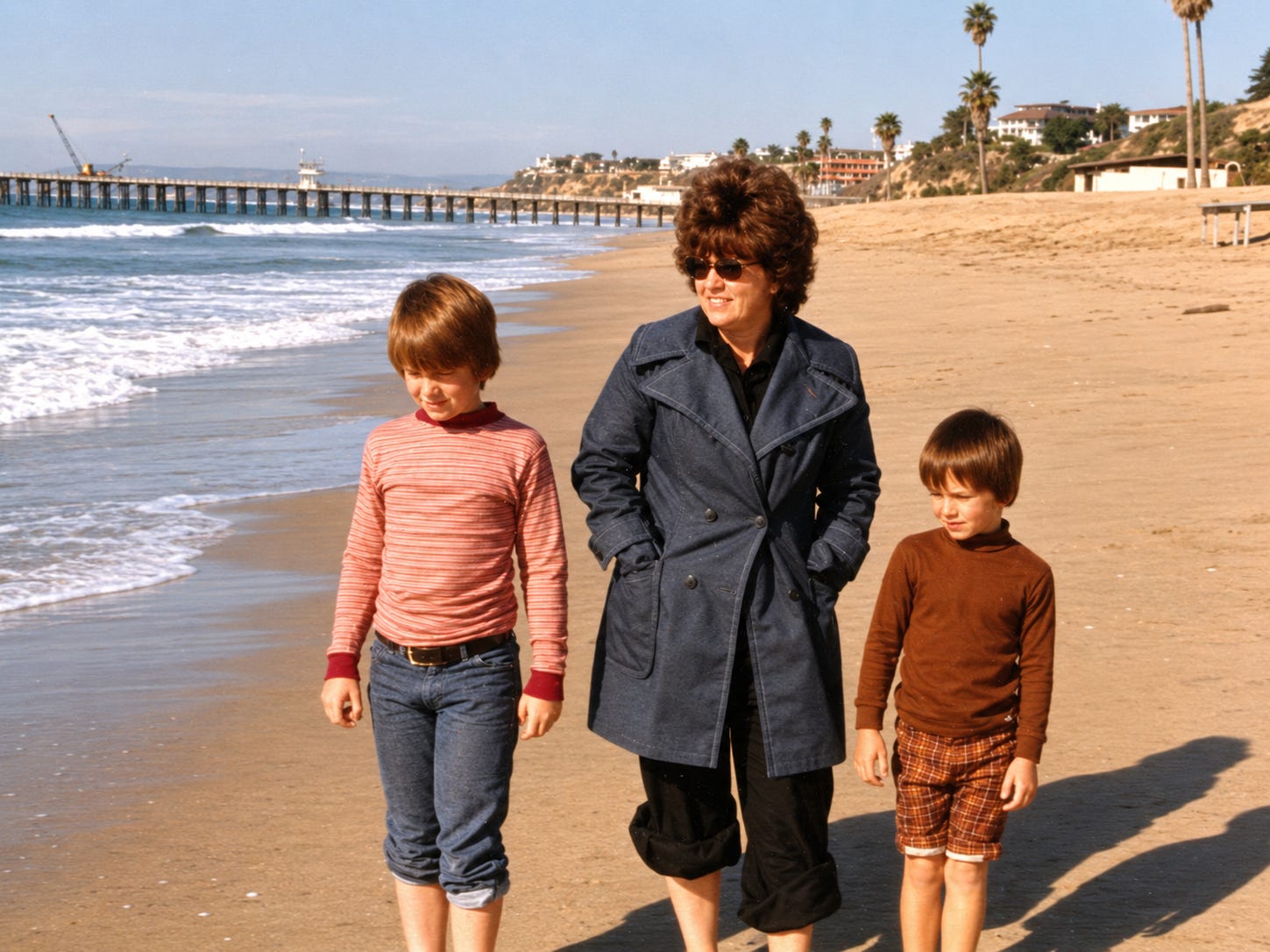
My dad also gaslit us, convincing us that my mother was the real villain of the family. When I was twenty-eight, I asked him point-blank if he’d ever cheated on my mother, her most frequent and bitter accusation.
“Absolutely not,” he said, without hesitation.
I was an adult — in my forties — when my father had a mental breakdown, and I finally learned the truth: not just that he had been cheating on her, but he had also failed to pay his taxes for years, costing my mother her retirement savings and all but ruining her life.
These days, come Father’s Day, I don’t think of him except with scorn.
But that doesn’t mean Father’s Day means nothing to me. My biological father wasn’t worth celebrating, but there have been three amazing men in my life who definitely are.
Better still, each taught me a different lesson.
Family isn’t about being related by blood.
When I was eighteen, Walter, my maternal grandfather, had to have quadruple bypass heart surgery.
Worried that I might be worried about inheriting his heart problems, my mother revealed that her father was actually her stepfather, not her biological father.
I also learned that her biological father had been a drunken philanderer who cheated on and physically abused my grandmother — even more of a monster than my own biological father.
When my mom was still a girl, her father was supposed to spend Saturdays with her, but instead, he’d drop her off at the local cinema where she’d stay all day while he went out to gamble and drink. Worse, he threatened her if she told my grandmother the truth.
After my grandmother divorced him — something still quite scandalous in the 1940s — she remarried Walter, who immediately adopted my mother and became a loving and devoted father.
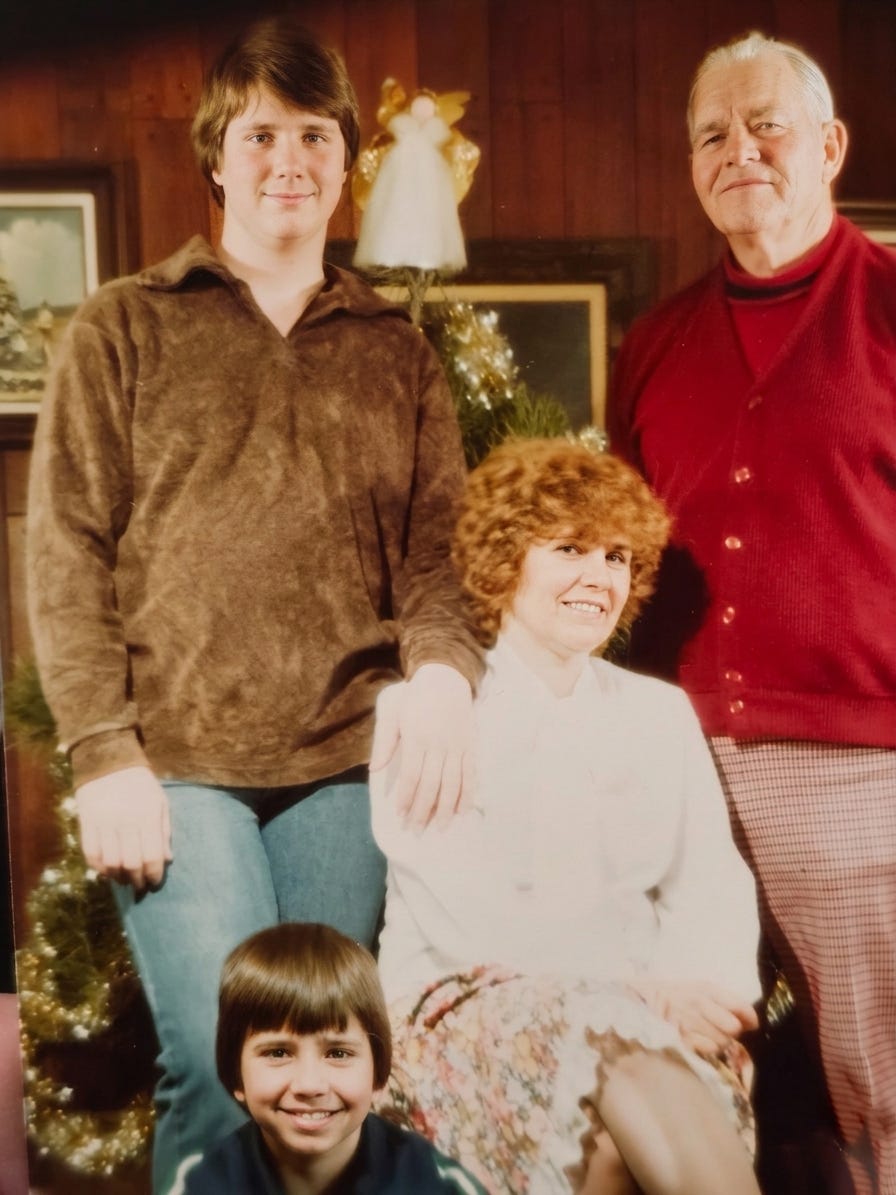
My mother worried that knowing he wasn’t my biological grandfather might change how I felt about him.
But he was a kind and deeply decent man, who was as devoted to my brother and me as he was to my mother. I loved him dearly.
Knowing he wasn’t biologically related to me didn’t change a thing.
It’s okay to want an unconventional life.
Thanks to Walter, I met Phil, the next man who would help shape the person I would eventually become.
When I was eighteen, I was chosen to be a high school exchange student in Sydney, Australia. I was only able to go because my grandfather paid for the flight.
Phil was the father of my exchange partner, Gareth.
Upon arriving in Australia, I was concerned because Gareth and I had almost nothing in common. He was outgoing and popular, but also a pretty wild kid who drank a lot, skipped school, and was no stranger to trouble.
(He grew up to be a great guy and a wonderful father himself.)
But on my second day in Australia, Phil saw I was worried about something and took me for a walk on the beach. I expressed my concern.
Phil laughed. “Not only do I not expect you to be anything like Gareth, but I’d also prefer if you weren’t!” he said.
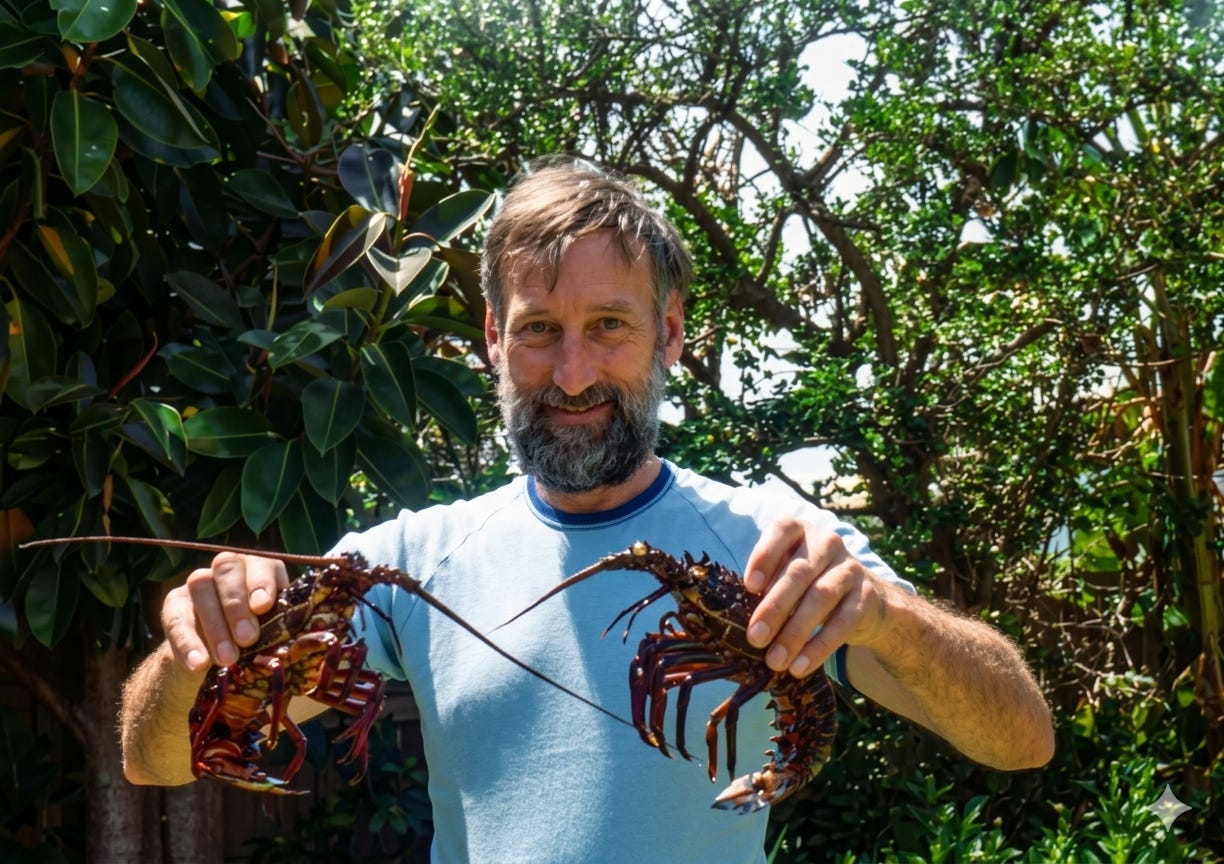
Later, Phil and I were talking about the future, and he asked, “What kind of life do you want?”
“I’m not sure,” I said. “But I know I don’t want the kind of life my parents have in mind for me. I don’t want to live in the suburbs and work a regular job.”
“So you want an unconventional life.”
I nodded. “My parents want me to be a lawyer or a banker. But I want to be a writer, I think, and to travel.” Even though I hadn’t yet grappled with being gay, I already knew that part of my life would be different too.
“If that’s who you want to be, then I think that’s who you should be,” Phil said.
Hearing that meant the world to me.
Better still, Phil soon got me to try all kinds of things I knew my parents would hate: riding a motorcycle, body surfing, and even shooting a gun. Honestly, they scared me too, but I figured I needed to at least try them.
Before long, I began to think I could do anything — even become a writer.
Thanks in part to Phil, I wound up with exactly the unconventional life I’d always dreamed about.
The secret to happiness is grace, gratitude, and “get on with it.”
Harry, Brent’s dad and my father-in-law, was a remarkable man in many ways, but what I especially loved was what I call his three “Gs”: his grace, gratitude, and ability to just get on with things.
Every year, we ate Christmas dinner at a family friend’s house. And every year, the dinner included an eclectic group of people. Unfortunately, one year that included a couple with some regressive political views — specifically, about lazy immigrants and ungrateful Black South Africans.
At first, Harry tried to steer the conversation to safer waters. When that didn’t work, he gently pushed back. When the offending couple still wouldn’t let it go, rather than start an argument that would ruin the event, Harry simply said to our hosts, “Thank you for a lovely meal — I’m afraid it’s now time for me to go.”
What could have turned into a very ugly dinner became a story we all laughed about on following Christmases — none of which the offending couple was invited to.
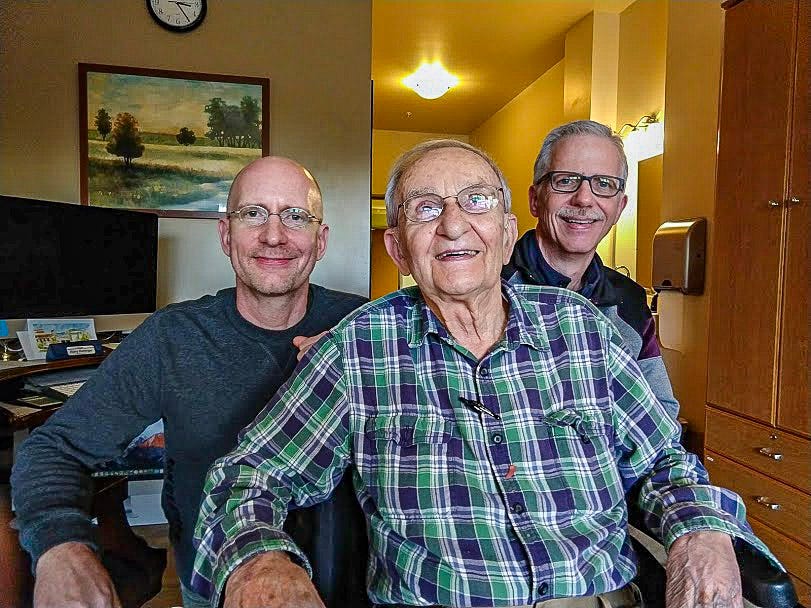
Harry also always expressed gratitude for his life. On one hand, he lived a great one, but he also had his share of setbacks: being pushed out of a law firm he co-founded and a wife who was diagnosed with early-onset Alzheimer’s.
But he was never bitter.
Even after COVID kept him almost completely isolated for two years, and physical infirmities kept him confined to a wheelchair, he would still greet us by saying, “I am such a lucky man! Every morning, I get to have a great cup of coffee.”
Harry was also a member of the Greatest Generation, and while he would never say it about himself, he truly embodied the “get on with it” attitude that was their hallmark.
That included when his wife came down with Alzheimer’s. Ironically, he was the first person she stopped recognizing — and she never recognized him again.
For years, he took care of her anyway, always without complaint. And then, when that became impossible, he found a wonderful facility for her.
Of course, he visited her every day. And she would often say to Brent and me, who she still did recognize, “Who is that man who visits me every day? He sure is nice.”
He sure was.
Walter, Phil, and Harry all shared a quality that might have been the most important lesson of all:
A real man isn’t about being tough or physically strong. It’s about being kind.
It’s easy to throw a punch. It’s much harder to be gentle. Gentle words have more power than angry ones, and a gentle touch requires more strength than a hard-thrown punch.
Walter, Phil, and Harry are all gone now. So today there are no cards or phone calls because there’s no one left to send them to.
But I mark Father’s Day anyway, grateful that I was lucky enough to have known these three extraordinary men worth celebrating.
Michael Jensen is a novelist and editor. For a newsletter with more of my photos, visit me at www.MichaelJensen.com.
Phil asking "what kind of life do you want" to an eighteen year old who didn't have permission to want one yet. Most people never get that question from an adult who actually means it.
What a beautiful and touching piece this is. I'm glad you had such good men in your life and I'm sorry that they are no longer physically with you (although they obviously are still with you).