
China Broke Our Brains
We expected to be shocked and transformed. We were.



It’s been two months since we returned from our ten-day journey through Southern China, and the two of us are still processing everything we saw and did.
The whole point of the trip was to experience a different culture — to go “beyond the beaten path” from most Western travelers and see what life is like in a part of the world that was mostly unfamiliar to us.
Well, we did.
In some ways, we had our pre-existing impressions and stereotypes confirmed, and in other ways, they were smashed all to bits.
Here are the most head-spinning fastballs — and the most unexpected curveballs.
China is really big and really old.
China is the fourth-largest country in the world by land area, only slightly smaller than the United States or Canada. But its population is 1.41 billion, only a shade smaller than India’s.
We traveled a thousand kilometers, but saw only one very small part of China.

Meanwhile, China’s recorded history goes back some 3500 years — with at least another 1500 years of “prehistory.”
We can’t help but compare that to our home country, the United States, which is about to celebrate only its 250th anniversary.
It’s true that North America has a noble and storied history of the peoples who lived there before the arrival of European invaders. But however you define this loaded thing called “civilization,” it has existed in this part of Asia for a very, very long time.
During our trip, we visited villages that were more than a thousand years old, and saw Guilin’s fantastic Sun and Moon Pagodas — made of bronze and silvered tiles, respectively — which are reconstructions of even older towers.
Meanwhile, the area’s fabulous Reed Flute Cave is said to have been used as a hiding place by the locals against invaders for a millennium or more — and only became known to the “outside” world in the 1940s.
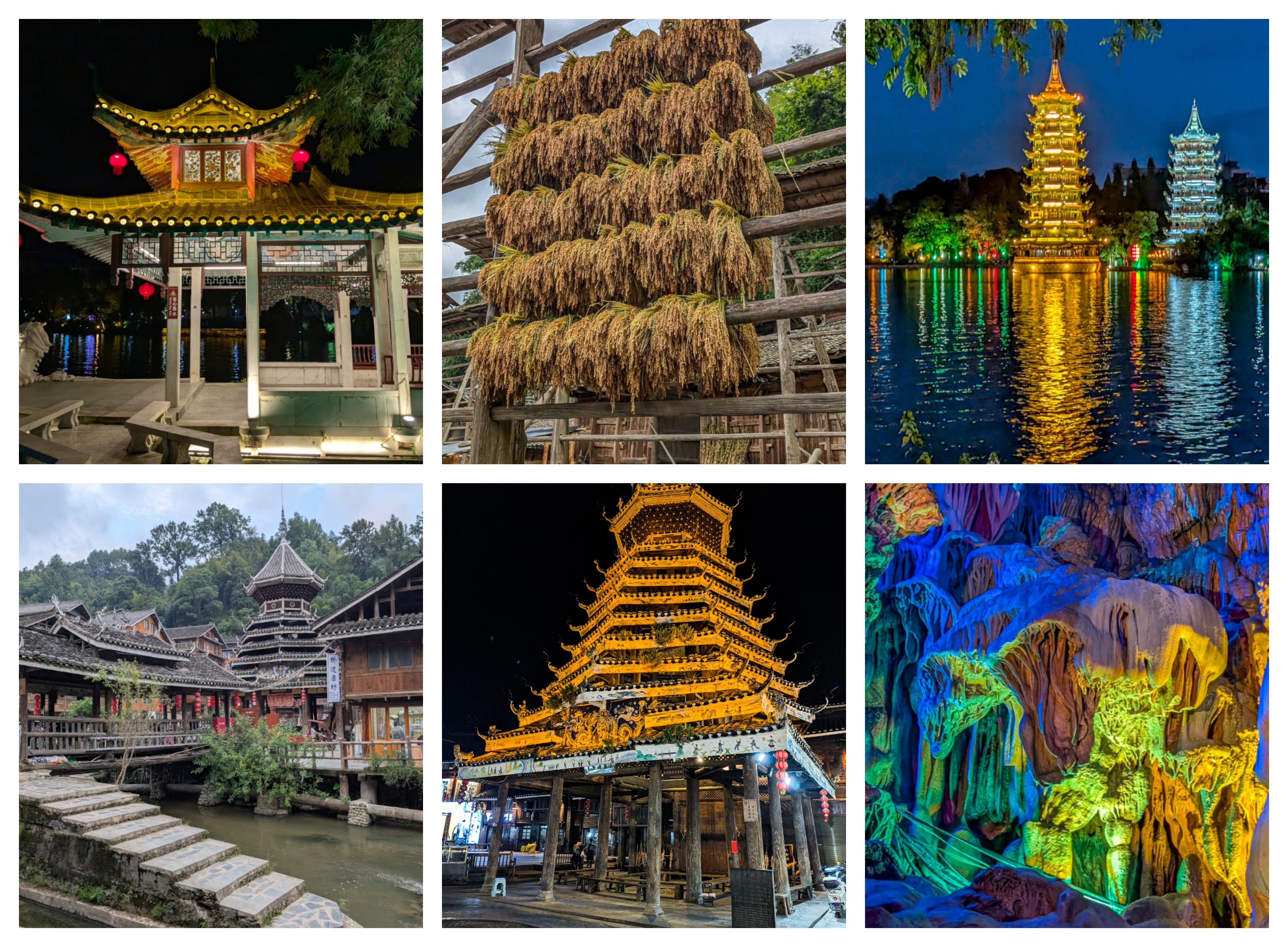
And, of course, in other parts of China, there are ruins and artifacts far older than these.
That said, the country is modernizing at a breathtaking pace.
In 2007, China had zero kilometers of high-speed rail.
It now has more than 45,000 kilometers of high-speed rail.
That’s more than the entire rest of the world combined — all these tracks, tunnels, bridges, and stations the size of airports built in less than twenty years.
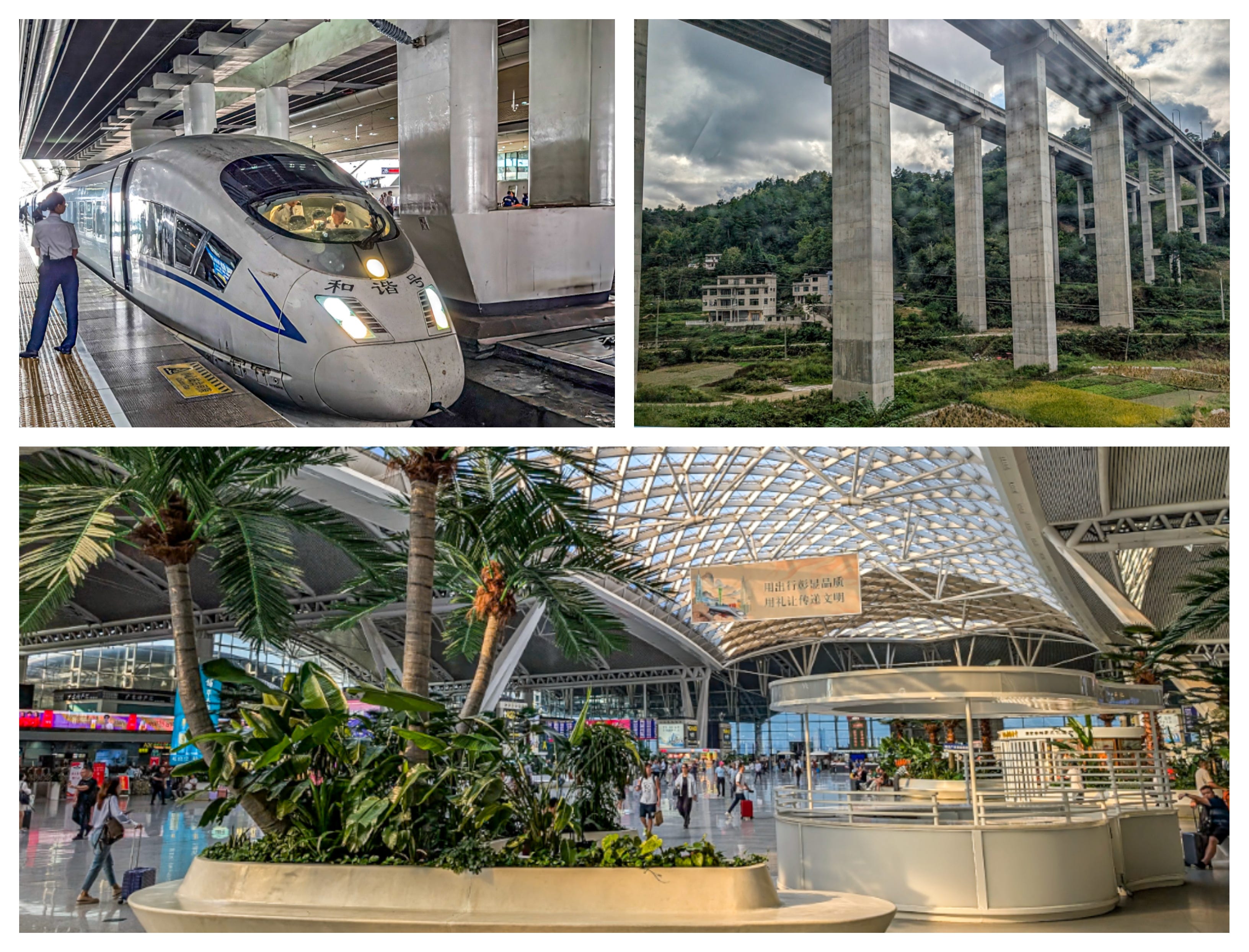
Since 1990, China’s population has gone from 20% urban to over 65%, with more than half a billion people migrating from rural areas to the cities. That’s required the construction of new mega-cities, such as Shenzhen, which in 1980 was a small city of 30,000 people, and today is a booming tech hub that’s home to 17 million.
The U.S. has 250 buildings taller than 600 meters; China now has 1,300 such structures, including the Shanghai Tower, the world’s third-tallest building.
Meanwhile, as the United States is currently making a massive lurch back toward fossil fuels, China is continuing its radical transformation to renewable “green” energy.
In fact, so many of China’s cars and scooters are electric that its city streets can be eerily quiet — and fairly dangerous to Westerners like us who are not accustomed to such silent vehicles. We almost got our asses run over several times.
The air quality was also a thousand times better than we expected.
